
Figueira dos Cavaleiros - Figueira dos Cavaleiros
Flight / Schedule
Figueira dos Cavaleiros - Figueira dos Cavaleiros
Aircraft
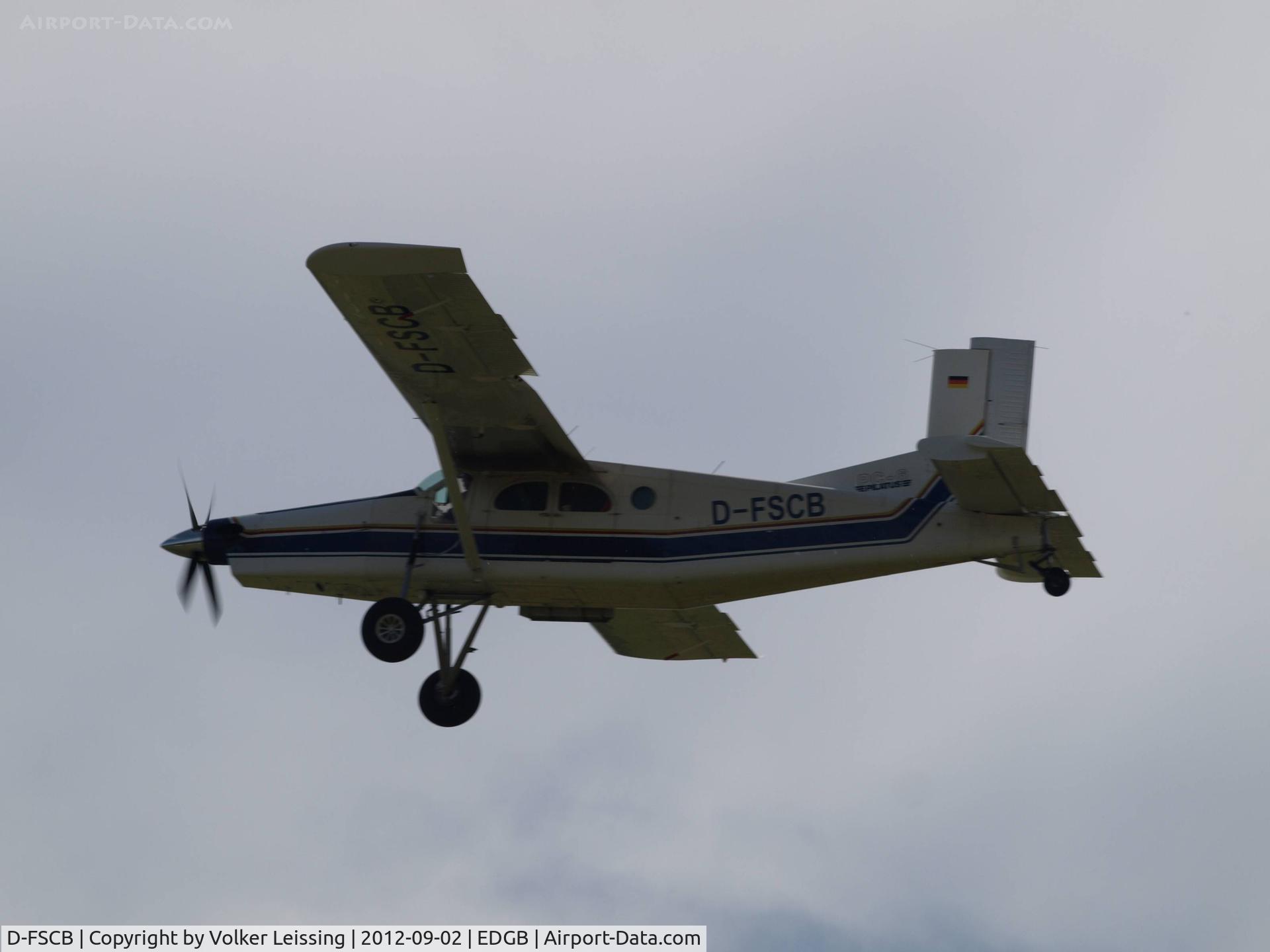
Pilatus PC-6 (Porter & Turbo Porter)Registration
D-FSCB
MSN
634
Year of Manufacture
1967
Operator
Grupo Seven AirDate
June 19, 2016 at 05:50 PM
Type
CRASHFlight Type
Skydiving / Paratroopers
Flight Phase
Flight
Crash Site
Plain, Valley
Crash Location
Ferreira do Alentejo Baixo Alentejo
Region
Europe • Portugal
Crash Cause
Technical failure
Narrative Report
On June 19, 2016 at 05:50 PM, Figueira dos Cavaleiros - Figueira dos Cavaleiros experienced a crash involving Pilatus PC-6 (Porter & Turbo Porter), operated by Grupo Seven Air, with the event recorded near Ferreira do Alentejo Baixo Alentejo.
The flight was categorized as skydiving / paratroopers and the reported phase was flight at a plain, valley crash site.
8 people were known to be on board, 1 fatalities were recorded, 7 survivors were identified or estimated. This corresponds to an estimated fatality rate of 12.5%.
Crew on board: 1, crew fatalities: 1, passengers on board: 7, passenger fatalities: 0, other fatalities: 0.
The listed crash cause is technical failure. On the afternoon of the 19th of June 2016 a Pilatus PC-6 aircraft, German registration DFSCB, took off from the airfield of Figueira dos Cavaleiros (LPFC) for its 17th launch of skydivers that day. On this flight there were 8 persons on board: 1 pilot, 5 skydivers and 2 passengers that were jumping in tandem with two of the skydivers. The meteorology featured a day with clear sky, the wind blew from 040° with 10 kt and the air temperature was around 32° C. The Pilatus took off for a local skydiving training flight and started a climb to an altitude of 14.500 ft. During the initial climb at a rate of 1.000 feet per minute, when crossing 7.000 feet above mean sea level, according to some of the skydivers in the group, a sound similar to the cracking/ripping of a metal structure was heard, and simultaneously the aircraft pitched up to a high nose-up attitude while yawing to the right, causing a severe flight instability. Suddenly, the entire rear fuselage structure disintegrated. According to the reports, some occupants were pushed against the structure of the aircraft before they were thrown outside. During the following seconds the skydivers who did not suffer serious injuries, managed to jump out of the plane and triggered their parachutes. Two of them were seriously injured before leaving the aircraft, their emergency parachutes being automatically deployed by the barometric opening mechanism. As a result, the disintegration of the remaining aircraft parts continued until the impact with the ground. Fragments of the aircraft parts were found over a length of approximately 1.500 meters and a width of about 500 meters and were widely dispersed, with an alignment with the direction of flight from west to east. The pilot was thrown out of the remains of the cockpit and hit the ground at about 400 meters from the impact site of the cabin. He did not trigger his parachute and it was not, nor is it a procedure to be equipped with an emergency parachute with an automatic barometric opening mechanism.
Aircraft reference details include registration D-FSCB, MSN 634, year of manufacture 1967.
Fatalities
Total
1
Crew
1
Passengers
0
Other
0
Crash Summary
On the afternoon of the 19th of June 2016 a Pilatus PC-6 aircraft, German registration DFSCB, took off from the airfield of Figueira dos Cavaleiros (LPFC) for its 17th launch of skydivers that day. On this flight there were 8 persons on board: 1 pilot, 5 skydivers and 2 passengers that were jumping in tandem with two of the skydivers. The meteorology featured a day with clear sky, the wind blew from 040° with 10 kt and the air temperature was around 32° C. The Pilatus took off for a local skydiving training flight and started a climb to an altitude of 14.500 ft. During the initial climb at a rate of 1.000 feet per minute, when crossing 7.000 feet above mean sea level, according to some of the skydivers in the group, a sound similar to the cracking/ripping of a metal structure was heard, and simultaneously the aircraft pitched up to a high nose-up attitude while yawing to the right, causing a severe flight instability. Suddenly, the entire rear fuselage structure disintegrated. According to the reports, some occupants were pushed against the structure of the aircraft before they were thrown outside. During the following seconds the skydivers who did not suffer serious injuries, managed to jump out of the plane and triggered their parachutes. Two of them were seriously injured before leaving the aircraft, their emergency parachutes being automatically deployed by the barometric opening mechanism. As a result, the disintegration of the remaining aircraft parts continued until the impact with the ground. Fragments of the aircraft parts were found over a length of approximately 1.500 meters and a width of about 500 meters and were widely dispersed, with an alignment with the direction of flight from west to east. The pilot was thrown out of the remains of the cockpit and hit the ground at about 400 meters from the impact site of the cabin. He did not trigger his parachute and it was not, nor is it a procedure to be equipped with an emergency parachute with an automatic barometric opening mechanism.
Cause: Technical failure
Occupants & Outcome
Crew On Board
1
Passengers On Board
7
Estimated Survivors
7
Fatality Rate
12.5%
Known people on board: 8
Operational Details
Schedule / Flight
Figueira dos Cavaleiros - Figueira dos Cavaleiros
Operator
Grupo Seven AirFlight Type
Skydiving / Paratroopers
Flight Phase
Flight
Crash Site
Plain, Valley
Region / Country
Europe • Portugal
Aircraft Details
Similar Plane Crashes
Portuguese Air Force - Aeronáutica Militar
Tellier T.3
The seaplane crashed in unknown circumstances in the sea off Cascais, killing both crew members.
Portuguese Air Force - Aeronáutica Militar
Breguet 14
The crew was completing a training flight when the airplane crashed in unknown circumstances in Barcarena. All three occupants were killed.
Portuguese Air Force - Aeronáutica Militar
Avro 504
The crew was completing a local training flight out from Lisbon-Alverca Airport. Shortly after takeoff, the single engine aircraft went out of control and crashed. Both crew members were killed. Crew: Lt Ferreira de Brito, Cpl Castro e Silva.
Portuguese Air Force - Aeronáutica Militar
Avro 504
The single engine airplane was approaching the Granja do Marquês AFB in Sintra when it crashed in unknown circumstances. Both occupants, Lt Almicar Alvarenca Passo and the passenger, Doctor Alf José de Azevedo Reis were killed.
Heinkel Flugzeuge
Heinkel He.6
The crew was performing a flight from Rostock to Newfoundland on behalf of the German manufacturer Heinkel Flugzeugbau. The aircraft departed Warnemünde harbor (north of Rostock) at 1221LT on 12OCT1927 and made several intermediate stops en route: Brunsbüttel on 12OCT, Wilhelmshaven on 13OCT, Amsterdam on 14OCT, Vigo on 16OCT, Lisbon on 18OCT and Horta on 04NOV. After few days on Faial Island, the crew decided to continue his trip to Canada and started on the night of 12 to 13 of November. Two takeoff attempts were abandoned due to unfavorable winds, and during the third attempt, while climbing, the aircraft crashed in the sea, in the harbor of Horta. While all three occupants escaped uninjured, the aircraft was destroyed. Crew: Captain Horst Mertz, pilot, Willem Bock, radio navigator, Fritz Rohde, engineer.
L'Aéropostale
CAMS 51
The seaplane named 'La Frégate' crashed while taking off from the Horta Bay for unknown reasons. While both crew members were slightly injured, the aircraft was damaged beyond repair. It was on its way from Brest, France, to New York.