
Longmont – Casa Grande
Flight / Schedule
Longmont – Casa Grande
Aircraft
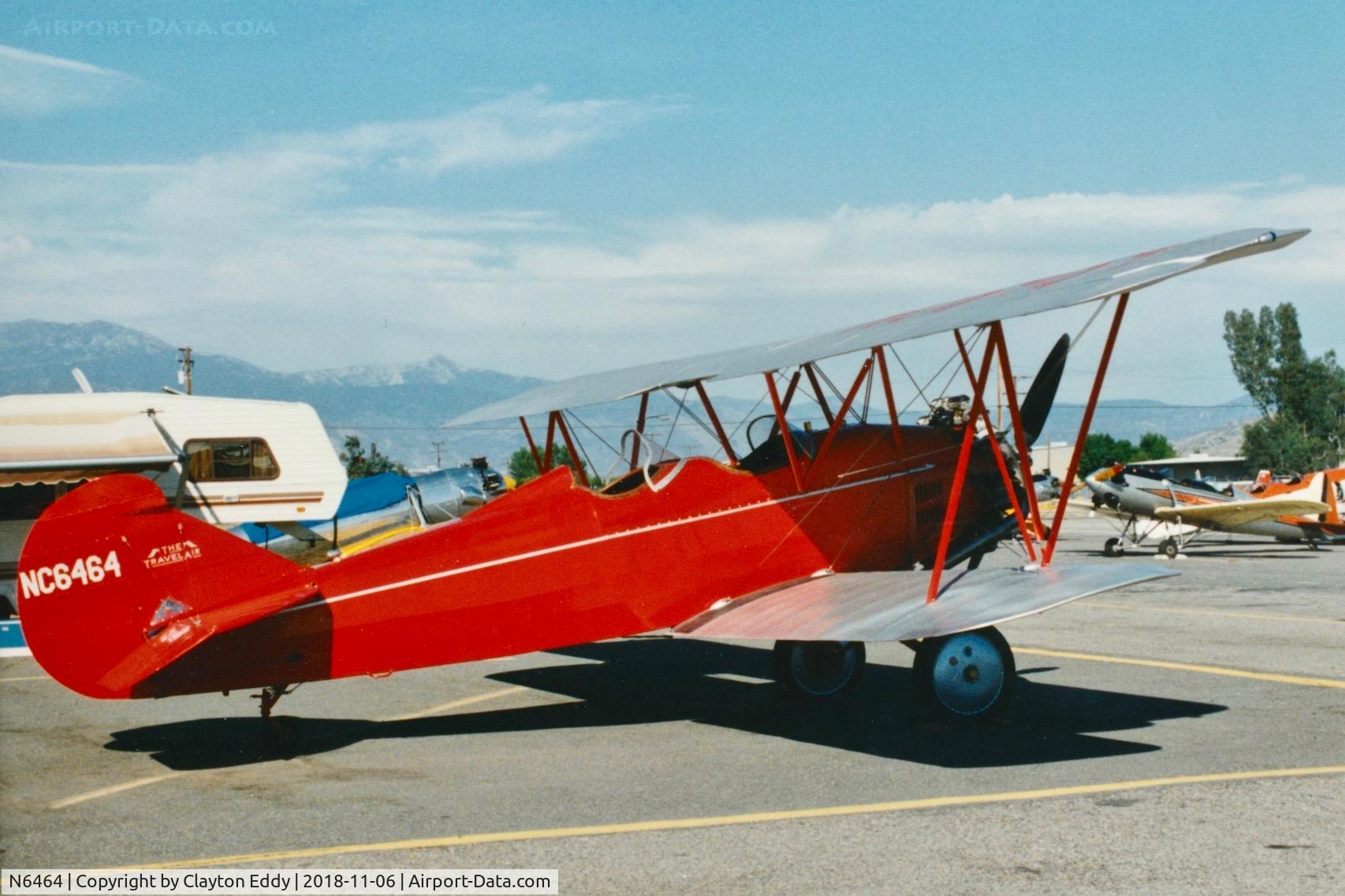
Travel Air 4000Registration
N6464
MSN
785
Year of Manufacture
1928
Operator
Daniel J. MurrayDate
March 2, 2016 at 08:00 AM
Type
CRASHFlight Type
Private
Flight Phase
Flight
Crash Site
Plain, Valley
Crash Location
Palmer Lake Colorado
Region
North America • United States of America
Coordinates
39.1222°, -104.9172°
Crash Cause
Human factor
Narrative Report
On March 2, 2016 at 08:00 AM, Longmont – Casa Grande experienced a crash involving Travel Air 4000, operated by Daniel J. Murray, with the event recorded near Palmer Lake Colorado.
The flight was categorized as private and the reported phase was flight at a plain, valley crash site.
2 people were known to be on board, 2 fatalities were recorded, 0 survivors were identified or estimated. This corresponds to an estimated fatality rate of 100.0%.
Crew on board: 1, crew fatalities: 1, passengers on board: 1, passenger fatalities: 1, other fatalities: 0.
The listed crash cause is human factor. The commercial pilot and the pilot-rated passenger were flying the biplane to a fly-in gathering in another state. Witnesses saw the airplane flying over a frozen lake at a low altitude and low airspeed. One witness saw the airplane "listing" left and right before it entered a left turn, and he lost sight of it. Other witnesses saw the airplane turn left and nose-dive into the ground. A postimpact fire consumed most of the airplane. Damage to the wreckage indicated that the airplane impacted the ground in a nose down attitude. The examination did not reveal evidence of any preimpact anomalies with the airframe, engine, or the control system of the airplane. A witness reported that, at the time of the accident, the wind was from the south about 30 miles per hour. However, a burnt area extending east from the airplane's impact point indicated the wind was from the west. Additionally, although wind information from nearby weather stations varied in direction and intensity. One station, about 14 miles west-northwest of the accident site reported calm wind., However, another station, located about 11 miles south of the accident site, recorded wind from the west at 11 knots with gusts to 27 knots about the time of the accident and wind from the west at 33 knots with gusts to 48 knots about an hour after the accident. Further, the forecast for the accident area called for wind gusts to 40 knots from the west-northwest. Therefore, it is likely that strong gusty west winds prevailed in the accident area at the time of the accident. Although some witnesses speculated that the pilot may have been attempting to land the airplane on the frozen lake, the airplane was not equipped to land on ice, and the reason the pilot was maneuvering at a low altitude in strong gusty winds could not be determined. Based on the witness observations and the damage to the wreckage, it is likely that the pilot allowed the airspeed to decrease to a point where the critical angle of attack was exceeded, and the airplane entered an aerodynamic stall/spin. Although the pilot was known to have heart disease, it is unlikely that his medical condition contributed to the accident. The witness observations indicate that the pilot was actively flying the airplane before the loss of control. Toxicology testing showed the presence of chlorpheniramine in the pilot's blood at a level that was likely in the therapeutic range. Chlorpheniramine is a sedating antihistamine available in a number of over the counter products, and it carries the warning, "May impair mental and/or physical ability required for the performance of potentially hazardous tasks (e.g., driving, operating heavy machinery)." Because of its sedating effect, chlorpheniramine may slow psychomotor functioning and cause drowsiness. It has also been shown in a driving simulator (after a single dose) to suppress visual-spatial cognition and visual-motor coordinating functions when compared to placebo. Such functions would have been necessary for the pilot to maintain control of the airplane while maneuvering close to the ground in the strong gusty wind conditions. Therefore, it is likely that the pilot's ability to safely operate the plane was impaired by the effects of chlorpheniramine.
Aircraft reference details include registration N6464, MSN 785, year of manufacture 1928.
Geospatial coordinates for this crash are approximately 39.1222°, -104.9172°.
Fatalities
Total
2
Crew
1
Passengers
1
Other
0
Crash Summary
The commercial pilot and the pilot-rated passenger were flying the biplane to a fly-in gathering in another state. Witnesses saw the airplane flying over a frozen lake at a low altitude and low airspeed. One witness saw the airplane "listing" left and right before it entered a left turn, and he lost sight of it. Other witnesses saw the airplane turn left and nose-dive into the ground. A postimpact fire consumed most of the airplane. Damage to the wreckage indicated that the airplane impacted the ground in a nose down attitude. The examination did not reveal evidence of any preimpact anomalies with the airframe, engine, or the control system of the airplane. A witness reported that, at the time of the accident, the wind was from the south about 30 miles per hour. However, a burnt area extending east from the airplane's impact point indicated the wind was from the west. Additionally, although wind information from nearby weather stations varied in direction and intensity. One station, about 14 miles west-northwest of the accident site reported calm wind., However, another station, located about 11 miles south of the accident site, recorded wind from the west at 11 knots with gusts to 27 knots about the time of the accident and wind from the west at 33 knots with gusts to 48 knots about an hour after the accident. Further, the forecast for the accident area called for wind gusts to 40 knots from the west-northwest. Therefore, it is likely that strong gusty west winds prevailed in the accident area at the time of the accident. Although some witnesses speculated that the pilot may have been attempting to land the airplane on the frozen lake, the airplane was not equipped to land on ice, and the reason the pilot was maneuvering at a low altitude in strong gusty winds could not be determined. Based on the witness observations and the damage to the wreckage, it is likely that the pilot allowed the airspeed to decrease to a point where the critical angle of attack was exceeded, and the airplane entered an aerodynamic stall/spin. Although the pilot was known to have heart disease, it is unlikely that his medical condition contributed to the accident. The witness observations indicate that the pilot was actively flying the airplane before the loss of control. Toxicology testing showed the presence of chlorpheniramine in the pilot's blood at a level that was likely in the therapeutic range. Chlorpheniramine is a sedating antihistamine available in a number of over the counter products, and it carries the warning, "May impair mental and/or physical ability required for the performance of potentially hazardous tasks (e.g., driving, operating heavy machinery)." Because of its sedating effect, chlorpheniramine may slow psychomotor functioning and cause drowsiness. It has also been shown in a driving simulator (after a single dose) to suppress visual-spatial cognition and visual-motor coordinating functions when compared to placebo. Such functions would have been necessary for the pilot to maintain control of the airplane while maneuvering close to the ground in the strong gusty wind conditions. Therefore, it is likely that the pilot's ability to safely operate the plane was impaired by the effects of chlorpheniramine.
Cause: Human factor
Occupants & Outcome
Crew On Board
1
Passengers On Board
1
Estimated Survivors
0
Fatality Rate
100.0%
Known people on board: 2
Operational Details
Schedule / Flight
Longmont – Casa Grande
Operator
Daniel J. MurrayFlight Type
Private
Flight Phase
Flight
Crash Site
Plain, Valley
Region / Country
North America • United States of America
Aircraft Details
Similar Plane Crashes
United States Signal Corps - USSC
De Havilland DH.4
The single engine airplane departed Dayton-McCook Field for a local test flight. Shortly after takeoff, the aircraft stalled and crashed, killing both occupants. Crew: Maj Oscar Brindley, Lt Col Henry Damm.
United States Signal Corps - USSC
De Havilland DH.4
Lt. Frank Stuart Patterson, son and nephew of the co-founders of National Cash Register, is killed in the crash of his DH.4M, AS-32098, at Wilbur Wright Field during a flight test of a new mechanism for synchronizing machine gun and propeller, when a tie rod breaks during a dive from 15,000 feet (4,600 m), causing the wings to separate from the aircraft. Wishing to recognize the contributions of the Patterson family (owners of NCR) the area of Wright Field east of Huffman Dam (including Wilbur Wright Field, Fairfield Air Depot, and the Huffman Prairie) is renamed Patterson Field on 6 July 1931, in honor of Lt. Patterson.
United States Signal Corps - USSC
De Havilland DH.4
The aircraft crashed in unknown circumstances.
United States Signal Corps - USSC
De Havilland DH.4
The crew was completing a training mission. At an altitude of about 4,000 feet, the aircraft entered a spin and crashed in an open field near Everman-Barron Field Airport. A crew was killed and the second occupants was injured. The aircraft was destroyed.
U.S. Air Mail Service
De Havilland DH.4
Crashed following an engine failure. Pilot fate unknown.
United States Signal Corps - USSC
De Havilland DH.4
The accident occurred in unknown circumstances.