
Oslo – Tromsø
Flight / Schedule
Oslo – Tromsø
Aircraft
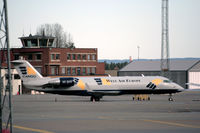
Canadair RegionalJet CRJ-200Registration
SE-DUX
MSN
7010
Year of Manufacture
1993
Operator
West Air SwedenDate
January 8, 2016 at 08:00 PM
Type
CRASHFlight Type
Cargo
Flight Phase
Flight
Crash Site
Mountains
Crash Location
Akkajaure Lake Norrbotten
Region
Europe • Sweden
Crash Cause
Technical failure
Narrative Report
On January 8, 2016 at 08:00 PM, Oslo – Tromsø experienced a crash involving Canadair RegionalJet CRJ-200, operated by West Air Sweden, with the event recorded near Akkajaure Lake Norrbotten.
The flight was categorized as cargo and the reported phase was flight at a mountains crash site.
2 people were known to be on board, 2 fatalities were recorded, 0 survivors were identified or estimated. This corresponds to an estimated fatality rate of 100.0%.
Crew on board: 2, crew fatalities: 2, passengers on board: 0, passenger fatalities: 0, other fatalities: 0.
The listed crash cause is technical failure. The flight was uneventful until the start of the event, which occurred during the approach briefing in level flight at FL 330. The event started at 00:19:20 hrs during darkness without moonlight, clouds or turbulence. The lack of external visual references meant that the pilots were totally dependent on their instruments which, inter alia consisted of three independent attitude indicators. According to recorded data and simulations a very fast increase in pitch was displayed on the left attitude indicator. The pilot in command, who was the pilot flying and seated in the left seat exclaimed a strong expression. The displayed pitch change meant that the pilot in command was subjected to a surprise effect and a degradation of spatial orientation The autopilot was, most probably, disconnected automatically, a “cavalry charge” aural warning and a single chime was heard, the latter most likely as a result of miscompare between the left and right pilots’ flying displays (PFD). Both elevators moved towards nose down and nose down stabilizer trim was gradually activated from the left control wheel trim switch. The airplane started to descend, the angle of attack and G-loads became negative. Both pilots exclaimed strong expressions and the co-pilot said “come up”. About 13 seconds after the start of the event the crew were presented with two contradictory attitude indicators with red chevrons pointing in opposite directions. At the same time none of the instruments displayed any comparator caution due to the PFDs declutter function in unusual attitude. Bank angle warnings were heard and the maximum operating speed and Mach number were exceeded 17 seconds after the start of the event, which activated the overspeed warning. The speed continued to increase, a distress call was transmitted and acknowledged by the air traffic control and the engine thrust was reduced to flight idle. The crew was active during the entire event. The dialogue between the pilots consisted mainly of different perceptions regarding turn directions. They also expressed the need to climb. At this stage, the pilots were probably subjected to spatial disorientation. The aircraft collided with the ground one minute and twenty seconds after the initial height loss. The two pilots were fatally injured and the airplane was destroyed.
Aircraft reference details include registration SE-DUX, MSN 7010, year of manufacture 1993.
Fatalities
Total
2
Crew
2
Passengers
0
Other
0
Crash Summary
The flight was uneventful until the start of the event, which occurred during the approach briefing in level flight at FL 330. The event started at 00:19:20 hrs during darkness without moonlight, clouds or turbulence. The lack of external visual references meant that the pilots were totally dependent on their instruments which, inter alia consisted of three independent attitude indicators. According to recorded data and simulations a very fast increase in pitch was displayed on the left attitude indicator. The pilot in command, who was the pilot flying and seated in the left seat exclaimed a strong expression. The displayed pitch change meant that the pilot in command was subjected to a surprise effect and a degradation of spatial orientation The autopilot was, most probably, disconnected automatically, a “cavalry charge” aural warning and a single chime was heard, the latter most likely as a result of miscompare between the left and right pilots’ flying displays (PFD). Both elevators moved towards nose down and nose down stabilizer trim was gradually activated from the left control wheel trim switch. The airplane started to descend, the angle of attack and G-loads became negative. Both pilots exclaimed strong expressions and the co-pilot said “come up”. About 13 seconds after the start of the event the crew were presented with two contradictory attitude indicators with red chevrons pointing in opposite directions. At the same time none of the instruments displayed any comparator caution due to the PFDs declutter function in unusual attitude. Bank angle warnings were heard and the maximum operating speed and Mach number were exceeded 17 seconds after the start of the event, which activated the overspeed warning. The speed continued to increase, a distress call was transmitted and acknowledged by the air traffic control and the engine thrust was reduced to flight idle. The crew was active during the entire event. The dialogue between the pilots consisted mainly of different perceptions regarding turn directions. They also expressed the need to climb. At this stage, the pilots were probably subjected to spatial disorientation. The aircraft collided with the ground one minute and twenty seconds after the initial height loss. The two pilots were fatally injured and the airplane was destroyed.
Cause: Technical failure
Occupants & Outcome
Crew On Board
2
Passengers On Board
0
Estimated Survivors
0
Fatality Rate
100.0%
Known people on board: 2
Operational Details
Schedule / Flight
Oslo – Tromsø
Operator
West Air SwedenFlight Type
Cargo
Flight Phase
Flight
Crash Site
Mountains
Region / Country
Europe • Sweden
Aircraft Details
Similar Plane Crashes
Handley Page Transport
Handley Page H.P.12
At 06.50 pm the Handley Page O/400, G-EAKE, departed for the last time from Kjeller and despite the strong winds it climbed to its cruising altitude at 2,440 metres (8,000 feet). The average speed that day was 100 kmh. Donovan explained Mrs Meisterlin under the first leg of the trip how they would fly to Karlstad and Stockholm. They crossed the Norwegian-Swedish border at 7.35 pm and Arvika at 7.55 pm. The clouds were by now getting thicker and at 8.25 pm they flew above Karlstad in 1,000 metres. They looked for Hallvard Næss and his Norman Thompson N.T.2B flying boat N-13, but in vein. He was delayed. At 9 pm they cross a landscape with thousands of tree and no possibility for an emergency landing. By now it was dark and only the fire coming from the exhaust pipe lighted up the sky. At 9.50 pm they flew above the large lake Mälaren and could enjoy a beautiful view. Donovan said, “Thumbs up – Stockholm!”, when at 11.20 pm a large city was in sight. But instead of going down, the Handley Page O/400 continued in the eastern direction and ended up above the lovely archipelago north of Stockholm. They started to fly around in circles and Donovan said, “I think they have lost themselves”. It was now decided to find as soon as possible a suitable landing site and finally the crew found a field that looked good enough. They flew in low altitude above houses and fields and finally land safely in a cornfield. Sergeant Rogers thought that the field was a regular meadow, but it turned out to be a cornfield. The aircraft suffered no damages. The following day the crew together Captain Meisterlin returned to the field where sergeant Rogers the night before had landed. The aircraft looked undamaged and therefore it was decided to start that day and proceed to Stockholm and the original landing site at Häsgerstalund. The owner of the manor gathered some local workers, who would help plough a lane through the cornfield. The lane was 5 metres wide and 300 metres long. At 3 pm the “runway” was ready and crew and passengers boarded the plane after thanking the hosts for the hospitality. Rogers switched on the engines and slowly the aircraft started on its take-off. It was however soon clear that the lane was not wide enough and that the two metres high corn touched the wings making the aircraft unstable. Sergeant Rogers tried to keep the aircraft straight, failed to do so and instead he tried to lift the aircraft from the field. By now the corn had twisted itself into the undercarriage and the aircraft crashed on its noose, tipping nearly completely around. Some were thrown out of the aircraft, while others were trapped into the fuselage. After the crash Sergeant Rogers shouted to turn off the petrol in order to avoid fire. Lieutenant Gottenborg managed to get out of the aircraft and ran to Captain Meisterlin, Donovan and Sergeant Rogers in order to free them. Donovan was the one with the worst injuries. He had burns in his face and on its hands and was in great pain. He managed to get out by himself. To get out Captain Meisterlin and Sergeant Rogers from the wreckage help was needed from the local workers. Sergeant Rogers’s leg injury (from the motor cycle accident in Norway) had worsened and he and Donovan were taken by stretcher to the ambulance and driven to the hospital in Östanå. Fortunately Dr. Nicolaysen was not hurt and could offer first aid. Mrs Meisterlin and Lieutenant Gottenborg were all unhurt and the journalist Qviller had broken his arm. Finally, the aircraft was now a total wreck and was damaged beyond repair. The flight to Stockholm and København was subsequently cancelled. Crew: Sergeant W. Rogers, pilot Mr. Donovan, mechanic. Observers: Captain Wilhelm Meisterlin and Lieutenant Brynjulf Gottenborg. Passengers: Dr. Nicolaysen, Mrs Astrid Meisterlin Mr. Haakon Qviller, journalist by the Norwegian newspaper Aftenposten. Source: Rob Mulder - www.europeanairlines.no
P.O. Flygkompani
Fairey III
While on a taxi flight, the pilot encountered control problems and attempted an emergency landing when the aircraft crash landed in a field located in Eskön, northeast of Gävle. Both occupants escaped uninjured and the aircraft was damaged beyond repair.
Swedish Air Force - Flygvapnet
FVM S.18
The aircraft crashed in unknown circumstances, killing both occupants.
Tryggve Gran
Armstrong Whitworth F.K.8
En route from Stockholm to Kristiania, the engine caught fire. The crew made an emergency landing in an open field located in Örebro and extinguished the fire. Shortly after takeoff, the aircraft went out of control and crashed upside down. Both occupants, Major Tryggve Gran and Captain Larry Carter, were uninjured and the aircraft was destroyed.
Swedish Air Force - Flygvapnet
FVM S.18
The crew was conducting a local training flight at Malmen AFB. While circling in the vicinity of the airbase, the aircraft collided with a Swedish Air Force Phönix C.1 Dront Ö4 registered 116. While the crew of the Phönix was able to make an emergency landing and was uninjured, the FVM S.18 entered a dive and crashed, killing its both occupants.
Swedish Navy - Svenska Marinen
Savoia S.13
Crashed in unknown circumstances in the sea off Märsgarn Island. The pilot, sole on board, was rescued.