
Houston - Houston
Flight / Schedule
Houston - Houston
Aircraft
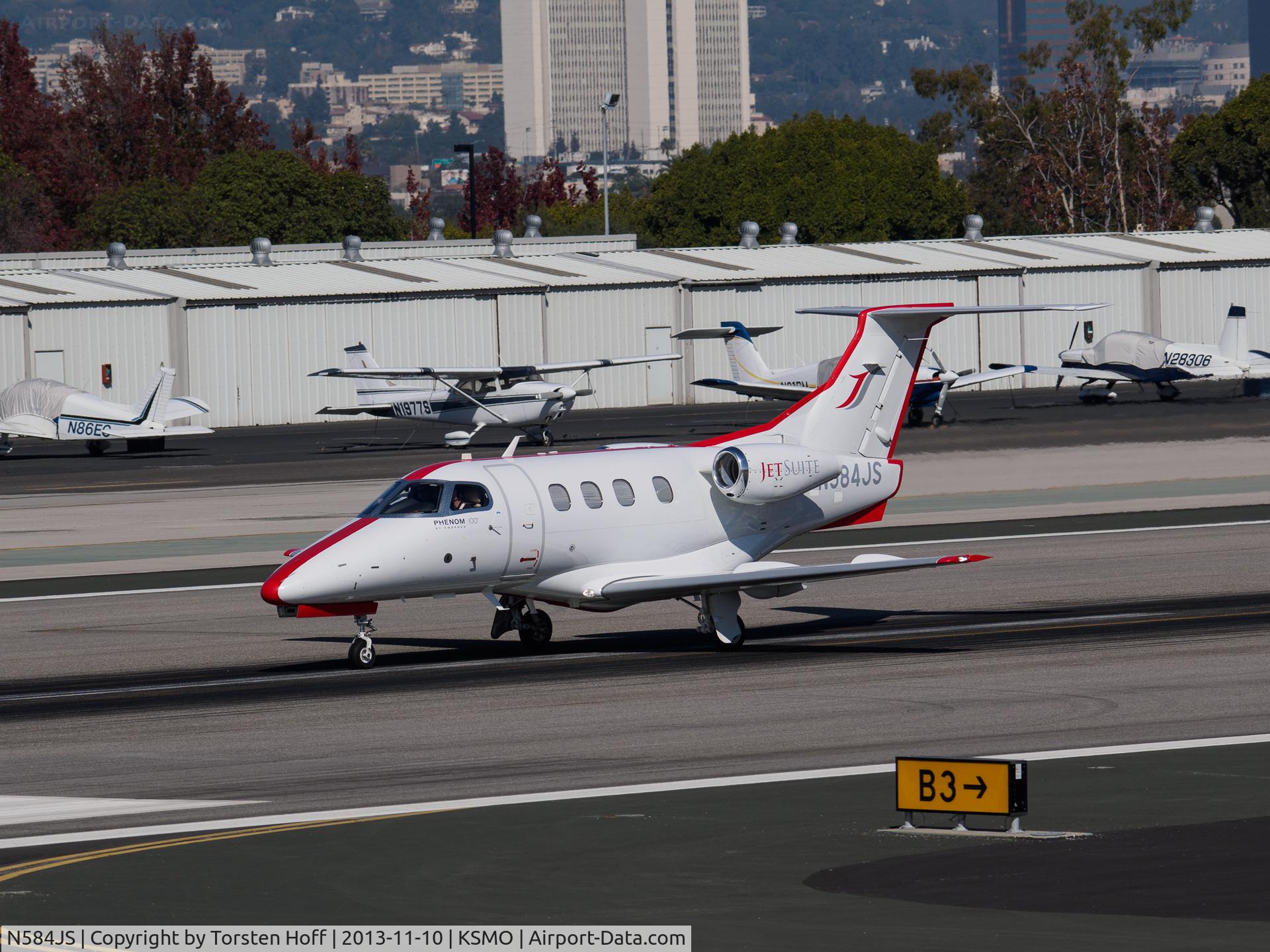
Embraer EMB-500 Phenom 100Registration
N584JS
MSN
500-00140
Year of Manufacture
2010
Operator
JetSuiteDate
November 21, 2014 at 10:10 AM
Type
CRASHFlight Type
Positioning
Flight Phase
Landing (descent or approach)
Crash Site
Airport (less than 10 km from airport)
Crash Location
Houston-Sugar Land Texas
Region
North America • United States of America
Coordinates
29.5896°, -95.6303°
Crash Cause
Human factor
Narrative Report
On November 21, 2014 at 10:10 AM, Houston - Houston experienced a crash involving Embraer EMB-500 Phenom 100, operated by JetSuite, with the event recorded near Houston-Sugar Land Texas.
The flight was categorized as positioning and the reported phase was landing (descent or approach) at a airport (less than 10 km from airport) crash site.
2 people were known to be on board, 0 fatalities were recorded, 2 survivors were identified or estimated. This corresponds to an estimated fatality rate of 0.0%.
Crew on board: 2, crew fatalities: 0, passengers on board: 0, passenger fatalities: 0, other fatalities: 0.
The listed crash cause is human factor. The pilots of the very light jet were conducting a positioning flight in instrument meteorological conditions. The flight was cleared by air traffic control for the instrument landing system (ILS) approach; upon being cleared for landing, the tower controller reported to the crew that there was no standing water on the runway. Review of the airplane's flight data recorder (FDR) data revealed that the airplane reached 50 ft above touchdown zone elevation (TDZE) at an indicated airspeed of 118 knots (KIAS). The airplane crossed the runway displaced threshold about 112 KIAS, and it touched down on the runway at 104 KIAS with about a 7-knot tailwind. FDR data revealed that, about 1.6 seconds after touchdown of the main landing gear, the nose landing gear touched down and the pilot's brake pedal input increased, with intermediate oscillations, over a period of 7.5 seconds before reaching full pedal deflection. During this time, the airplane achieved its maximum wheel braking friction coefficient and deceleration. The cockpit voice recorder recorded both pilots express concern the that the airplane was not slowing. About 4 seconds after the airplane reached maximum deceleration, the pilot applied the emergency parking brake (EPB). Upon application of the EPB, the wheel speed dropped to zero and the airplane began to skid, which resulted in reverted-rubber hydroplaning, further decreasing the airplane's stopping performance. The airplane continued past the end of the runway, crossed a service road, and came to rest in a drainage ditch. Postaccident examination of the brake system and data downloaded from the brake control unit indicated that it functioned as commanded during the landing. The airplane was not equipped with thrust reversers or spoilers to aid in deceleration. The operator's standard operating procedures required pilots to conduct a go-around if the airspeed at 50 ft above TDZE exceeded 111 kts. Further, the landing distances published in the airplane flight manual (AFM) are based on the airplane slowing to its reference speed (Vref) of 101 KIAS at 50 ft over the runway threshold. The airplane's speed at that time exceeded Vref, which resulted in an increased runway distance required to stop; however, landing distance calculations performed in accordance with the AFM showed that the airplane should still have been able to stop on the available runway. An airplane performance study also showed that the airplane had adequate distance available on which to stop had the pilot continued to apply maximum braking rather than engage the EPB. The application of the EPB resulted in skidding, which increased the stopping distance. Although the runway was not contaminated with standing water at the time of the accident, the performance study revealed that the maximum wheel braking friction coefficient was significantly less than the values derived from the unfactored wet runway landing distances published in the AFM, and was more consistent with the AFM-provided landing distances for runways contaminated with standing water. Federal Aviation Administration Safety Alert for Operators (SAFO) 15009 warns operators that, "the advisory data for wet runway landings may not provide a safe stopping margin under all conditions" and advised them to assume "a braking action of medium or fair when computing time-of-arrival landing performance or [increase] the factor applied to the wet runway time-of-arrival landing performance data." It is likely that, based on the landing data in the AFM, the crew expected a faster rate of deceleration upon application of maximum braking; when that rate of deceleration was not achieved, the pilot chose to engage the EPB, which only further degraded the airplane's braking performance.
Aircraft reference details include registration N584JS, MSN 500-00140, year of manufacture 2010.
Geospatial coordinates for this crash are approximately 29.5896°, -95.6303°.
Fatalities
Total
0
Crew
0
Passengers
0
Other
0
Crash Summary
The pilots of the very light jet were conducting a positioning flight in instrument meteorological conditions. The flight was cleared by air traffic control for the instrument landing system (ILS) approach; upon being cleared for landing, the tower controller reported to the crew that there was no standing water on the runway. Review of the airplane's flight data recorder (FDR) data revealed that the airplane reached 50 ft above touchdown zone elevation (TDZE) at an indicated airspeed of 118 knots (KIAS). The airplane crossed the runway displaced threshold about 112 KIAS, and it touched down on the runway at 104 KIAS with about a 7-knot tailwind. FDR data revealed that, about 1.6 seconds after touchdown of the main landing gear, the nose landing gear touched down and the pilot's brake pedal input increased, with intermediate oscillations, over a period of 7.5 seconds before reaching full pedal deflection. During this time, the airplane achieved its maximum wheel braking friction coefficient and deceleration. The cockpit voice recorder recorded both pilots express concern the that the airplane was not slowing. About 4 seconds after the airplane reached maximum deceleration, the pilot applied the emergency parking brake (EPB). Upon application of the EPB, the wheel speed dropped to zero and the airplane began to skid, which resulted in reverted-rubber hydroplaning, further decreasing the airplane's stopping performance. The airplane continued past the end of the runway, crossed a service road, and came to rest in a drainage ditch. Postaccident examination of the brake system and data downloaded from the brake control unit indicated that it functioned as commanded during the landing. The airplane was not equipped with thrust reversers or spoilers to aid in deceleration. The operator's standard operating procedures required pilots to conduct a go-around if the airspeed at 50 ft above TDZE exceeded 111 kts. Further, the landing distances published in the airplane flight manual (AFM) are based on the airplane slowing to its reference speed (Vref) of 101 KIAS at 50 ft over the runway threshold. The airplane's speed at that time exceeded Vref, which resulted in an increased runway distance required to stop; however, landing distance calculations performed in accordance with the AFM showed that the airplane should still have been able to stop on the available runway. An airplane performance study also showed that the airplane had adequate distance available on which to stop had the pilot continued to apply maximum braking rather than engage the EPB. The application of the EPB resulted in skidding, which increased the stopping distance. Although the runway was not contaminated with standing water at the time of the accident, the performance study revealed that the maximum wheel braking friction coefficient was significantly less than the values derived from the unfactored wet runway landing distances published in the AFM, and was more consistent with the AFM-provided landing distances for runways contaminated with standing water. Federal Aviation Administration Safety Alert for Operators (SAFO) 15009 warns operators that, "the advisory data for wet runway landings may not provide a safe stopping margin under all conditions" and advised them to assume "a braking action of medium or fair when computing time-of-arrival landing performance or [increase] the factor applied to the wet runway time-of-arrival landing performance data." It is likely that, based on the landing data in the AFM, the crew expected a faster rate of deceleration upon application of maximum braking; when that rate of deceleration was not achieved, the pilot chose to engage the EPB, which only further degraded the airplane's braking performance.
Cause: Human factor
Occupants & Outcome
Crew On Board
2
Passengers On Board
0
Estimated Survivors
2
Fatality Rate
0.0%
Known people on board: 2
Operational Details
Schedule / Flight
Houston - Houston
Operator
JetSuiteFlight Type
Positioning
Flight Phase
Landing (descent or approach)
Crash Site
Airport (less than 10 km from airport)
Region / Country
North America • United States of America
Aircraft Details
Similar Plane Crashes
United States Signal Corps - USSC
De Havilland DH.4
The single engine airplane departed Dayton-McCook Field for a local test flight. Shortly after takeoff, the aircraft stalled and crashed, killing both occupants. Crew: Maj Oscar Brindley, Lt Col Henry Damm.
United States Signal Corps - USSC
De Havilland DH.4
Lt. Frank Stuart Patterson, son and nephew of the co-founders of National Cash Register, is killed in the crash of his DH.4M, AS-32098, at Wilbur Wright Field during a flight test of a new mechanism for synchronizing machine gun and propeller, when a tie rod breaks during a dive from 15,000 feet (4,600 m), causing the wings to separate from the aircraft. Wishing to recognize the contributions of the Patterson family (owners of NCR) the area of Wright Field east of Huffman Dam (including Wilbur Wright Field, Fairfield Air Depot, and the Huffman Prairie) is renamed Patterson Field on 6 July 1931, in honor of Lt. Patterson.
United States Signal Corps - USSC
De Havilland DH.4
The aircraft crashed in unknown circumstances.
United States Signal Corps - USSC
De Havilland DH.4
The crew was completing a training mission. At an altitude of about 4,000 feet, the aircraft entered a spin and crashed in an open field near Everman-Barron Field Airport. A crew was killed and the second occupants was injured. The aircraft was destroyed.
U.S. Air Mail Service
De Havilland DH.4
Crashed following an engine failure. Pilot fate unknown.
United States Signal Corps - USSC
De Havilland DH.4
The accident occurred in unknown circumstances.