
Paris-Roissy-Charles de Gaulle – East Midlands
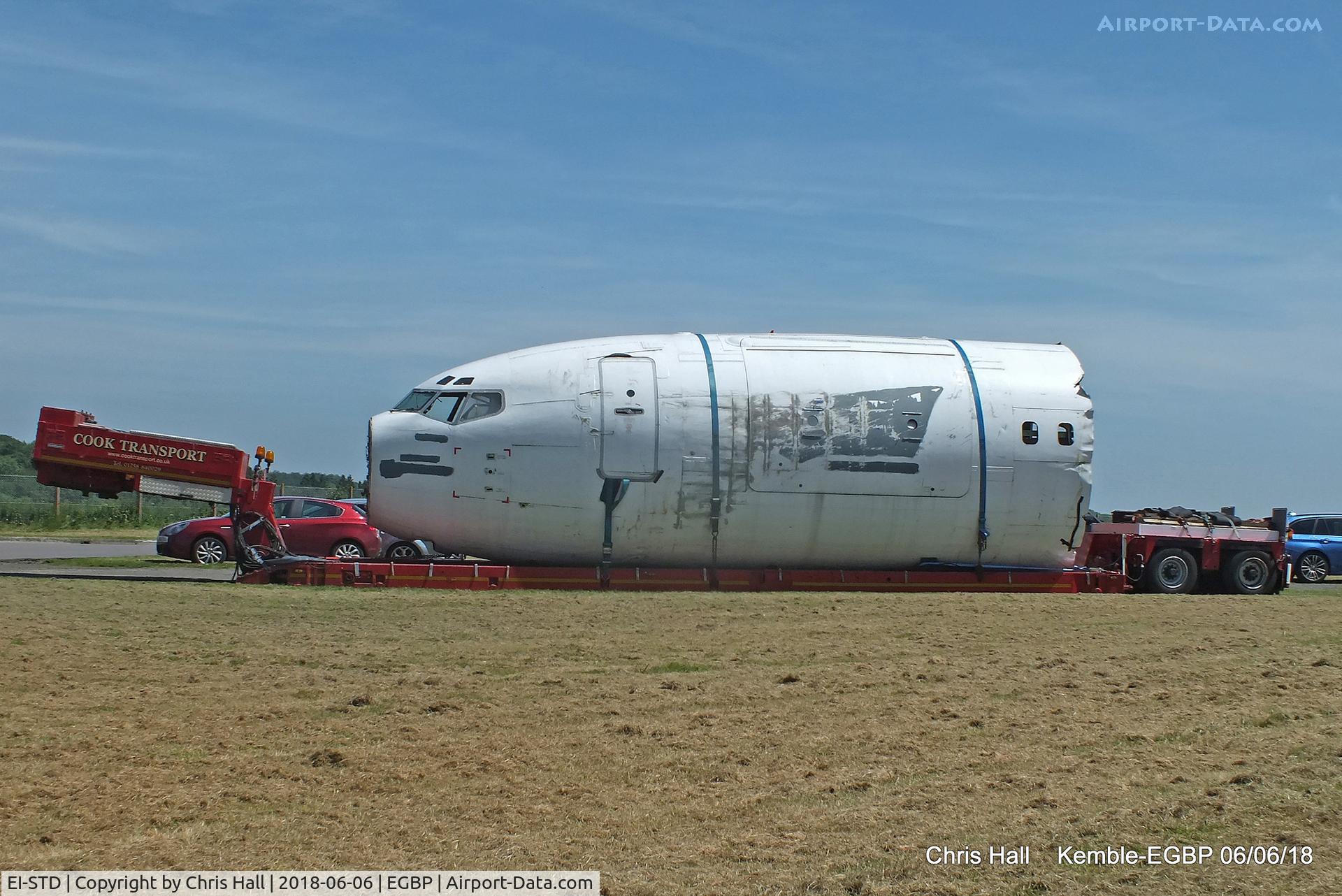
Flight / Schedule
Paris-Roissy-Charles de Gaulle – East Midlands
Aircraft
Boeing 737-400Registration
EI-STD
MSN
24433/1881
Year of Manufacture
1990
Operator
Air ContractorsDate
April 29, 2014 at 02:28 AM
Type
CRASHFlight Type
Cargo
Flight Phase
Landing (descent or approach)
Crash Site
Airport (less than 10 km from airport)
Crash Location
East Midlands Leicestershire
Region
Europe • United Kingdom
Coordinates
52.8281°, -1.3327°
Crash Cause
Technical failure
Narrative Report
On April 29, 2014 at 02:28 AM, Paris-Roissy-Charles de Gaulle – East Midlands experienced a crash involving Boeing 737-400, operated by Air Contractors, with the event recorded near East Midlands Leicestershire.
The flight was categorized as cargo and the reported phase was landing (descent or approach) at a airport (less than 10 km from airport) crash site.
2 people were known to be on board, 0 fatalities were recorded, 2 survivors were identified or estimated. This corresponds to an estimated fatality rate of 0.0%.
Crew on board: 2, crew fatalities: 0, passengers on board: 0, passenger fatalities: 0, other fatalities: 0.
The listed crash cause is technical failure. The aircraft was scheduled to operate three commercial air transport (cargo) sectors: from Athens to Bergamo, then to Paris Charles de Gaulle, and finally East Midlands. The aircraft’s flap load relief system was inoperative, which meant that the maximum flap position to be used in flight was 30, rather than 40º. This defect had been deferred in the aircraft’s technical log and it had no effect on the landing of the aircraft. Otherwise, the aircraft was fully serviceable. The co-pilot completed the pre-flight external inspection of the aircraft in good light, and found nothing amiss. The departure from Athens was uneventful, but a combination of factors affecting Bergamo (including poor weather, absence of precision approach aids, and work in progress affecting the available landing distance) led the crew to decide to route directly to Paris, where a normal landing was carried out. The aircraft departed Paris for East Midlands at 0040 hrs, loaded with 10 tonnes of freight, 8 tonnes of fuel (the minimum required was 5.6 tonnes), and with the co-pilot as Pilot Flying. Once established in the cruise, the flight crew obtained the latest ATIS information from East Midlands, which stated that Runway 27 was in use, although there was a slight tailwind, and Low Visibility Procedures (LVPs) were in force. They planned to exchange control at about FL100 in the descent, for the commander to carry out a Category III autoland. However, as they neared their destination, the weather improved, LVPs were cancelled, and the flight crew re-briefed for an autopilot approach, followed by a manual landing, to be carried out by the co-pilot. The landing was to be with Flap 30, Autobrake 2, and idle reverse thrust. The final ATIS transmission which the flight crew noted before landing stated that the wind was 130/05 kt, visibility was 3,000 metres in mist, and the cloud was broken at 600 ft aal. The commander of EI-STD established radio contact with the tower controller, and the aircraft was cleared to land; the surface wind was transmitted as 090/05 kt. The touchdown was unremarkable, and the autobrake functioned normally, while the co-pilot applied idle reverse thrust on the engines. As the aircraft’s speed reduced through approximately 60 kt, the co-pilot handed control to the commander, who then made a brake pedal application to disengage the autobrake system. However, the system remained engaged, so he made a second, more positive, brake application. The aircraft “shuddered” and rolled slightly left-wing-low as the lower part of the left main landing gear detached. The commander used the steering tiller to try to keep the aircraft tracking straight along the runway centreline, but it came to a halt slightly off the centreline, resting on its right main landing gear, the remains of the left main landing gear leg, and the left engine lower cowl. The co-pilot saw some smoke drift past the aircraft as it came to a halt. The co-pilot made a transmission to the tower controller, reporting that the aircraft was in difficulties, after which the co-pilot of another aircraft (which was taxiing from its parking position along the parallel taxiway) made a transmission referring to smoke from the 737’s landing gear. The commander of EI-STD had reached the conclusion that one of the main landing gear legs had failed, but as a result of the other pilot’s transmission, he was also concerned that the aircraft might be on fire. The commander immediately moved both engine start levers to the cut-off positions, shutting down the engines. Three RFFS vehicles had by now arrived at the adjacent taxiway intersection, and their presence there prompted the commander to consider that the aircraft was not on fire (he believed that if it were, the vehicles would have adopted positions closer by and begun to apply fire-fighting media). The RFFS vehicles then moved closer to the aircraft and fire-fighters placed a ladder against door L1, which the co-pilot had opened. Having spoken to fire-fighters while standing in the entrance vestibule, the commander returned to the flight deck and switched off the battery. The flight crew were assisted from the aircraft and fire-fighters applied foam around the landing gear and engine to make the area safe. The commander had taken the Notoc2 with him from the aircraft, and informed fire-fighters of the dangerous goods on board the aircraft.
Aircraft reference details include registration EI-STD, MSN 24433/1881, year of manufacture 1990.
Geospatial coordinates for this crash are approximately 52.8281°, -1.3327°.
Fatalities
Total
0
Crew
0
Passengers
0
Other
0
Crash Summary
The aircraft was scheduled to operate three commercial air transport (cargo) sectors: from Athens to Bergamo, then to Paris Charles de Gaulle, and finally East Midlands. The aircraft’s flap load relief system was inoperative, which meant that the maximum flap position to be used in flight was 30, rather than 40º. This defect had been deferred in the aircraft’s technical log and it had no effect on the landing of the aircraft. Otherwise, the aircraft was fully serviceable. The co-pilot completed the pre-flight external inspection of the aircraft in good light, and found nothing amiss. The departure from Athens was uneventful, but a combination of factors affecting Bergamo (including poor weather, absence of precision approach aids, and work in progress affecting the available landing distance) led the crew to decide to route directly to Paris, where a normal landing was carried out. The aircraft departed Paris for East Midlands at 0040 hrs, loaded with 10 tonnes of freight, 8 tonnes of fuel (the minimum required was 5.6 tonnes), and with the co-pilot as Pilot Flying. Once established in the cruise, the flight crew obtained the latest ATIS information from East Midlands, which stated that Runway 27 was in use, although there was a slight tailwind, and Low Visibility Procedures (LVPs) were in force. They planned to exchange control at about FL100 in the descent, for the commander to carry out a Category III autoland. However, as they neared their destination, the weather improved, LVPs were cancelled, and the flight crew re-briefed for an autopilot approach, followed by a manual landing, to be carried out by the co-pilot. The landing was to be with Flap 30, Autobrake 2, and idle reverse thrust. The final ATIS transmission which the flight crew noted before landing stated that the wind was 130/05 kt, visibility was 3,000 metres in mist, and the cloud was broken at 600 ft aal. The commander of EI-STD established radio contact with the tower controller, and the aircraft was cleared to land; the surface wind was transmitted as 090/05 kt. The touchdown was unremarkable, and the autobrake functioned normally, while the co-pilot applied idle reverse thrust on the engines. As the aircraft’s speed reduced through approximately 60 kt, the co-pilot handed control to the commander, who then made a brake pedal application to disengage the autobrake system. However, the system remained engaged, so he made a second, more positive, brake application. The aircraft “shuddered” and rolled slightly left-wing-low as the lower part of the left main landing gear detached. The commander used the steering tiller to try to keep the aircraft tracking straight along the runway centreline, but it came to a halt slightly off the centreline, resting on its right main landing gear, the remains of the left main landing gear leg, and the left engine lower cowl. The co-pilot saw some smoke drift past the aircraft as it came to a halt. The co-pilot made a transmission to the tower controller, reporting that the aircraft was in difficulties, after which the co-pilot of another aircraft (which was taxiing from its parking position along the parallel taxiway) made a transmission referring to smoke from the 737’s landing gear. The commander of EI-STD had reached the conclusion that one of the main landing gear legs had failed, but as a result of the other pilot’s transmission, he was also concerned that the aircraft might be on fire. The commander immediately moved both engine start levers to the cut-off positions, shutting down the engines. Three RFFS vehicles had by now arrived at the adjacent taxiway intersection, and their presence there prompted the commander to consider that the aircraft was not on fire (he believed that if it were, the vehicles would have adopted positions closer by and begun to apply fire-fighting media). The RFFS vehicles then moved closer to the aircraft and fire-fighters placed a ladder against door L1, which the co-pilot had opened. Having spoken to fire-fighters while standing in the entrance vestibule, the commander returned to the flight deck and switched off the battery. The flight crew were assisted from the aircraft and fire-fighters applied foam around the landing gear and engine to make the area safe. The commander had taken the Notoc2 with him from the aircraft, and informed fire-fighters of the dangerous goods on board the aircraft.
Cause: Technical failure
Occupants & Outcome
Crew On Board
2
Passengers On Board
0
Estimated Survivors
2
Fatality Rate
0.0%
Known people on board: 2
Operational Details
Schedule / Flight
Paris-Roissy-Charles de Gaulle – East Midlands
Operator
Air ContractorsFlight Type
Cargo
Flight Phase
Landing (descent or approach)
Crash Site
Airport (less than 10 km from airport)
Region / Country
Europe • United Kingdom
Aircraft Details
Similar Plane Crashes
Handley Page Aircraft Company Ltd
Handley Page V/1500
Assembled at Cricklewood Airfield in May 1918, the aircraft departed Cricklewood for its 13th test flight, carrying six crew members. Shortly after takeoff, while climbing to a height of about 700-800 feet, all four engines stopped. The pilot elected to return for an emergency landing when the aircraft stalled and crashed in a field located in front of 21 Garrick Avenue in Golders Green, bursting into flames. Colonel Ogilvie, who was seating in the tail gunner position at the back of the plane, survived, while all five other occupants were killed. Crew: Cpt Vernon Earl George Busby, pilot, † Mr. Bertram G. Cooper, † Mr. R. P. Cooper, † Mr. W. H. Hathaway, † Mr. J. W. Windebank, † Colonel Ogilvie.
Marine Aeroplane Depot
Fairey III
The pilot departed Isle of Grain on a delivery flight to Glasgow-Renfrew Airport. On approach to RAF Usworth (RAF Hylton), he elected to make a go-around when the aircraft lost height and crashed. The aircraft was destroyed and the pilot, Captain Arthur Leslie Simms, was killed.
Royal Air Force - RAF
De Havilland DH.6
The crew was completing a local training flight at RAF Seaton Carew when the aircraft entered a spin and crashed in a field, bursting into flames. Both occupants were killed. Crew: Cpt Charles David Danby, pilot, 1st Class E. A. Bannister, mechanic.
Royal Air Force - RAF
Handley Page H.P.12
The aircraft departed Castle Bromwich for a test flight, carrying five engineers and two crew members. En route, the twin engine aircraft suffered technical problems with a wing, lost height and crashed in a field located in Maxstoke. The aircraft was destroyed and all seven occupants were killed. Crew: Lt Robert Edward Macbeth, Lt Frederick James Bravery, 1st Air Mechanic James Benjamn May, 2nd Air Mechanic Albert J. Winrow, 2nd Air Mechanic H. Simmonds, 3rd Air Mechanic Charles William Offord, 3rd George Greenland.
Royal Air Force - RAF
Blackburn R.T.1 Kangaroo
On final approach in bad visibility, aircraft was too low. It struck the ground short of runway and crashed. Both occupants were injured. Crew was performing a training flight on behalf of the 246th Squadron.
Royal Air Force - RAF
De Havilland DH.9
The pilot tried to return to his base but due to low visibility by night, he lost his orientation. He elected to make an emergency landing in an open field but the aircraft hit a tree and crashed. The pilot was injured.