
Rapid City – Elk City
Flight / Schedule
Rapid City – Elk City
Aircraft
Cessna 525 CitationJet CJ1Registration
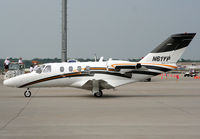
N61YP
MSN
525-0237
Year of Manufacture
1998
Operator
Brink ConstructorsDate
February 3, 2014 at 11:00 PM
Type
CRASHFlight Type
Executive/Corporate/Business
Flight Phase
Landing (descent or approach)
Crash Site
Airport (less than 10 km from airport)
Crash Location
Elk City Oklahoma
Region
North America • United States of America
Coordinates
35.4140°, -99.4139°
Crash Cause
Human factor
Narrative Report
On February 3, 2014 at 11:00 PM, Rapid City – Elk City experienced a crash involving Cessna 525 CitationJet CJ1, operated by Brink Constructors, with the event recorded near Elk City Oklahoma.
The flight was categorized as executive/corporate/business and the reported phase was landing (descent or approach) at a airport (less than 10 km from airport) crash site.
7 people were known to be on board, 0 fatalities were recorded, 7 survivors were identified or estimated. This corresponds to an estimated fatality rate of 0.0%.
Crew on board: 1, crew fatalities: 0, passengers on board: 6, passenger fatalities: 0, other fatalities: 0.
The listed crash cause is human factor. The airline transport pilot was conducting a business flight with six passengers on board. Radar data showed that, after crossing the final approach fix for an instrument approach at the destination airport, the airplane descended below the minimum descent altitude (MDA) of 2,480 ft mean sea level (msl); dark night, instrument meteorological conditions existed at that time. Subsequently, when the airplane was about 2 miles from the airport and about 2,070 ft msl, the airplane impacted a utility pole, which was 10 ft above ground level (agl). After impacting the pole, the pilot executed a missed approach, and about 40 minutes later, he landed the airplane without further incident at another airport. On-scene examination showed that the impact had scattered debris from the separated utility pole for about 200 ft into a snow-covered field. Examination of the airplane revealed that the impact resulted in substantial damage to the nose structure, lower and upper fuselage, and horizontal stabilizer. Further examinations of the airplane, including its static system, both altimeters, both vertical speed indicators, and the radar altimeter system revealed no evidence of preaccident mechanical malfunctions or failures that would have precluded normal operation. The pilot reported that he thought he had leveled the airplane at an altitude above the MDA and that at no time during the descent and approach did the airplane's radar altimeter sound an alert indicating that the airplane was below 400 ft agl radar altitude. He also reported that he never saw the terrain, any obstructions, nor the runway lights or airport environment. Despite the pilot's statement, given the radar data and the impact evidence, it is apparent that he descended the airplane below the MDA, which resulted in the subsequent impact with the utility pole. It could not be determined why the radar altimeter did not alert the pilot that the airplane was only 10 ft above the ground. The pilot's second-class medical certificate, which had been issued more than 20 months before the accident, had expired. The medical certificate limitation section in the expired certificate stated, "Not valid for night flying or by color signal control." There is no evidence that these restrictions contributed to the accident.
Aircraft reference details include registration N61YP, MSN 525-0237, year of manufacture 1998.
Geospatial coordinates for this crash are approximately 35.4140°, -99.4139°.
Fatalities
Total
0
Crew
0
Passengers
0
Other
0
Crash Summary
The airline transport pilot was conducting a business flight with six passengers on board. Radar data showed that, after crossing the final approach fix for an instrument approach at the destination airport, the airplane descended below the minimum descent altitude (MDA) of 2,480 ft mean sea level (msl); dark night, instrument meteorological conditions existed at that time. Subsequently, when the airplane was about 2 miles from the airport and about 2,070 ft msl, the airplane impacted a utility pole, which was 10 ft above ground level (agl). After impacting the pole, the pilot executed a missed approach, and about 40 minutes later, he landed the airplane without further incident at another airport. On-scene examination showed that the impact had scattered debris from the separated utility pole for about 200 ft into a snow-covered field. Examination of the airplane revealed that the impact resulted in substantial damage to the nose structure, lower and upper fuselage, and horizontal stabilizer. Further examinations of the airplane, including its static system, both altimeters, both vertical speed indicators, and the radar altimeter system revealed no evidence of preaccident mechanical malfunctions or failures that would have precluded normal operation. The pilot reported that he thought he had leveled the airplane at an altitude above the MDA and that at no time during the descent and approach did the airplane's radar altimeter sound an alert indicating that the airplane was below 400 ft agl radar altitude. He also reported that he never saw the terrain, any obstructions, nor the runway lights or airport environment. Despite the pilot's statement, given the radar data and the impact evidence, it is apparent that he descended the airplane below the MDA, which resulted in the subsequent impact with the utility pole. It could not be determined why the radar altimeter did not alert the pilot that the airplane was only 10 ft above the ground. The pilot's second-class medical certificate, which had been issued more than 20 months before the accident, had expired. The medical certificate limitation section in the expired certificate stated, "Not valid for night flying or by color signal control." There is no evidence that these restrictions contributed to the accident.
Cause: Human factor
Occupants & Outcome
Crew On Board
1
Passengers On Board
6
Estimated Survivors
7
Fatality Rate
0.0%
Known people on board: 7
Operational Details
Schedule / Flight
Rapid City – Elk City
Operator
Brink ConstructorsFlight Type
Executive/Corporate/Business
Flight Phase
Landing (descent or approach)
Crash Site
Airport (less than 10 km from airport)
Region / Country
North America • United States of America
Aircraft Details
Similar Plane Crashes
United States Signal Corps - USSC
De Havilland DH.4
The single engine airplane departed Dayton-McCook Field for a local test flight. Shortly after takeoff, the aircraft stalled and crashed, killing both occupants. Crew: Maj Oscar Brindley, Lt Col Henry Damm.
United States Signal Corps - USSC
De Havilland DH.4
Lt. Frank Stuart Patterson, son and nephew of the co-founders of National Cash Register, is killed in the crash of his DH.4M, AS-32098, at Wilbur Wright Field during a flight test of a new mechanism for synchronizing machine gun and propeller, when a tie rod breaks during a dive from 15,000 feet (4,600 m), causing the wings to separate from the aircraft. Wishing to recognize the contributions of the Patterson family (owners of NCR) the area of Wright Field east of Huffman Dam (including Wilbur Wright Field, Fairfield Air Depot, and the Huffman Prairie) is renamed Patterson Field on 6 July 1931, in honor of Lt. Patterson.
United States Signal Corps - USSC
De Havilland DH.4
The aircraft crashed in unknown circumstances.
United States Signal Corps - USSC
De Havilland DH.4
The crew was completing a training mission. At an altitude of about 4,000 feet, the aircraft entered a spin and crashed in an open field near Everman-Barron Field Airport. A crew was killed and the second occupants was injured. The aircraft was destroyed.
U.S. Air Mail Service
De Havilland DH.4
Crashed following an engine failure. Pilot fate unknown.
United States Signal Corps - USSC
De Havilland DH.4
The accident occurred in unknown circumstances.