
Namur - Namur
Flight / Schedule
Namur - Namur
Aircraft
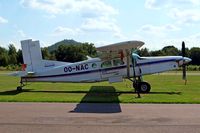
Pilatus PC-6 (Porter & Turbo Porter)Registration
OO-NAC
MSN
710
Year of Manufacture
1969
Operator
Paraclub NamurDate
October 19, 2013 at 03:35 PM
Type
CRASHFlight Type
Skydiving / Paratroopers
Flight Phase
Flight
Crash Site
Airport (less than 10 km from airport)
Crash Location
Namur Namur
Region
Europe • Belgium
Coordinates
50.2602°, 4.9107°
Crash Cause
Human factor
Narrative Report
On October 19, 2013 at 03:35 PM, Namur - Namur experienced a crash involving Pilatus PC-6 (Porter & Turbo Porter), operated by Paraclub Namur, with the event recorded near Namur Namur.
The flight was categorized as skydiving / paratroopers and the reported phase was flight at a airport (less than 10 km from airport) crash site.
11 people were known to be on board, 11 fatalities were recorded, 0 survivors were identified or estimated. This corresponds to an estimated fatality rate of 100.0%.
Crew on board: 1, crew fatalities: 1, passengers on board: 10, passenger fatalities: 10, other fatalities: 0.
The listed crash cause is human factor. On 19 October 2013, the Pilatus Porter was being used for parachute drops. The day started normally with the first take-off at 07:21. Each flight transported 9 or 10 passengers. Except for the first two, all the flights of that day were conducted by the same pilot. The aircraft’s last landing in EBNM was at 13:20 to board the next group of 10 parachutists. After the take-off, the aircraft appeared again on the radar at 13:28 at an altitude of 1200 ft. At 13:28:52, the EBCI Air Traffic Control Officer (ATCO) instructed the aircraft to remain at 2000 ft AMSL to allow for crossing traffic, a B737 landing at EBCI, and to proceed further to the east. After the crossing, the Pilatus was authorized to climb to 5000 ft. At 13:33:32, when the aeroplane was flying at 4400 ft, the pilot was authorized to turn back to the drop zone and turned towards its target, the EBNM airfield. Shortly after, a witness observed the aeroplane making a wide turn to the left. This witness monitored the aeroplane for about 40 seconds. He indicated the engine was making an abnormal noise which he compared with the explosions made by the exhaust of a rally car when decelerating. Finally, the witness heard a loud explosion ending by the dive of the aeroplane. He believed that the sound of an explosion was caused by the “engine turbine disintegration”. Another witness driving on the E42 highway saw the aeroplane performing what he perceived as being some aerobatic manoeuvers. The aeroplane was diving and was spinning. A moment later, he saw the wing break-up, including the separation and falling of smaller parts. A sailplane pilot was standing in his garden not far from the crash site. He first heard the sound of the Pilatus which he described as being typical, smooth and constant. He looked at the aeroplane and noticed it was flying at a lower altitude than usual. He stopped observing after a few seconds. 30 to 40 seconds later, he heard an abnormal noise change which he thought was a propeller pitch change or an engine power change. He looked for the aeroplane in the sky and saw the aeroplane diving with an angle of more than 45° immediately followed by a sharp pull-out angle of over 70°, followed by the upwards breaking of a wing. The aeroplane went down “as in a stall”. The witness still heard “the sound of propeller angle moving” after the wing separation. Another witness standing approximately at an horizontal distance of 600 m from the aeroplane described having heard a sound change. He looked at the aeroplane and saw the aeroplane flying horizontally, making several significant left and right roll movements of the wings before it disappearing from his view. The aeroplane crashed on a field in the territory of Gelbressée, killing all occupants. The aeroplane caught fire shortly after the impact. A big part of the left wing, elements thereof and the right sliding door of the cabin were found at 2 km from the main wreckage. Of the aircraft’s occupants, 4 parachutists were ejected from the aircraft just prior to impact.
Aircraft reference details include registration OO-NAC, MSN 710, year of manufacture 1969.
Geospatial coordinates for this crash are approximately 50.2602°, 4.9107°.
Fatalities
Total
11
Crew
1
Passengers
10
Other
0
Crash Summary
On 19 October 2013, the Pilatus Porter was being used for parachute drops. The day started normally with the first take-off at 07:21. Each flight transported 9 or 10 passengers. Except for the first two, all the flights of that day were conducted by the same pilot. The aircraft’s last landing in EBNM was at 13:20 to board the next group of 10 parachutists. After the take-off, the aircraft appeared again on the radar at 13:28 at an altitude of 1200 ft. At 13:28:52, the EBCI Air Traffic Control Officer (ATCO) instructed the aircraft to remain at 2000 ft AMSL to allow for crossing traffic, a B737 landing at EBCI, and to proceed further to the east. After the crossing, the Pilatus was authorized to climb to 5000 ft. At 13:33:32, when the aeroplane was flying at 4400 ft, the pilot was authorized to turn back to the drop zone and turned towards its target, the EBNM airfield. Shortly after, a witness observed the aeroplane making a wide turn to the left. This witness monitored the aeroplane for about 40 seconds. He indicated the engine was making an abnormal noise which he compared with the explosions made by the exhaust of a rally car when decelerating. Finally, the witness heard a loud explosion ending by the dive of the aeroplane. He believed that the sound of an explosion was caused by the “engine turbine disintegration”. Another witness driving on the E42 highway saw the aeroplane performing what he perceived as being some aerobatic manoeuvers. The aeroplane was diving and was spinning. A moment later, he saw the wing break-up, including the separation and falling of smaller parts. A sailplane pilot was standing in his garden not far from the crash site. He first heard the sound of the Pilatus which he described as being typical, smooth and constant. He looked at the aeroplane and noticed it was flying at a lower altitude than usual. He stopped observing after a few seconds. 30 to 40 seconds later, he heard an abnormal noise change which he thought was a propeller pitch change or an engine power change. He looked for the aeroplane in the sky and saw the aeroplane diving with an angle of more than 45° immediately followed by a sharp pull-out angle of over 70°, followed by the upwards breaking of a wing. The aeroplane went down “as in a stall”. The witness still heard “the sound of propeller angle moving” after the wing separation. Another witness standing approximately at an horizontal distance of 600 m from the aeroplane described having heard a sound change. He looked at the aeroplane and saw the aeroplane flying horizontally, making several significant left and right roll movements of the wings before it disappearing from his view. The aeroplane crashed on a field in the territory of Gelbressée, killing all occupants. The aeroplane caught fire shortly after the impact. A big part of the left wing, elements thereof and the right sliding door of the cabin were found at 2 km from the main wreckage. Of the aircraft’s occupants, 4 parachutists were ejected from the aircraft just prior to impact.
Cause: Human factor
Occupants & Outcome
Crew On Board
1
Passengers On Board
10
Estimated Survivors
0
Fatality Rate
100.0%
Known people on board: 11
Operational Details
Schedule / Flight
Namur - Namur
Operator
Paraclub NamurFlight Type
Skydiving / Paratroopers
Flight Phase
Flight
Crash Site
Airport (less than 10 km from airport)
Region / Country
Europe • Belgium
Aircraft Details
Similar Plane Crashes
Belgian Air Force - Force Aérienne Belge - Belgische Luchtmacht
Breguet 14
The pilot was completing a local training flight. Upon landing at Asch-Zutendaal AFB located northeast of Genk, control was lost and the aircraft crashed, bursting into flames. The pilot Cpl Léon Georges Delacenserie was killed.
Belgian Air Force - Force Aérienne Belge - Belgische Luchtmacht
De Havilland DH.9
The pilot Oscar Dumortier was performing a training mission. On approach to Goetsenhoven AFB located 2 km south of Tienen, the aircraft crashed in an open field located in Outgaarden. The aircraft was destroyed and the pilot killed.
Belgian Air Force - Force Aérienne Belge - Belgische Luchtmacht
De Havilland DH.9
Crashed in Hankendover, near Goetsenhoven Airport, while performing a local training flight. Both crew members were killed.
Belgian Air Force - Force Aérienne Belge - Belgische Luchtmacht
Ansaldo A.300
The pilot Joseph Bauwens was performing a training flight at Goetsenhoven Airbase. The aircraft crashed in unknown circumstances, killing the pilot, sole on board.
Imperial Airways
De Havilland DH.34
Crashed on takeoff for unknown reasons. All occupants escaped unhurt while the aircraft was destroyed.
Ateliers de Constructions Aéronautiques de Zeebrugge
ACAZ T.1
The crew was performing the second flight on this first prototype. Following an uneventful flight from Zeebrugge, while approaching Brussels in low visibility due to poor weather conditions, the aircraft hit a tree and crashed. The pilot Étienne Hage was unhurt while the mechanic was slightly injured. The aircraft was damaged beyond repair and the project was abandoned.