
Nashville – New York
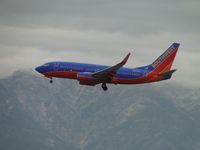
Flight / Schedule
Nashville – New York
Aircraft
Boeing 737-700Registration
N753SW
MSN
29848/400
Year of Manufacture
1999
Operator
Southwest AirlinesDate
July 22, 2013 at 05:44 PM
Type
CRASHFlight Type
Scheduled Revenue Flight
Flight Phase
Landing (descent or approach)
Crash Site
Airport (less than 10 km from airport)
Crash Location
New York-LaGuardia New York
Region
North America • United States of America
Crash Cause
Human factor
Narrative Report
On July 22, 2013 at 05:44 PM, Nashville – New York experienced a crash involving Boeing 737-700, operated by Southwest Airlines, with the event recorded near New York-LaGuardia New York.
The flight was categorized as scheduled revenue flight and the reported phase was landing (descent or approach) at a airport (less than 10 km from airport) crash site.
150 people were known to be on board, 0 fatalities were recorded, 150 survivors were identified or estimated. This corresponds to an estimated fatality rate of 0.0%.
Crew on board: 5, crew fatalities: 0, passengers on board: 145, passenger fatalities: 0, other fatalities: 0.
The listed crash cause is human factor. As the airplane was on final approach, the captain, who was the pilot monitoring (PM), realized that the flaps were not configured as had been briefed, with a setting of 40 degrees for the landing. Data from the flight data recorder (FDR) indicate that the captain set the flaps to 40 degrees as the airplane was descending through about 500 ft altitude, which was about 51 seconds from touchdown. When the airplane was between 100 to 200 ft altitude, it was above the glideslope. Concerned that the airplane was too high, the captain exclaimed repeatedly "get down" to the first officer about 9 seconds from touchdown. About 3 seconds from touchdown when the airplane was about 27 ft altitude, the captain announced "I got it," indicating that she was taking control of the airplane, and the first officer replied, "ok, you got it." According to FDR data, after the captain took control, the control column was relaxed to a neutral position and the throttles were not advanced until about 1 second before touchdown. The airplane touched down at a descent rate of 960 ft per minute and a nose-down pitch attitude of -3.1 degrees, resulting in the nose gear contacting the runway first and a hard landing. The airplane came to a stop on the right side of the runway centerline about 2,500 ft from its initial touchdown. The operator's stabilized approach criteria require an immediate go-around if the airplane flaps or landing gear were not in the final landing configuration by 1,000 ft above the touchdown zone; in this case, the flaps were not correctly configured until the airplane was passing through 500 ft. Further, the airplane's deviation about the glideslope at 100 to 200 ft would have been another opportunity for the captain, as the PM at this point during the flight, to call for a go-around, as indicated in the Southwest Airlines Flight Operations Manual (FOM). Accident data suggest that pilots often fail to perform a go-around or missed approach when stabilized approach criteria are not met. A review of NTSB investigated accidents by human factors researchers found that about 75% of accidents were the result of plan continuation errors in which the crew continued an approach despite cues that suggested it should not be continued. Additionally, line operations safety audit data presented at the International Air Safety Summit in 2011 suggested that 97% of unstabilized approaches were continued to landing even though doing so was in violation of companies' standard operating procedures (SOPs). The Southwest FOM also states that the captain can take control of the airplane for safety reasons; however, the captain's decision to take control of the airplane at 27 ft above the ground did not allow her adequate time to correct the airplane's deteriorating energy state and prevent the nose landing gear from striking the runway. The late transfer of control resulted in neither pilot being able to effectively monitor the airplane's altitude and attitude. The first officer reported that, after the captain took control of the airplane, he scanned the altimeter and airspeed to gain situational awareness but that he became distracted by the runway "rushing" up to them and "there was no time to say anything." The captain should have called for a go-around when it was apparent that the approach was unstabilized well before the point that she attempted to salvage the landing by taking control of the airplane at a very low altitude. In addition, the captain did not follow SOPs at several points during the flight. As PM, she should have made the standard callout per the Southwest FOM when the airplane was above glideslope, stating "glideslope" and adding a descriptive word or words to the callout (for example, "one dot high"). Rather than make this callout, however, the captain repeatedly said "get down" to the first officer before stating "I got it." The way she handled the transfer of airplane control was also contrary to the FOM, which indicates that the PM should say "I have the aircraft." The flight crew's performance was indicative of poor crew resource management.
Aircraft reference details include registration N753SW, MSN 29848/400, year of manufacture 1999.
Fatalities
Total
0
Crew
0
Passengers
0
Other
0
Crash Summary
As the airplane was on final approach, the captain, who was the pilot monitoring (PM), realized that the flaps were not configured as had been briefed, with a setting of 40 degrees for the landing. Data from the flight data recorder (FDR) indicate that the captain set the flaps to 40 degrees as the airplane was descending through about 500 ft altitude, which was about 51 seconds from touchdown. When the airplane was between 100 to 200 ft altitude, it was above the glideslope. Concerned that the airplane was too high, the captain exclaimed repeatedly "get down" to the first officer about 9 seconds from touchdown. About 3 seconds from touchdown when the airplane was about 27 ft altitude, the captain announced "I got it," indicating that she was taking control of the airplane, and the first officer replied, "ok, you got it." According to FDR data, after the captain took control, the control column was relaxed to a neutral position and the throttles were not advanced until about 1 second before touchdown. The airplane touched down at a descent rate of 960 ft per minute and a nose-down pitch attitude of -3.1 degrees, resulting in the nose gear contacting the runway first and a hard landing. The airplane came to a stop on the right side of the runway centerline about 2,500 ft from its initial touchdown. The operator's stabilized approach criteria require an immediate go-around if the airplane flaps or landing gear were not in the final landing configuration by 1,000 ft above the touchdown zone; in this case, the flaps were not correctly configured until the airplane was passing through 500 ft. Further, the airplane's deviation about the glideslope at 100 to 200 ft would have been another opportunity for the captain, as the PM at this point during the flight, to call for a go-around, as indicated in the Southwest Airlines Flight Operations Manual (FOM). Accident data suggest that pilots often fail to perform a go-around or missed approach when stabilized approach criteria are not met. A review of NTSB investigated accidents by human factors researchers found that about 75% of accidents were the result of plan continuation errors in which the crew continued an approach despite cues that suggested it should not be continued. Additionally, line operations safety audit data presented at the International Air Safety Summit in 2011 suggested that 97% of unstabilized approaches were continued to landing even though doing so was in violation of companies' standard operating procedures (SOPs). The Southwest FOM also states that the captain can take control of the airplane for safety reasons; however, the captain's decision to take control of the airplane at 27 ft above the ground did not allow her adequate time to correct the airplane's deteriorating energy state and prevent the nose landing gear from striking the runway. The late transfer of control resulted in neither pilot being able to effectively monitor the airplane's altitude and attitude. The first officer reported that, after the captain took control of the airplane, he scanned the altimeter and airspeed to gain situational awareness but that he became distracted by the runway "rushing" up to them and "there was no time to say anything." The captain should have called for a go-around when it was apparent that the approach was unstabilized well before the point that she attempted to salvage the landing by taking control of the airplane at a very low altitude. In addition, the captain did not follow SOPs at several points during the flight. As PM, she should have made the standard callout per the Southwest FOM when the airplane was above glideslope, stating "glideslope" and adding a descriptive word or words to the callout (for example, "one dot high"). Rather than make this callout, however, the captain repeatedly said "get down" to the first officer before stating "I got it." The way she handled the transfer of airplane control was also contrary to the FOM, which indicates that the PM should say "I have the aircraft." The flight crew's performance was indicative of poor crew resource management.
Cause: Human factor
Occupants & Outcome
Crew On Board
5
Passengers On Board
145
Estimated Survivors
150
Fatality Rate
0.0%
Known people on board: 150
Operational Details
Schedule / Flight
Nashville – New York
Operator
Southwest AirlinesFlight Type
Scheduled Revenue Flight
Flight Phase
Landing (descent or approach)
Crash Site
Airport (less than 10 km from airport)
Region / Country
North America • United States of America
Aircraft Details
Similar Plane Crashes
United States Signal Corps - USSC
De Havilland DH.4
The single engine airplane departed Dayton-McCook Field for a local test flight. Shortly after takeoff, the aircraft stalled and crashed, killing both occupants. Crew: Maj Oscar Brindley, Lt Col Henry Damm.
United States Signal Corps - USSC
De Havilland DH.4
Lt. Frank Stuart Patterson, son and nephew of the co-founders of National Cash Register, is killed in the crash of his DH.4M, AS-32098, at Wilbur Wright Field during a flight test of a new mechanism for synchronizing machine gun and propeller, when a tie rod breaks during a dive from 15,000 feet (4,600 m), causing the wings to separate from the aircraft. Wishing to recognize the contributions of the Patterson family (owners of NCR) the area of Wright Field east of Huffman Dam (including Wilbur Wright Field, Fairfield Air Depot, and the Huffman Prairie) is renamed Patterson Field on 6 July 1931, in honor of Lt. Patterson.
United States Signal Corps - USSC
De Havilland DH.4
The aircraft crashed in unknown circumstances.
United States Signal Corps - USSC
De Havilland DH.4
The crew was completing a training mission. At an altitude of about 4,000 feet, the aircraft entered a spin and crashed in an open field near Everman-Barron Field Airport. A crew was killed and the second occupants was injured. The aircraft was destroyed.
U.S. Air Mail Service
De Havilland DH.4
Crashed following an engine failure. Pilot fate unknown.
United States Signal Corps - USSC
De Havilland DH.4
The accident occurred in unknown circumstances.