
Copake - Copake
Flight / Schedule
Copake - Copake
Aircraft
Grumman G-44 WidgeonRegistration
N8AS
MSN
1315
Year of Manufacture
1943
Operator
Michael B. BraunsteinDate
May 2, 2013 at 04:29 PM
Type
CRASHFlight Type
Private
Flight Phase
Flight
Crash Site
Lake, Sea, Ocean, River
Crash Location
Catskill New York
Region
North America • United States of America
Coordinates
42.2173°, -73.8646°
Crash Cause
Human factor
Narrative Report
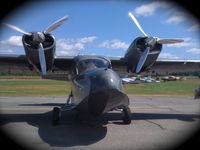
On May 2, 2013 at 04:29 PM, Copake - Copake experienced a crash involving Grumman G-44 Widgeon, operated by Michael B. Braunstein, with the event recorded near Catskill New York.
The flight was categorized as private and the reported phase was flight at a lake, sea, ocean, river crash site.
1 people were known to be on board, 1 fatalities were recorded, 0 survivors were identified or estimated. This corresponds to an estimated fatality rate of 100.0%.
Crew on board: 1, crew fatalities: 1, passengers on board: 0, passenger fatalities: 0, other fatalities: 0.
The listed crash cause is human factor. Michael B. Braunstein, aged 72, was the owner of this vintage aircraft built in 1943 and was performing a local flight within the State of New York. Aircraft was destroyed when it impacted the waters of the Hudson River, near Catskill, New York. The certificated airline transport pilot was fatally injured. Visual meteorological conditions prevailed, and no flight plan had been filed for the local personal flight conducted under Title 14 Code of Federal Regulations Part 91, which departed from B Flat Farm Airport (3NK8), Copake, New York about 1600. Approximately 25 witnesses were interviewed. Witnesses reported observing the twin-engine amphibious airplane flying southbound low above a river and hearing the engine running. The airplane then made a 180-degree left turn, which was consistent with the pilot flying a tight traffic pattern before attempting a water landing. The airplane then descended, leveled off above the water, and suddenly banked left. The airplane’s nose and left pontoon then struck the water, and the airplane nosed over, caught fire, and sank. Postrecovery examination of the wreckage revealed that the landing gear was in the “up” position and that the flaps were extended, which indicates that the airplane had been configured for a water landing. No evidence of any preimpact failures or malfunctions of the airplane or engines was found that would have precluded normal operation. At the time of the accident, a light breeze was blowing, the river was at slack tide, and the water conditions were calm, all of which were conducive to glassy water conditions. It is likely that the glassy water conditions adversely affected the pilot’s depth perception and led to his inability to correctly judge the airplane’s height above the water. He subsequently flared the airplane too high, which resulted in the airplane exceeding its critical angle-of-attack, entering an aerodynamic stall, and impacting the water in a nose-low attitude.
Aircraft reference details include registration N8AS, MSN 1315, year of manufacture 1943.
Geospatial coordinates for this crash are approximately 42.2173°, -73.8646°.
Fatalities
Total
1
Crew
1
Passengers
0
Other
0
Crash Summary
Michael B. Braunstein, aged 72, was the owner of this vintage aircraft built in 1943 and was performing a local flight within the State of New York. Aircraft was destroyed when it impacted the waters of the Hudson River, near Catskill, New York. The certificated airline transport pilot was fatally injured. Visual meteorological conditions prevailed, and no flight plan had been filed for the local personal flight conducted under Title 14 Code of Federal Regulations Part 91, which departed from B Flat Farm Airport (3NK8), Copake, New York about 1600. Approximately 25 witnesses were interviewed. Witnesses reported observing the twin-engine amphibious airplane flying southbound low above a river and hearing the engine running. The airplane then made a 180-degree left turn, which was consistent with the pilot flying a tight traffic pattern before attempting a water landing. The airplane then descended, leveled off above the water, and suddenly banked left. The airplane’s nose and left pontoon then struck the water, and the airplane nosed over, caught fire, and sank. Postrecovery examination of the wreckage revealed that the landing gear was in the “up” position and that the flaps were extended, which indicates that the airplane had been configured for a water landing. No evidence of any preimpact failures or malfunctions of the airplane or engines was found that would have precluded normal operation. At the time of the accident, a light breeze was blowing, the river was at slack tide, and the water conditions were calm, all of which were conducive to glassy water conditions. It is likely that the glassy water conditions adversely affected the pilot’s depth perception and led to his inability to correctly judge the airplane’s height above the water. He subsequently flared the airplane too high, which resulted in the airplane exceeding its critical angle-of-attack, entering an aerodynamic stall, and impacting the water in a nose-low attitude.
Cause: Human factor
Occupants & Outcome
Crew On Board
1
Passengers On Board
0
Estimated Survivors
0
Fatality Rate
100.0%
Known people on board: 1
Operational Details
Schedule / Flight
Copake - Copake
Operator
Michael B. BraunsteinFlight Type
Private
Flight Phase
Flight
Crash Site
Lake, Sea, Ocean, River
Region / Country
North America • United States of America
Aircraft Details
Similar Plane Crashes
United States Signal Corps - USSC
De Havilland DH.4
The single engine airplane departed Dayton-McCook Field for a local test flight. Shortly after takeoff, the aircraft stalled and crashed, killing both occupants. Crew: Maj Oscar Brindley, Lt Col Henry Damm.
United States Signal Corps - USSC
De Havilland DH.4
Lt. Frank Stuart Patterson, son and nephew of the co-founders of National Cash Register, is killed in the crash of his DH.4M, AS-32098, at Wilbur Wright Field during a flight test of a new mechanism for synchronizing machine gun and propeller, when a tie rod breaks during a dive from 15,000 feet (4,600 m), causing the wings to separate from the aircraft. Wishing to recognize the contributions of the Patterson family (owners of NCR) the area of Wright Field east of Huffman Dam (including Wilbur Wright Field, Fairfield Air Depot, and the Huffman Prairie) is renamed Patterson Field on 6 July 1931, in honor of Lt. Patterson.
United States Signal Corps - USSC
De Havilland DH.4
The aircraft crashed in unknown circumstances.
United States Signal Corps - USSC
De Havilland DH.4
The crew was completing a training mission. At an altitude of about 4,000 feet, the aircraft entered a spin and crashed in an open field near Everman-Barron Field Airport. A crew was killed and the second occupants was injured. The aircraft was destroyed.
U.S. Air Mail Service
De Havilland DH.4
Crashed following an engine failure. Pilot fate unknown.
United States Signal Corps - USSC
De Havilland DH.4
The accident occurred in unknown circumstances.