
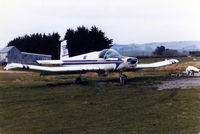
ZK-EMX
Flight / Schedule
ZK-EMX
Aircraft
Fletcher FU-24Registration
ZK-EMX
MSN
278
Year of Manufacture
1981
Operator
Super AirDate
December 8, 2012 at 01:15 PM
Type
CRASHFlight Type
Spraying (Agricultural)
Flight Phase
Flight
Crash Site
Plain, Valley
Crash Location
Rotorua Bay of Plenty Regional Council
Region
Oceania • New Zealand
Crash Cause
Human factor
Narrative Report
On December 8, 2012 at 01:15 PM, ZK-EMX experienced a crash involving Fletcher FU-24, operated by Super Air, with the event recorded near Rotorua Bay of Plenty Regional Council.
The flight was categorized as spraying (agricultural) and the reported phase was flight at a plain, valley crash site.
1 people were known to be on board, 1 fatalities were recorded, 0 survivors were identified or estimated. This corresponds to an estimated fatality rate of 100.0%.
Crew on board: 1, crew fatalities: 1, passengers on board: 0, passenger fatalities: 0, other fatalities: 0.
The listed crash cause is human factor. The pilot, who was undertaking training toward a Grade 2 Agricultural Pilot Rating, began work at approximately 0625 hours on the day of the accident. The pilot and his instructor, who was in another topdressing aircraft, flew to a block of land to the south east of Rotorua where the pilot completed 15 sowing runs, while his instructor worked in the local vicinity in the second aircraft. The pilot and instructor completed the work on this block, had a break and then transited to the Waikite Valley, arriving at approximately 0945 hours. At 1045 hours, after refuelling his aircraft, the pilot commenced sowing a ‘special mix’ fertiliser, in an alternating pattern between the instructor and pilot, with two aircraft operating from the airstrip. The alternating pattern allowed the instructor to observe and supervise the pilot during the take off and landing phases, while allowing the operation to proceed efficiently. The pilot and instructor stopped for lunch after an hour of flying, refuelled once more and then continued with their work. The amount of fertiliser that was loaded into the pilot’s aircraft was progressively increased as the work proceeded. The initial load of product was 900 kg, gradually increasing by 50 kg increments, when the instructor was satisfied that the pilot’s performance allowed this increase. The last five loads carried prior to the accident were each 1100 kg. Nothing untoward was noticed during the sowing runs, apart from the pilot aborting one landing attempt, due to the wake turbulence from the instructor’s aircraft during take off. At the time of the accident the pilot was performing ‘clearing runs’, sowing on remaining areas of land not already covered by previous sowing runs. Immediately prior to the accident, the pilot called the instructor on the radio to enquire of his location. The instructor responded with “directly behind you on the other side of the woolshed”. A few seconds later, as the instructor approached to land at the airstrip, he observed the pilot’s aircraft flying in a westerly direction at approximately 400 ft AGL. He then saw the pilot’s aircraft make a slight turn to the left. Describing what he had seen as: “he started to climb and turn slightly to the left, then the plane was in a left hand spin”. The instructor thought at the time that the aircraft spun for one and a half rotations to the left, prior to being obscured by the ridge adjacent to the airstrip. The accident occurred in daylight, at approximately 1315 hours, at Waikite Valley, Rotorua, at an elevation of 1460 ft. Latitude S 38° 18.5', longitude E 176° 17.42'.
Aircraft reference details include registration ZK-EMX, MSN 278, year of manufacture 1981.
Fatalities
Total
1
Crew
1
Passengers
0
Other
0
Crash Summary
The pilot, who was undertaking training toward a Grade 2 Agricultural Pilot Rating, began work at approximately 0625 hours on the day of the accident. The pilot and his instructor, who was in another topdressing aircraft, flew to a block of land to the south east of Rotorua where the pilot completed 15 sowing runs, while his instructor worked in the local vicinity in the second aircraft. The pilot and instructor completed the work on this block, had a break and then transited to the Waikite Valley, arriving at approximately 0945 hours. At 1045 hours, after refuelling his aircraft, the pilot commenced sowing a ‘special mix’ fertiliser, in an alternating pattern between the instructor and pilot, with two aircraft operating from the airstrip. The alternating pattern allowed the instructor to observe and supervise the pilot during the take off and landing phases, while allowing the operation to proceed efficiently. The pilot and instructor stopped for lunch after an hour of flying, refuelled once more and then continued with their work. The amount of fertiliser that was loaded into the pilot’s aircraft was progressively increased as the work proceeded. The initial load of product was 900 kg, gradually increasing by 50 kg increments, when the instructor was satisfied that the pilot’s performance allowed this increase. The last five loads carried prior to the accident were each 1100 kg. Nothing untoward was noticed during the sowing runs, apart from the pilot aborting one landing attempt, due to the wake turbulence from the instructor’s aircraft during take off. At the time of the accident the pilot was performing ‘clearing runs’, sowing on remaining areas of land not already covered by previous sowing runs. Immediately prior to the accident, the pilot called the instructor on the radio to enquire of his location. The instructor responded with “directly behind you on the other side of the woolshed”. A few seconds later, as the instructor approached to land at the airstrip, he observed the pilot’s aircraft flying in a westerly direction at approximately 400 ft AGL. He then saw the pilot’s aircraft make a slight turn to the left. Describing what he had seen as: “he started to climb and turn slightly to the left, then the plane was in a left hand spin”. The instructor thought at the time that the aircraft spun for one and a half rotations to the left, prior to being obscured by the ridge adjacent to the airstrip. The accident occurred in daylight, at approximately 1315 hours, at Waikite Valley, Rotorua, at an elevation of 1460 ft. Latitude S 38° 18.5', longitude E 176° 17.42'.
Cause: Human factor
Occupants & Outcome
Crew On Board
1
Passengers On Board
0
Estimated Survivors
0
Fatality Rate
100.0%
Known people on board: 1
Operational Details
Operator
Super AirFlight Type
Spraying (Agricultural)
Flight Phase
Flight
Crash Site
Plain, Valley
Region / Country
Oceania • New Zealand
Aircraft Details
Similar Plane Crashes
Walsh Brother's Flying School
Avro 504
The pilot was performing a sightseeing flight around New Plymouth. While approaching to land, the aircraft stalled and crashed near the aerodrome. All three occupants were killed. Crew: Captain Richard Russell, pilot Passengers: James Clarke, mayor of New Plymouth, Kathleen Warnock.
Canterbury Aviation
Avro 504
The pilot H. C. Grout was performing some demo flights in the region of Blenheim. After a stop in Kaikoura, he was positioning to his base in Christchurch. En route, the engine failed and he was forced to attempt an emergency landing. At low height, the airplane stalled and crashed in a wheat field near Motunau. Seriously injured, the pilot was evacuated to a local hospital but died from his injuries in the evening. The aircraft was destroyed.
Canterbury Aviation
Avro 504
Crashed in unknown circumstances near Wigram AFB. There were no casualties.
K. W. J. Hall
De Havilland DH.60 Moth
The single engine aircraft crashed in unknown circumstances in Waikari, north of Christchurch. The pilot and owner K. W. J. Hall was unhurt.
Aerial Services New Zealand
Dornier DO.12 Libelle
The crew was performing a local test flight out of Auckland when the engine misfired on approach. The seaplane stalled and crashed in the Mechanics Bay, off Milford Beach. The aircraft was destroyed and both occupants were killed. Crew: Don Harkness, pilot. Passenger: Charles Goldsbro.
Bryant House Airways
De Havilland DH.60 Moth
Captain A. W. Saunders was performing demo flights on the racecourse of Te Awamutu. With his passenger Alfred W. Minchin, he climbed to a height of 1,000 feet when the plane was seen to enter a spin. The spin was recovered from about 50 feet and the Moth was still diving when it impacted the ground. Both occupants were seriously injured and evacuated to the local hospital. While the passenger died from his injuries in the evening, the pilot died the following day. The aircraft was destroyed by impact forces.