
San Juan - Sint Marteen
Flight / Schedule
San Juan - Sint Marteen
Aircraft
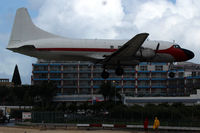
Convair CV-440 MetropolitanRegistration
N153JR
MSN
117
Year of Manufacture
1953
Operator
Fresh AirDate
March 15, 2012 at 07:38 AM
Type
CRASHFlight Type
Cargo
Flight Phase
Takeoff (climb)
Crash Site
Lake, Sea, Ocean, River
Crash Location
San Juan-Luis Muñoz Marín (Isla Verde) All Puerto Rico
Region
Central America • Puerto Rico
Crash Cause
Human factor
Narrative Report
On March 15, 2012 at 07:38 AM, San Juan - Sint Marteen experienced a crash involving Convair CV-440 Metropolitan, operated by Fresh Air, with the event recorded near San Juan-Luis Muñoz Marín (Isla Verde) All Puerto Rico.
The flight was categorized as cargo and the reported phase was takeoff (climb) at a lake, sea, ocean, river crash site.
2 people were known to be on board, 2 fatalities were recorded, 0 survivors were identified or estimated. This corresponds to an estimated fatality rate of 100.0%.
Crew on board: 2, crew fatalities: 2, passengers on board: 0, passenger fatalities: 0, other fatalities: 0.
The listed crash cause is human factor. The airplane, operated by Fresh Air, Inc., crashed into a lagoon about 1 mile east of the departure end of runway 10 at Luis Muñoz Marín International Airport (SJU), San Juan, Puerto Rico. The two pilots died, and the airplane was destroyed by impact forces. The airplane was operated under the provisions of 14 Code of Federal Regulations (CFR) Part 1251 as a cargo flight. Visual meteorological conditions prevailed at the time of the accident, and a visual flight rules flight plan was filed. The flight had departed from runway 10 at SJU destined for Princess Juliana International Airport, St. Maarten. Shortly after takeoff, the first officer declared an emergency, and then the captain requested a left turn back to SJU and asked the local air traffic controllers if they could see smoke coming from the airplane (the two tower controllers noted in postaccident interviews that they did not see more smoke than usual coming from the airplane). The controllers cleared the flight to land on runway 28, but as the airplane began to align with the runway, it crashed into a nearby lagoon (Laguna La Torrecilla). Radar data shows that the airplane was heading south at an altitude of about 520 ft when it began a descending turn to the right to line up with runway 28. The airplane continued to bank to the right until radar contact was lost. The estimated airspeed at this point was only 88 knots, 9 knots below the published stall speed for level flight and close to the 87-knot air minimum control speed. However, minimum control speeds increase substantially for a turn into the inoperative engine as the accident crew did in the final seconds of the flight. As a result, the airplane was operating close to both stall and controllability limits when radar contact was lost. Pilots flying multiengine aircraft are generally trained to shut down the engine experiencing a problem and feather that propeller; thus, the flight crew likely intended to shut down the right engine by bringing the mixture control lever to the IDLE CUTOFF position and feathering the right propeller, as called out in the Engine Fire In Flight Checklist. This would have left the flight crew with the left engine operative to return to the airport. However, postaccident examinations revealed that the left propeller was found feathered at impact, with the left engine settings consistent with the engine at takeoff or climb setting. The right engine settings were generally consistent with the engine being shut down; however, the right propeller’s pitch was consistent with a high rotation/takeoff power setting. The accident airplane was not equipped with a flight data recorder or a cockpit voice recorder (nor was it required to be so equipped); hence, the investigation was unable to determine at what point in the accident sequence the flight crew shut down the right engine and at what point they feathered the left propeller, or why they would have done so. Post accident examination of the airplane revealed fire and thermal damage to the airframe on the airplane’s right wing rear spar, nacelle aft of the power section, and in the vicinity of the junction between the augmentor assemblies and the exhaust muffler assembly. While the investigation was unable to determine the exact location of the ignition source, it appears to have been aft of the engine in the vicinity of the junction between the augmentor assemblies and exhaust muffler assembly. The investigation identified no indication of a fire in the engine proper and no mechanical failures that would have prevented the normal operation of either engine.
Aircraft reference details include registration N153JR, MSN 117, year of manufacture 1953.
Fatalities
Total
2
Crew
2
Passengers
0
Other
0
Crash Summary
The airplane, operated by Fresh Air, Inc., crashed into a lagoon about 1 mile east of the departure end of runway 10 at Luis Muñoz Marín International Airport (SJU), San Juan, Puerto Rico. The two pilots died, and the airplane was destroyed by impact forces. The airplane was operated under the provisions of 14 Code of Federal Regulations (CFR) Part 1251 as a cargo flight. Visual meteorological conditions prevailed at the time of the accident, and a visual flight rules flight plan was filed. The flight had departed from runway 10 at SJU destined for Princess Juliana International Airport, St. Maarten. Shortly after takeoff, the first officer declared an emergency, and then the captain requested a left turn back to SJU and asked the local air traffic controllers if they could see smoke coming from the airplane (the two tower controllers noted in postaccident interviews that they did not see more smoke than usual coming from the airplane). The controllers cleared the flight to land on runway 28, but as the airplane began to align with the runway, it crashed into a nearby lagoon (Laguna La Torrecilla). Radar data shows that the airplane was heading south at an altitude of about 520 ft when it began a descending turn to the right to line up with runway 28. The airplane continued to bank to the right until radar contact was lost. The estimated airspeed at this point was only 88 knots, 9 knots below the published stall speed for level flight and close to the 87-knot air minimum control speed. However, minimum control speeds increase substantially for a turn into the inoperative engine as the accident crew did in the final seconds of the flight. As a result, the airplane was operating close to both stall and controllability limits when radar contact was lost. Pilots flying multiengine aircraft are generally trained to shut down the engine experiencing a problem and feather that propeller; thus, the flight crew likely intended to shut down the right engine by bringing the mixture control lever to the IDLE CUTOFF position and feathering the right propeller, as called out in the Engine Fire In Flight Checklist. This would have left the flight crew with the left engine operative to return to the airport. However, postaccident examinations revealed that the left propeller was found feathered at impact, with the left engine settings consistent with the engine at takeoff or climb setting. The right engine settings were generally consistent with the engine being shut down; however, the right propeller’s pitch was consistent with a high rotation/takeoff power setting. The accident airplane was not equipped with a flight data recorder or a cockpit voice recorder (nor was it required to be so equipped); hence, the investigation was unable to determine at what point in the accident sequence the flight crew shut down the right engine and at what point they feathered the left propeller, or why they would have done so. Post accident examination of the airplane revealed fire and thermal damage to the airframe on the airplane’s right wing rear spar, nacelle aft of the power section, and in the vicinity of the junction between the augmentor assemblies and the exhaust muffler assembly. While the investigation was unable to determine the exact location of the ignition source, it appears to have been aft of the engine in the vicinity of the junction between the augmentor assemblies and exhaust muffler assembly. The investigation identified no indication of a fire in the engine proper and no mechanical failures that would have prevented the normal operation of either engine.
Cause: Human factor
Occupants & Outcome
Crew On Board
2
Passengers On Board
0
Estimated Survivors
0
Fatality Rate
100.0%
Known people on board: 2
Operational Details
Schedule / Flight
San Juan - Sint Marteen
Operator
Fresh AirFlight Type
Cargo
Flight Phase
Takeoff (climb)
Crash Site
Lake, Sea, Ocean, River
Region / Country
Central America • Puerto Rico
Aircraft Details
Similar Plane Crashes
Pan American World Airways - PAA
Loening C-W Air Yacht
While taking off from the bay in Puerto Rico, the seaplane hit an embankment and came to rest. Both crew members were rescued and the aircraft sank.
Pan American World Airways - PAA
Sikorsky S-38
Upon landing off San Juan, the floatplane collided with an undetermined floating object and was damaged beyond repair. All nine occupants were rescued.
United States Army Air Corps - USAAC
Sikorsky S-43
Crashed into the sea shortly after take off following an engine failure. Crew fate unknown.
Pan American World Airways - PAA
Sikorsky S-42
Following an uneventful flight, the crew completed the approach to the San Juan harbor in good weather conditions. Upon landing on water in a nose down attitude, the seaplane plunged into the water and came to rest. Two passengers were killed while all 25 other occupants were rescued. Crew: Charles A. Lorber, pilot, Harvey E. Breaux, copilot, John Donovan Donnelley, flight engineer, W. P. Mahoney, radio navigator, Joe Catala, steward, A. E. Calligari, steward. Source & photos: http://www.webstart.com/jed/house/NC15376/
United States Army Air Forces - USAAF
Consolidated B-24 Liberator
After touchdown at Borinquen Airport, the aircraft went out off control, veered off runway and came to rest in flames into an airport building. The crew fate remains unknown.
United States Army Air Forces - USAAF
Douglas C-39 (DC-2)
While flying in a valley in poor weather conditions, the aircraft hit a mountain shrouded in clouds. All 22 occupants were killed, among them three civilians. According to USAF, the aircraft hit the mountain slope sixty metres from the summit and the cloud base was around 1,200 metres. The twin engine aircraft was following a 150° heading and was flying at a cruising speed at the time of the accident. Crew: Francis H. Durant, pilot, 4.