
Welshpool - Welshpool
Flight / Schedule
Welshpool - Welshpool
Aircraft
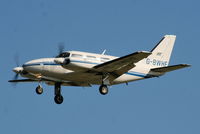
Piper PA-31-310 NavajoRegistration
G-BWHF
MSN
31-7612076
Year of Manufacture
1976
Operator
Awyr Cymru CyfDate
January 18, 2012 at 11:17 AM
Type
CRASHFlight Type
Training
Flight Phase
Landing (descent or approach)
Crash Site
Airport (less than 10 km from airport)
Crash Location
Welshpool Powys
Region
Europe • United Kingdom
Coordinates
52.6605°, -3.1487°
Crash Cause
Human factor
Narrative Report
On January 18, 2012 at 11:17 AM, Welshpool - Welshpool experienced a crash involving Piper PA-31-310 Navajo, operated by Awyr Cymru Cyf, with the event recorded near Welshpool Powys.
The flight was categorized as training and the reported phase was landing (descent or approach) at a airport (less than 10 km from airport) crash site.
2 people were known to be on board, 2 fatalities were recorded, 0 survivors were identified or estimated. This corresponds to an estimated fatality rate of 100.0%.
Crew on board: 2, crew fatalities: 2, passengers on board: 0, passenger fatalities: 0, other fatalities: 0.
The listed crash cause is human factor. The commander had retired from flying Commercial Air Transport operations with an airline in August 2011. He had recently renewed his single pilot Instrument Rating and Multi Engine Piston (Land) planes rating and his intention was to continue flying part-time. He had been invited to fly G-BWHF, which was privately operated for business purposes, but his last flight in this aircraft was on 10 November 1998. Accordingly, he planned to conduct a re-familiarisation flight. The commander was accompanied by another pilot who was not a flight instructor but had recent experience of flying the aircraft and was familiar with the aerodrome. A webcam recorded the pilots towing the aircraft to the refuelling point, refuelling it and carrying out pre-flight preparations. There were no witnesses to any briefings which may have taken place. The commander first started the right engine, which initially ran roughly and backfired before running smoothly. The left engine started normally. The second pilot took his place in the front right seat. The aircraft taxied to the holding point of Runway 22, and was heard by witnesses to be running normally. A witness who lived adjacent to the airfield but could not see the aircraft heard the power and propeller checks being carried out, three or four times instead of once per engine as was usual. The engines were heard to increase power and the witness observed the aircraft accelerate along the runway and takeoff at 1105 hrs. It climbed straight ahead and through a small patch of thin stratus cloud, the base of which the witness estimated was approximately 1,000 ft aal. The aircraft remained visible as it passed through the cloud and continued climbing. The witness turned away from the aircraft to continue working but stated that apart from the unusual number of run-up checks, the aircraft appeared and sounded normal. The pilot of a Robinson R22 helicopter which departed Welshpool at 1015 hrs described weather to the south of the aerodrome as drizzle with patches of broken stratus at 600-700 ft aal. He was able to climb the helicopter between the patches of stratus until, at 1,500 ft, he was above the tops of the cloud. Visibility below the cloud was approximately 5-6 km but, above the cloud, it was in excess of 10 km. He noted that the top of Long Mountain was in cloud and his passenger took a photograph of the Long Mountain area The R22 returned to the airfield and joined left hand downwind for Runway 22. As it did so, its pilot heard a transmission from the pilot of the PA-31 stating that he was rejoining for circuits. The R22 pilot transmitted his position in order to alert the PA-31, then continued around the circuit and called final before making his approach to the runway, landing at about 1115 hrs. After passing overhead Welshpool, it made a descending left circuit, becoming established on a left hand, downwind leg for Runway 22. A witness approximately 3.5 nm northeast of the accident site saw the aircraft coming towards him with both propellers turning. It made a turn to the left with the engines apparently at a high power setting and, as it passed over Long Mountain, commenced a descent. He could not recall whether he could still hear the engines as the aircraft descended. He then lost sight of it behind the rising ground of Long Mountain. A search was initiated when the aircraft failed to return to Welshpool. Its wreckage was located in an open field on the west slope of Long Mountain. There were no witnesses to the actual impact with the trees or surface of the field but the sound was heard by a witness in the wood who stated that the engines were audible immediately prior to impact. The accident, which was not survivable, occurred at 1117 hrs. Both pilots were fatally injured.
Aircraft reference details include registration G-BWHF, MSN 31-7612076, year of manufacture 1976.
Geospatial coordinates for this crash are approximately 52.6605°, -3.1487°.
Fatalities
Total
2
Crew
2
Passengers
0
Other
0
Crash Summary
The commander had retired from flying Commercial Air Transport operations with an airline in August 2011. He had recently renewed his single pilot Instrument Rating and Multi Engine Piston (Land) planes rating and his intention was to continue flying part-time. He had been invited to fly G-BWHF, which was privately operated for business purposes, but his last flight in this aircraft was on 10 November 1998. Accordingly, he planned to conduct a re-familiarisation flight. The commander was accompanied by another pilot who was not a flight instructor but had recent experience of flying the aircraft and was familiar with the aerodrome. A webcam recorded the pilots towing the aircraft to the refuelling point, refuelling it and carrying out pre-flight preparations. There were no witnesses to any briefings which may have taken place. The commander first started the right engine, which initially ran roughly and backfired before running smoothly. The left engine started normally. The second pilot took his place in the front right seat. The aircraft taxied to the holding point of Runway 22, and was heard by witnesses to be running normally. A witness who lived adjacent to the airfield but could not see the aircraft heard the power and propeller checks being carried out, three or four times instead of once per engine as was usual. The engines were heard to increase power and the witness observed the aircraft accelerate along the runway and takeoff at 1105 hrs. It climbed straight ahead and through a small patch of thin stratus cloud, the base of which the witness estimated was approximately 1,000 ft aal. The aircraft remained visible as it passed through the cloud and continued climbing. The witness turned away from the aircraft to continue working but stated that apart from the unusual number of run-up checks, the aircraft appeared and sounded normal. The pilot of a Robinson R22 helicopter which departed Welshpool at 1015 hrs described weather to the south of the aerodrome as drizzle with patches of broken stratus at 600-700 ft aal. He was able to climb the helicopter between the patches of stratus until, at 1,500 ft, he was above the tops of the cloud. Visibility below the cloud was approximately 5-6 km but, above the cloud, it was in excess of 10 km. He noted that the top of Long Mountain was in cloud and his passenger took a photograph of the Long Mountain area The R22 returned to the airfield and joined left hand downwind for Runway 22. As it did so, its pilot heard a transmission from the pilot of the PA-31 stating that he was rejoining for circuits. The R22 pilot transmitted his position in order to alert the PA-31, then continued around the circuit and called final before making his approach to the runway, landing at about 1115 hrs. After passing overhead Welshpool, it made a descending left circuit, becoming established on a left hand, downwind leg for Runway 22. A witness approximately 3.5 nm northeast of the accident site saw the aircraft coming towards him with both propellers turning. It made a turn to the left with the engines apparently at a high power setting and, as it passed over Long Mountain, commenced a descent. He could not recall whether he could still hear the engines as the aircraft descended. He then lost sight of it behind the rising ground of Long Mountain. A search was initiated when the aircraft failed to return to Welshpool. Its wreckage was located in an open field on the west slope of Long Mountain. There were no witnesses to the actual impact with the trees or surface of the field but the sound was heard by a witness in the wood who stated that the engines were audible immediately prior to impact. The accident, which was not survivable, occurred at 1117 hrs. Both pilots were fatally injured.
Cause: Human factor
Occupants & Outcome
Crew On Board
2
Passengers On Board
0
Estimated Survivors
0
Fatality Rate
100.0%
Known people on board: 2
Operational Details
Schedule / Flight
Welshpool - Welshpool
Operator
Awyr Cymru CyfFlight Type
Training
Flight Phase
Landing (descent or approach)
Crash Site
Airport (less than 10 km from airport)
Region / Country
Europe • United Kingdom
Aircraft Details
Similar Plane Crashes
Handley Page Aircraft Company Ltd
Handley Page V/1500
Assembled at Cricklewood Airfield in May 1918, the aircraft departed Cricklewood for its 13th test flight, carrying six crew members. Shortly after takeoff, while climbing to a height of about 700-800 feet, all four engines stopped. The pilot elected to return for an emergency landing when the aircraft stalled and crashed in a field located in front of 21 Garrick Avenue in Golders Green, bursting into flames. Colonel Ogilvie, who was seating in the tail gunner position at the back of the plane, survived, while all five other occupants were killed. Crew: Cpt Vernon Earl George Busby, pilot, † Mr. Bertram G. Cooper, † Mr. R. P. Cooper, † Mr. W. H. Hathaway, † Mr. J. W. Windebank, † Colonel Ogilvie.
Marine Aeroplane Depot
Fairey III
The pilot departed Isle of Grain on a delivery flight to Glasgow-Renfrew Airport. On approach to RAF Usworth (RAF Hylton), he elected to make a go-around when the aircraft lost height and crashed. The aircraft was destroyed and the pilot, Captain Arthur Leslie Simms, was killed.
Royal Air Force - RAF
De Havilland DH.6
The crew was completing a local training flight at RAF Seaton Carew when the aircraft entered a spin and crashed in a field, bursting into flames. Both occupants were killed. Crew: Cpt Charles David Danby, pilot, 1st Class E. A. Bannister, mechanic.
Royal Air Force - RAF
Handley Page H.P.12
The aircraft departed Castle Bromwich for a test flight, carrying five engineers and two crew members. En route, the twin engine aircraft suffered technical problems with a wing, lost height and crashed in a field located in Maxstoke. The aircraft was destroyed and all seven occupants were killed. Crew: Lt Robert Edward Macbeth, Lt Frederick James Bravery, 1st Air Mechanic James Benjamn May, 2nd Air Mechanic Albert J. Winrow, 2nd Air Mechanic H. Simmonds, 3rd Air Mechanic Charles William Offord, 3rd George Greenland.
Royal Air Force - RAF
Blackburn R.T.1 Kangaroo
On final approach in bad visibility, aircraft was too low. It struck the ground short of runway and crashed. Both occupants were injured. Crew was performing a training flight on behalf of the 246th Squadron.
Royal Air Force - RAF
De Havilland DH.9
The pilot tried to return to his base but due to low visibility by night, he lost his orientation. He elected to make an emergency landing in an open field but the aircraft hit a tree and crashed. The pilot was injured.