
Point Mugu NAS - Point Mugu NAS
Flight / Schedule
Point Mugu NAS - Point Mugu NAS
Aircraft
Boeing 707Registration
N707AR
MSN
20029/790
Year of Manufacture
1969
Operator
Omega AirDate
May 18, 2011 at 05:27 PM
Type
CRASHFlight Type
Refuelling
Flight Phase
Takeoff (climb)
Crash Site
Airport (less than 10 km from airport)
Crash Location
Point Mugu NAS California
Region
North America • United States of America
Crash Cause
Technical failure
Narrative Report
On May 18, 2011 at 05:27 PM, Point Mugu NAS - Point Mugu NAS experienced a crash involving Boeing 707, operated by Omega Air, with the event recorded near Point Mugu NAS California.
The flight was categorized as refuelling and the reported phase was takeoff (climb) at a airport (less than 10 km from airport) crash site.
3 people were known to be on board, 0 fatalities were recorded, 3 survivors were identified or estimated. This corresponds to an estimated fatality rate of 0.0%.
Crew on board: 3, crew fatalities: 0, passengers on board: 0, passenger fatalities: 0, other fatalities: 0.
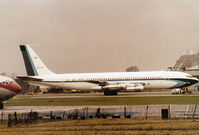
The listed crash cause is technical failure. On May 18, 2011, about 1727 Pacific daylight time, a modified Boeing 707, registration N707AR, operating as Omega Aerial Refueling Services (Omega) flight 70 crashed on takeoff from runway 21 at Point Mugu Naval Air Station, California (KNTD). The airplane collided with a marsh area to the left side beyond the departure end of the runway and was substantially damaged by postimpact fire. The three flight crewmembers sustained minor injuries. The flight was conducted under the provisions of a contract between Omega and the US Naval Air Systems Command (NAVAIR) to provide aerial refueling of Navy F/A-18s in offshore warning area airspace. According to the Federal Aviation Administration (FAA), Omega, and the US Navy, the airplane was operating as a nonmilitary public aircraft under the provisions of 49 United States Code Sections 40102 and 40125. The accident flight crew consisted of a captain, first officer, and flight engineer who had flown with each other many times previously. The crewmembers reported conducting a normal preflight inspection. As the airplane taxied toward the runway, the reported wind was from 280º magnetic at 24 knots, gusting to 34 knots; the flight crew reported that the windsock showed very little change in the wind direction and a slight amount of gust. The crew had calculated a takeoff decision speed (V1) of 141 knots and a rotation speed (Vr) of 147 knots. The crew elected to add 5 knots to the rotation speed to compensate for the wind gusts and briefed a maximum power takeoff. The first officer, who was the pilot monitoring, stated that he advised the captain, who was the pilot flying, about advancing the power relatively smoothly to avoid a compressor stall with the crosswind, and the captain agreed. About 1723, air traffic control cleared the flight for takeoff from runway 21 and instructed the crew to turn left to a heading of 160º after departure. The captain applied takeoff thrust, and the first officer told investigators that, as the pilot in the right seat, he applied forward pressure on the yoke and right aileron input to compensate for the right crosswind. According to the crew, the takeoff roll was normal. At rotation speed, the captain rotated the airplane to an initial target pitch attitude of 11º airplane nose up. Shortly after liftoff, when the airplane was about 20 feet above the runway and about 7,000 feet down the runway, all three crewmembers heard a loud noise and observed the thrust lever for the No. 2 (left inboard) engine rapidly retard to the aft limit of the throttle quadrant. The captain stated that he applied full right rudder and near full right aileron to maintain directional control and level the wings, but the airplane continued to drift to the left. The captain reported that he perceived the airplane would not continue to climb and decided to “put it back on the ground.” Witnesses and a cell phone video from another Omega 707 crewmember observing the takeoff indicated that the No. 2 (left inboard) engine separated and traveled up above the left wing as the airplane was passing abeam taxiway A2. The inlet cowling for the No. 1 (left outboard) engine separated immediately thereafter, consistent with being struck by the No. 2 engine nacelle. The airplane began to descend with the remaining three engine power levers at maximum power, and the left wing dipped slightly (Pratt & Whitney indicated that loss of the inlet cowling on the No. 1 engine would increase drag, effectively resulting in less than zero thrust output). The captain said he lowered the nose and leveled the wings just as the airplane touched down on the runway between taxiway A2 and A1. The airplane made multiple contacts with the runway before drifting left and departing the runway surface before the airplane reached taxiway A1. The airplane crossed taxiway A and came to rest in the marsh area. According to the flight crewmembers, they observed flames in the cabin area and did not have time to perform an engine shutdown or evacuation checklist. The crew reported difficulty exiting the cockpit due to mud and debris blocking the cockpit door. All three crewmembers successfully evacuated through the left forward entrance via the escape slide.
Aircraft reference details include registration N707AR, MSN 20029/790, year of manufacture 1969.
Fatalities
Total
0
Crew
0
Passengers
0
Other
0
Crash Summary
On May 18, 2011, about 1727 Pacific daylight time, a modified Boeing 707, registration N707AR, operating as Omega Aerial Refueling Services (Omega) flight 70 crashed on takeoff from runway 21 at Point Mugu Naval Air Station, California (KNTD). The airplane collided with a marsh area to the left side beyond the departure end of the runway and was substantially damaged by postimpact fire. The three flight crewmembers sustained minor injuries. The flight was conducted under the provisions of a contract between Omega and the US Naval Air Systems Command (NAVAIR) to provide aerial refueling of Navy F/A-18s in offshore warning area airspace. According to the Federal Aviation Administration (FAA), Omega, and the US Navy, the airplane was operating as a nonmilitary public aircraft under the provisions of 49 United States Code Sections 40102 and 40125. The accident flight crew consisted of a captain, first officer, and flight engineer who had flown with each other many times previously. The crewmembers reported conducting a normal preflight inspection. As the airplane taxied toward the runway, the reported wind was from 280º magnetic at 24 knots, gusting to 34 knots; the flight crew reported that the windsock showed very little change in the wind direction and a slight amount of gust. The crew had calculated a takeoff decision speed (V1) of 141 knots and a rotation speed (Vr) of 147 knots. The crew elected to add 5 knots to the rotation speed to compensate for the wind gusts and briefed a maximum power takeoff. The first officer, who was the pilot monitoring, stated that he advised the captain, who was the pilot flying, about advancing the power relatively smoothly to avoid a compressor stall with the crosswind, and the captain agreed. About 1723, air traffic control cleared the flight for takeoff from runway 21 and instructed the crew to turn left to a heading of 160º after departure. The captain applied takeoff thrust, and the first officer told investigators that, as the pilot in the right seat, he applied forward pressure on the yoke and right aileron input to compensate for the right crosswind. According to the crew, the takeoff roll was normal. At rotation speed, the captain rotated the airplane to an initial target pitch attitude of 11º airplane nose up. Shortly after liftoff, when the airplane was about 20 feet above the runway and about 7,000 feet down the runway, all three crewmembers heard a loud noise and observed the thrust lever for the No. 2 (left inboard) engine rapidly retard to the aft limit of the throttle quadrant. The captain stated that he applied full right rudder and near full right aileron to maintain directional control and level the wings, but the airplane continued to drift to the left. The captain reported that he perceived the airplane would not continue to climb and decided to “put it back on the ground.” Witnesses and a cell phone video from another Omega 707 crewmember observing the takeoff indicated that the No. 2 (left inboard) engine separated and traveled up above the left wing as the airplane was passing abeam taxiway A2. The inlet cowling for the No. 1 (left outboard) engine separated immediately thereafter, consistent with being struck by the No. 2 engine nacelle. The airplane began to descend with the remaining three engine power levers at maximum power, and the left wing dipped slightly (Pratt & Whitney indicated that loss of the inlet cowling on the No. 1 engine would increase drag, effectively resulting in less than zero thrust output). The captain said he lowered the nose and leveled the wings just as the airplane touched down on the runway between taxiway A2 and A1. The airplane made multiple contacts with the runway before drifting left and departing the runway surface before the airplane reached taxiway A1. The airplane crossed taxiway A and came to rest in the marsh area. According to the flight crewmembers, they observed flames in the cabin area and did not have time to perform an engine shutdown or evacuation checklist. The crew reported difficulty exiting the cockpit due to mud and debris blocking the cockpit door. All three crewmembers successfully evacuated through the left forward entrance via the escape slide.
Cause: Technical failure
Occupants & Outcome
Crew On Board
3
Passengers On Board
0
Estimated Survivors
3
Fatality Rate
0.0%
Known people on board: 3
Operational Details
Schedule / Flight
Point Mugu NAS - Point Mugu NAS
Operator
Omega AirFlight Type
Refuelling
Flight Phase
Takeoff (climb)
Crash Site
Airport (less than 10 km from airport)
Region / Country
North America • United States of America
Aircraft Details
Similar Plane Crashes
United States Signal Corps - USSC
De Havilland DH.4
The single engine airplane departed Dayton-McCook Field for a local test flight. Shortly after takeoff, the aircraft stalled and crashed, killing both occupants. Crew: Maj Oscar Brindley, Lt Col Henry Damm.
United States Signal Corps - USSC
De Havilland DH.4
Lt. Frank Stuart Patterson, son and nephew of the co-founders of National Cash Register, is killed in the crash of his DH.4M, AS-32098, at Wilbur Wright Field during a flight test of a new mechanism for synchronizing machine gun and propeller, when a tie rod breaks during a dive from 15,000 feet (4,600 m), causing the wings to separate from the aircraft. Wishing to recognize the contributions of the Patterson family (owners of NCR) the area of Wright Field east of Huffman Dam (including Wilbur Wright Field, Fairfield Air Depot, and the Huffman Prairie) is renamed Patterson Field on 6 July 1931, in honor of Lt. Patterson.
United States Signal Corps - USSC
De Havilland DH.4
The aircraft crashed in unknown circumstances.
United States Signal Corps - USSC
De Havilland DH.4
The crew was completing a training mission. At an altitude of about 4,000 feet, the aircraft entered a spin and crashed in an open field near Everman-Barron Field Airport. A crew was killed and the second occupants was injured. The aircraft was destroyed.
U.S. Air Mail Service
De Havilland DH.4
Crashed following an engine failure. Pilot fate unknown.
United States Signal Corps - USSC
De Havilland DH.4
The accident occurred in unknown circumstances.