
Palmer - Unalakleet
Flight / Schedule
Palmer - Unalakleet
Aircraft
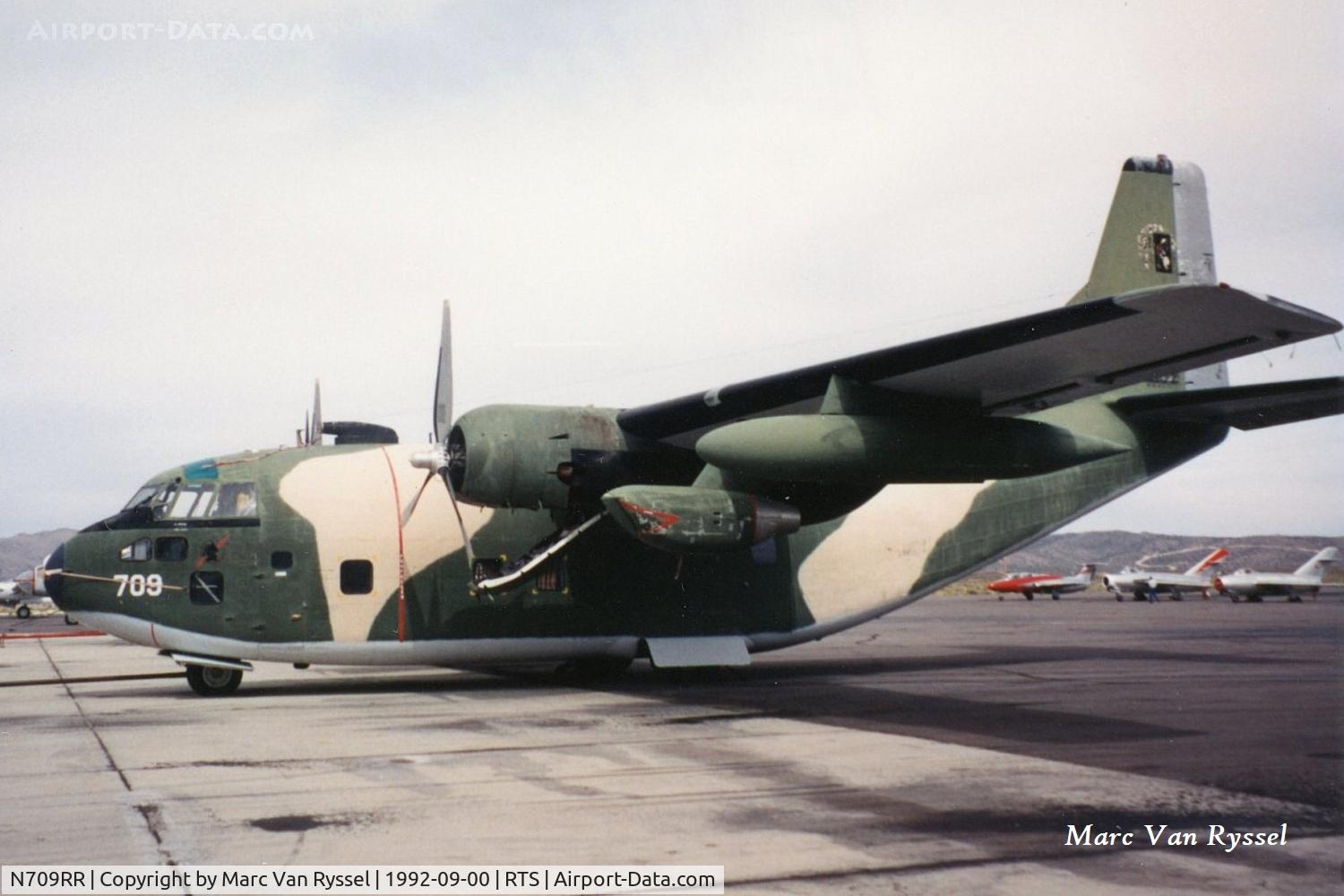
Fairchild C-123 ProviderRegistration
N709RR
MSN
20158
Year of Manufacture
1954
Operator
All West FreightDate
August 1, 2010 at 03:00 PM
Type
CRASHFlight Type
Cargo
Flight Phase
Flight
Crash Site
Mountains
Crash Location
Denali National Park Alaska
Region
North America • United States of America
Coordinates
63.7302°, -148.8921°
Crash Cause
Human factor
Narrative Report
On August 1, 2010 at 03:00 PM, Palmer - Unalakleet experienced a crash involving Fairchild C-123 Provider, operated by All West Freight, with the event recorded near Denali National Park Alaska.
The flight was categorized as cargo and the reported phase was flight at a mountains crash site.
3 people were known to be on board, 3 fatalities were recorded, 0 survivors were identified or estimated. This corresponds to an estimated fatality rate of 100.0%.
Crew on board: 2, crew fatalities: 2, passengers on board: 1, passenger fatalities: 1, other fatalities: 0.
The listed crash cause is human factor. The pilot, co-pilot and the passenger departed on a day VFR cross country flight in a large, 1950's era former military transportb category airplane to deliver cargo. The pilot did not file a flight plan, and had no communication with any air traffic control facility during the flight. While en route, witnesses saw the airplane fly slowly across a valley near the entrance of a national park, which was not the intended route of flight. The airplane suddenly pitched up, stalled, and dived into wooded terrain within the park. Two pilot-rated witnesses said the engines were operating at the time of the accident, and the landing gear was retracted. An on-scene examination of the burned airplane structure and engines revealed no evidence of any preaccident mechanical deficiencies, or any evidence that the cargo had shifted during the flight. A former military pilot who had experience in the accident type airplane, stated that the airplane was considered unrecoverable from a stall, and for that reason, pilots did not typically practice stalls in it. He also indicated that if a problem was encountered with one of the two piston engines on the airplane, the auxiliary jet engine on the affected side should be started to provide additional thrust. Given the lack of mechanical deficiencies discovered during postaccident inspection, the absence of any distress communications, and the fact that neither of the two auxiliary jet engines had been started to assist in the event of a piston engine malfunction, it is likely the pilot allowed the airplane to lose airspeed and enter a low altitude stall from which he was unable to recover.
Aircraft reference details include registration N709RR, MSN 20158, year of manufacture 1954.
Geospatial coordinates for this crash are approximately 63.7302°, -148.8921°.
Fatalities
Total
3
Crew
2
Passengers
1
Other
0
Crash Summary
The pilot, co-pilot and the passenger departed on a day VFR cross country flight in a large, 1950's era former military transportb category airplane to deliver cargo. The pilot did not file a flight plan, and had no communication with any air traffic control facility during the flight. While en route, witnesses saw the airplane fly slowly across a valley near the entrance of a national park, which was not the intended route of flight. The airplane suddenly pitched up, stalled, and dived into wooded terrain within the park. Two pilot-rated witnesses said the engines were operating at the time of the accident, and the landing gear was retracted. An on-scene examination of the burned airplane structure and engines revealed no evidence of any preaccident mechanical deficiencies, or any evidence that the cargo had shifted during the flight. A former military pilot who had experience in the accident type airplane, stated that the airplane was considered unrecoverable from a stall, and for that reason, pilots did not typically practice stalls in it. He also indicated that if a problem was encountered with one of the two piston engines on the airplane, the auxiliary jet engine on the affected side should be started to provide additional thrust. Given the lack of mechanical deficiencies discovered during postaccident inspection, the absence of any distress communications, and the fact that neither of the two auxiliary jet engines had been started to assist in the event of a piston engine malfunction, it is likely the pilot allowed the airplane to lose airspeed and enter a low altitude stall from which he was unable to recover.
Cause: Human factor
Occupants & Outcome
Crew On Board
2
Passengers On Board
1
Estimated Survivors
0
Fatality Rate
100.0%
Known people on board: 3
Operational Details
Schedule / Flight
Palmer - Unalakleet
Operator
All West FreightFlight Type
Cargo
Flight Phase
Flight
Crash Site
Mountains
Region / Country
North America • United States of America
Aircraft Details
Similar Plane Crashes
United States Signal Corps - USSC
De Havilland DH.4
The single engine airplane departed Dayton-McCook Field for a local test flight. Shortly after takeoff, the aircraft stalled and crashed, killing both occupants. Crew: Maj Oscar Brindley, Lt Col Henry Damm.
United States Signal Corps - USSC
De Havilland DH.4
Lt. Frank Stuart Patterson, son and nephew of the co-founders of National Cash Register, is killed in the crash of his DH.4M, AS-32098, at Wilbur Wright Field during a flight test of a new mechanism for synchronizing machine gun and propeller, when a tie rod breaks during a dive from 15,000 feet (4,600 m), causing the wings to separate from the aircraft. Wishing to recognize the contributions of the Patterson family (owners of NCR) the area of Wright Field east of Huffman Dam (including Wilbur Wright Field, Fairfield Air Depot, and the Huffman Prairie) is renamed Patterson Field on 6 July 1931, in honor of Lt. Patterson.
United States Signal Corps - USSC
De Havilland DH.4
The aircraft crashed in unknown circumstances.
United States Signal Corps - USSC
De Havilland DH.4
The crew was completing a training mission. At an altitude of about 4,000 feet, the aircraft entered a spin and crashed in an open field near Everman-Barron Field Airport. A crew was killed and the second occupants was injured. The aircraft was destroyed.
U.S. Air Mail Service
De Havilland DH.4
Crashed following an engine failure. Pilot fate unknown.
United States Signal Corps - USSC
De Havilland DH.4
The accident occurred in unknown circumstances.