
Évora - Évora
Flight / Schedule
Évora - Évora
Aircraft
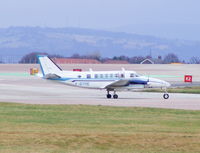
Beechcraft 99 AirlinerRegistration
F-BTME
MSN
U-79
Year of Manufacture
1968
Operator
Skydive PortugalDate
August 14, 2009 at 07:08 PM
Type
CRASHFlight Type
Skydiving / Paratroopers
Flight Phase
Landing (descent or approach)
Crash Site
City
Crash Location
Évora Alto Alentejo
Region
Europe • Portugal
Coordinates
38.5693°, -7.9325°
Crash Cause
Human factor
Narrative Report
On August 14, 2009 at 07:08 PM, Évora - Évora experienced a crash involving Beechcraft 99 Airliner, operated by Skydive Portugal, with the event recorded near Évora Alto Alentejo.
The flight was categorized as skydiving / paratroopers and the reported phase was landing (descent or approach) at a city crash site.
2 people were known to be on board, 2 fatalities were recorded, 0 survivors were identified or estimated. This corresponds to an estimated fatality rate of 100.0%.
Crew on board: 1, crew fatalities: 1, passengers on board: 1, passenger fatalities: 1, other fatalities: 0.
The listed crash cause is human factor. The aircraft, a Beechcraft model BE-99, s/n U79, with French registration F-BTME, belonging to the operator “Avioarte Serviços Aéreos, Lda”, was involved all that day, 14th of August, 2009, flying locally, carrying parachutists for skydiving exercises, in the vicinity of Évora aerodrome (LPEV), working for the enterprise “Skydive”. With twelve full equipped parachutists and one pilot on board, the aircraft took-off on runway 01 at 18:47, intending to climb to an altitude of 13000ft (4000m), at which altitude the jumping would take place. When passing about 9500ft (2900m), left engine (#1) flame-out and respective propeller was automatically feathered. The pilot stop climb at around 10500ft (3200m), informed the parachutists that one engine had stopped and they should jump a little lower than it was expected, while he would proceed for landing at same aerodrome, with one engine inoperative. All parachutists left the aircraft, on sequence, but one, who, after being next to the exit, returned to the cockpit and remained on board, with the pilot. The aircraft started a dive, turning around the field, and the pilot contacted the tower on left base leg for runway 01, but said nothing about the inoperative engine or any assistance required. He was told to report on final, which he never did. He continued the approach for runway 01, with landing gear down and flaps at initial setting (13º), but keeping high speed. The aircraft made a low pass, over all runway length, without the wheels touching the ground. Once passing runway end it continued flying, the pilot increased power on right engine (#2) and the aircraft started deviating to the left, with wings levelled and without showing significant climb tendency. Observers, at the aerodrome, lost the sight of the aircraft for some moments and saw it reappearing close to Almeirim residential quarter (in the outskirts of Évora). One testimony, sited at the aerodrome, referred seeing the aircraft executing a sudden manoeuvre, like a left roll, pointing the wheels up to the sky. Moments later a collision sound was heard, the engine became silent and some flames and a black smoke cloud appeared. The aircraft collided with a residential building, in Maria Auxiliadora street, Almeirim residential quarter, sited about 1160m far from runway end, on track 330º. After the collision with the building, the aircraft fell to the ground, upside-down, a fire sparked immediately and the plane was engulfed by flames. Fire brigades from Évora, Viana do Alentejo, Montemor-o-Novo and Arraiolos arrived at the scene, promptly, but it took some time for the fire to be extinguished (after burning all aircraft fuel) and the burned bodies recovered from the wreckage.
Aircraft reference details include registration F-BTME, MSN U-79, year of manufacture 1968.
Geospatial coordinates for this crash are approximately 38.5693°, -7.9325°.
Fatalities
Total
2
Crew
1
Passengers
1
Other
0
Crash Summary
The aircraft, a Beechcraft model BE-99, s/n U79, with French registration F-BTME, belonging to the operator “Avioarte Serviços Aéreos, Lda”, was involved all that day, 14th of August, 2009, flying locally, carrying parachutists for skydiving exercises, in the vicinity of Évora aerodrome (LPEV), working for the enterprise “Skydive”. With twelve full equipped parachutists and one pilot on board, the aircraft took-off on runway 01 at 18:47, intending to climb to an altitude of 13000ft (4000m), at which altitude the jumping would take place. When passing about 9500ft (2900m), left engine (#1) flame-out and respective propeller was automatically feathered. The pilot stop climb at around 10500ft (3200m), informed the parachutists that one engine had stopped and they should jump a little lower than it was expected, while he would proceed for landing at same aerodrome, with one engine inoperative. All parachutists left the aircraft, on sequence, but one, who, after being next to the exit, returned to the cockpit and remained on board, with the pilot. The aircraft started a dive, turning around the field, and the pilot contacted the tower on left base leg for runway 01, but said nothing about the inoperative engine or any assistance required. He was told to report on final, which he never did. He continued the approach for runway 01, with landing gear down and flaps at initial setting (13º), but keeping high speed. The aircraft made a low pass, over all runway length, without the wheels touching the ground. Once passing runway end it continued flying, the pilot increased power on right engine (#2) and the aircraft started deviating to the left, with wings levelled and without showing significant climb tendency. Observers, at the aerodrome, lost the sight of the aircraft for some moments and saw it reappearing close to Almeirim residential quarter (in the outskirts of Évora). One testimony, sited at the aerodrome, referred seeing the aircraft executing a sudden manoeuvre, like a left roll, pointing the wheels up to the sky. Moments later a collision sound was heard, the engine became silent and some flames and a black smoke cloud appeared. The aircraft collided with a residential building, in Maria Auxiliadora street, Almeirim residential quarter, sited about 1160m far from runway end, on track 330º. After the collision with the building, the aircraft fell to the ground, upside-down, a fire sparked immediately and the plane was engulfed by flames. Fire brigades from Évora, Viana do Alentejo, Montemor-o-Novo and Arraiolos arrived at the scene, promptly, but it took some time for the fire to be extinguished (after burning all aircraft fuel) and the burned bodies recovered from the wreckage.
Cause: Human factor
Occupants & Outcome
Crew On Board
1
Passengers On Board
1
Estimated Survivors
0
Fatality Rate
100.0%
Known people on board: 2
Operational Details
Schedule / Flight
Évora - Évora
Operator
Skydive PortugalFlight Type
Skydiving / Paratroopers
Flight Phase
Landing (descent or approach)
Crash Site
City
Region / Country
Europe • Portugal
Aircraft Details
Similar Plane Crashes
Portuguese Air Force - Aeronáutica Militar
Tellier T.3
The seaplane crashed in unknown circumstances in the sea off Cascais, killing both crew members.
Portuguese Air Force - Aeronáutica Militar
Breguet 14
The crew was completing a training flight when the airplane crashed in unknown circumstances in Barcarena. All three occupants were killed.
Portuguese Air Force - Aeronáutica Militar
Avro 504
The crew was completing a local training flight out from Lisbon-Alverca Airport. Shortly after takeoff, the single engine aircraft went out of control and crashed. Both crew members were killed. Crew: Lt Ferreira de Brito, Cpl Castro e Silva.
Portuguese Air Force - Aeronáutica Militar
Avro 504
The single engine airplane was approaching the Granja do Marquês AFB in Sintra when it crashed in unknown circumstances. Both occupants, Lt Almicar Alvarenca Passo and the passenger, Doctor Alf José de Azevedo Reis were killed.
Heinkel Flugzeuge
Heinkel He.6
The crew was performing a flight from Rostock to Newfoundland on behalf of the German manufacturer Heinkel Flugzeugbau. The aircraft departed Warnemünde harbor (north of Rostock) at 1221LT on 12OCT1927 and made several intermediate stops en route: Brunsbüttel on 12OCT, Wilhelmshaven on 13OCT, Amsterdam on 14OCT, Vigo on 16OCT, Lisbon on 18OCT and Horta on 04NOV. After few days on Faial Island, the crew decided to continue his trip to Canada and started on the night of 12 to 13 of November. Two takeoff attempts were abandoned due to unfavorable winds, and during the third attempt, while climbing, the aircraft crashed in the sea, in the harbor of Horta. While all three occupants escaped uninjured, the aircraft was destroyed. Crew: Captain Horst Mertz, pilot, Willem Bock, radio navigator, Fritz Rohde, engineer.
L'Aéropostale
CAMS 51
The seaplane named 'La Frégate' crashed while taking off from the Horta Bay for unknown reasons. While both crew members were slightly injured, the aircraft was damaged beyond repair. It was on its way from Brest, France, to New York.