
Rio de Janeiro – Paris
Flight / Schedule
Rio de Janeiro – Paris
Aircraft
Airbus A330Registration
F-GZCP
MSN
660
Year of Manufacture
2005
Operator
Air FranceDate
June 1, 2009 at 02:00 PM
Type
CRASHFlight Type
Scheduled Revenue Flight
Flight Phase
Flight
Crash Site
Lake, Sea, Ocean, River
Crash Location
Fernando de Noronha Pernambuco
Region
South America • Brazil
Coordinates
-3.8537°, -32.4198°
Crash Cause
Human factor
Narrative Report
On June 1, 2009 at 02:00 PM, Rio de Janeiro – Paris experienced a crash involving Airbus A330, operated by Air France, with the event recorded near Fernando de Noronha Pernambuco.
The flight was categorized as scheduled revenue flight and the reported phase was flight at a lake, sea, ocean, river crash site.
228 people were known to be on board, 228 fatalities were recorded, 0 survivors were identified or estimated. This corresponds to an estimated fatality rate of 100.0%.
Crew on board: 12, crew fatalities: 12, passengers on board: 216, passenger fatalities: 216, other fatalities: 0.
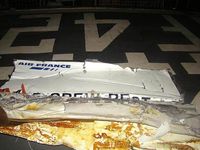
The listed crash cause is human factor. On Sunday 31 May 2009, the Airbus A330-203 registered F-GZCP operated by Air France was programmed to perform scheduled flight AF 447 between Rio de Janeiro-Galeão and Paris Charles de Gaulle. Twelve crew members (3 flight crew, 9 cabin crew) and 216 passengers were on board. The departure was planned for 22 h 00. At around 22 h 10, the crew was cleared to start up engines and leave the stand. Takeoff took place at 22 h 29. The Captain was Pilot Not Flying (PNF); one of the copilots was Pilot Flying (PF). At the start of the Cockpit Voice Recorder (CVR) recording, shortly after midnight, the aeroplane was in cruise at flight level 350. Autopilot 2 and auto-thrust were engaged. Auto fuel transfer in the “trim tank” was carried out during the climb. The flight was calm. At 1 h 35, the aeroplane arrived at INTOL point and the crew left the Recife frequency to change to HF communication with the Atlántico Oceanic control centre. A SELCAL test was successfully carried out, but attempts to establish an ADS-C connection with DAKAR Oceanic failed. Shortly afterwards, the co-pilot modified the scale on his Navigation Display (ND) from 320 NM to 160 NM and noted “…a thing straight ahead”. The Captain confirmed and the crew again discussed the fact that the high temperature meant that they could not climb to flight level 370. At 1 h 45, the aeroplane entered a slightly turbulent zone, just before SALPU point. Note: At about 0 h 30 the crew had received information from the OCC about the presence of a convective zone linked to the inter-tropical convergence zone (ITCZ) between SALPU and TASIL. The crew dimmed the lighting in the cockpit and switched on the lights “to see”. The co-pilot noted that they were “entering the cloud layer” and that it would have been good to be able to climb. A few minutes later, the turbulence increased slightly in strength. Shortly after 1 h 52, the turbulence stopped. The co-pilot again drew the Captain’s attention to the REC MAX value, which had then reached flight level (FL) 375. A short time later, the Captain woke the second co-pilot and said “[…] he’s going to take my place”. At around 2 h 00, after leaving his seat, the Captain attended the briefing between the two co-pilots, during which the PF (seated on the right) said specifically that “well the little bit of turbulence that you just saw we should find the same ahead we’re in the cloud layer unfortunately we can’t climb much for the moment because the temperature is falling more slowly than forecast” and that “the logon with DAKAR failed”. Then the Captain left the cockpit. The aeroplane approached the ORARO point. It was flying at flight level 350 and at Mach 0.82. The pitch attitude was about 2.5 degrees. The weight and balance of the aeroplane were around 205 tonnes and 29%. The two copilots again discussed the temperature and the REC MAX. The turbulence increased slightly. At 2 h 06, the PF called the cabin crew, telling them that “in two minutes we ought to be in an area where it will start moving about a bit more than now you’ll have to watch out there” and he added “I’ll call you when we’re out of it”. At around 2 h 08, the PNF proposed “go to the left a bit […]”. The HDG mode was activated and the selected heading decreased by about 12 degrees in relation to the route. The PNF changed the gain adjustment on his weather radar to maximum, after noticing that it was in calibrated mode. The crew decided to reduce the speed to about Mach 0.8 and engine de-icing was turned on. At 2 h 10 min 05, the autopilot then the auto-thrust disconnected and the PF said “I have the controls”. The aeroplane began to roll to the right and the PF made a nose-up and left input. The stall warning triggered briefly twice in a row. The recorded parameters showed a sharp fall from about 275 kt to 60 kt in the speed displayed on the left primary flight display (PFD), then a few moments later in the speed displayed on the integrated standby instrument system (ISIS). The flight control law reconfigured from normal to alternate. The Flight Directors (FD) were not disconnected by the crew, but the crossbars disappeared. Note: Only the speeds displayed on the left side and on the ISIS are recorded on the FDR; the speed displayed on the right side is not recorded. At 2 h 10 min 16, the PNF said “we’ve lost the speeds ” then “alternate law protections”. The PF made rapid and high amplitude roll control inputs, more or less from stop to stop. He also made a nose-up input that increased the aeroplane’s pitch attitude up to 11° in ten seconds. Between 2 h 10 min 18 and 2 h 10 min 25, the PNF read out the ECAM messages in a disorganized manner. He mentioned the loss of autothrust and the reconfiguration to alternate law. The thrust lock function was deactivated. The PNF called out and turned on the wing anti-icing. The PNF said that the aeroplane was climbing and asked the PF several times to descend. The latter then made several nose-down inputs that resulted in a reduction in the pitch attitude and the vertical speed. The aeroplane was then at about 37,000 ft and continued to climb. At about 2 h 10 min 36, the speed displayed on the left side became valid again and was then 223 kt; the ISIS speed was still erroneous. The aeroplane had lost about 50 kt since the autopilot disconnection and the beginning of the climb. The speed displayed on the left side was incorrect for 29 seconds. At 2 h 10 min 47, the thrust controls were pulled back slightly to 2/3 of the IDLE/CLB notch (85% of N1). Two seconds later, the pitch attitude came back to a little above 6°, the roll was controlled and the angle of attack was slightly less than 5°. The aeroplane’s pitch attitude increased progressively beyond 10 degrees and the plane started to climb. From 2 h 10 min 50, the PNF called the Captain several times. At 2 h 10 min 51, the stall warning triggered again, in a continuous manner. The thrust levers were positioned in the TO/GA detent and the PF made nose-up inputs. The recorded angle of attack, of around 6 degrees at the triggering of the stall warning, continued to increase. The trimmable horizontal stabilizer (THS) began a nose-up movement and moved from 3 to 13 degrees pitch-up in about 1 minute and remained in the latter position until the end of the flight. Around fifteen seconds later, the ADR3 being selected on the right side PFD, the speed on the PF side became valid again at the same time as that displayed on the ISIS. It was then at 185kt and the three displayed airspeeds were consistent. The PF continued to make nose-up inputs. The aeroplane’s altitude reached its maximum of about 38,000 ft; its pitch attitude and angle of attack were 16 degrees. At 2 h 11 min 37, the PNF said “controls to the left”, took over priority without any callout and continued to handle the aeroplane. The PF almost immediately took back priority without any callout and continued piloting. At around 2 h 11 min 42, the Captain re-entered the cockpit. During the following seconds, all of the recorded speeds became invalid and the stall warning stopped, after having sounded continuously for 54 seconds. The altitude was then about 35,000 ft, the angle of attack exceeded 40 degrees and the vertical speed was about -10,000 ft/min. The aeroplane’s pitch attitude did not exceed 15 degrees and the engines’ N1’s were close to 100%. The aeroplane was subject to roll oscillations to the right that sometimes reached 40 degrees. The PF made an input on the side-stick to the left stop and nose-up, which lasted about 30 seconds. At 2 h 12 min 02, the PF said, “I have no more displays”, and the PNF “we have no valid indications”. At that moment, the thrust levers were in the IDLE detent and the engines’ N1’s were at 55%. Around fifteen seconds later, the PF made pitch-down inputs. In the following moments, the angle of attack decreased, the speeds became valid again and the stall warning triggered again. At 2 h 13 min 32, the PF said, “[we’re going to arrive] at level one hundred”. About fifteen seconds later, simultaneous inputs by both pilots on the side-sticks were recorded and the PF said, “go ahead you have the controls”. The angle of attack, when it was valid, always remained above 35 degrees. From 2 h 14 min 17, the Ground Proximity Warning System (GPWS) “sink rate” and then “pull up” warnings sounded. The recordings stopped at 2 h 14 min 28. The last recorded values were a vertical speed of -10,912 ft/min, a ground speed of 107 kt, pitch attitude of 16.2 degrees nose-up, roll angle of 5.3 degrees left and a magnetic heading of 270 degrees. No emergency message was transmitted by the crew. The wreckage was found at a depth of 3,900 metres on 2 April 2011 at about 6.5 NM on the radial 019 from the last position transmitted by the aeroplane. Both CVR and DFDR were found 23 months after the accident, in May 2011 at a depth of 3,900 metres. The final report was published in July 2012.
Aircraft reference details include registration F-GZCP, MSN 660, year of manufacture 2005.
Geospatial coordinates for this crash are approximately -3.8537°, -32.4198°.
Fatalities
Total
228
Crew
12
Passengers
216
Other
0
Crash Summary
On Sunday 31 May 2009, the Airbus A330-203 registered F-GZCP operated by Air France was programmed to perform scheduled flight AF 447 between Rio de Janeiro-Galeão and Paris Charles de Gaulle. Twelve crew members (3 flight crew, 9 cabin crew) and 216 passengers were on board. The departure was planned for 22 h 00. At around 22 h 10, the crew was cleared to start up engines and leave the stand. Takeoff took place at 22 h 29. The Captain was Pilot Not Flying (PNF); one of the copilots was Pilot Flying (PF). At the start of the Cockpit Voice Recorder (CVR) recording, shortly after midnight, the aeroplane was in cruise at flight level 350. Autopilot 2 and auto-thrust were engaged. Auto fuel transfer in the “trim tank” was carried out during the climb. The flight was calm. At 1 h 35, the aeroplane arrived at INTOL point and the crew left the Recife frequency to change to HF communication with the Atlántico Oceanic control centre. A SELCAL test was successfully carried out, but attempts to establish an ADS-C connection with DAKAR Oceanic failed. Shortly afterwards, the co-pilot modified the scale on his Navigation Display (ND) from 320 NM to 160 NM and noted “…a thing straight ahead”. The Captain confirmed and the crew again discussed the fact that the high temperature meant that they could not climb to flight level 370. At 1 h 45, the aeroplane entered a slightly turbulent zone, just before SALPU point. Note: At about 0 h 30 the crew had received information from the OCC about the presence of a convective zone linked to the inter-tropical convergence zone (ITCZ) between SALPU and TASIL. The crew dimmed the lighting in the cockpit and switched on the lights “to see”. The co-pilot noted that they were “entering the cloud layer” and that it would have been good to be able to climb. A few minutes later, the turbulence increased slightly in strength. Shortly after 1 h 52, the turbulence stopped. The co-pilot again drew the Captain’s attention to the REC MAX value, which had then reached flight level (FL) 375. A short time later, the Captain woke the second co-pilot and said “[…] he’s going to take my place”. At around 2 h 00, after leaving his seat, the Captain attended the briefing between the two co-pilots, during which the PF (seated on the right) said specifically that “well the little bit of turbulence that you just saw we should find the same ahead we’re in the cloud layer unfortunately we can’t climb much for the moment because the temperature is falling more slowly than forecast” and that “the logon with DAKAR failed”. Then the Captain left the cockpit. The aeroplane approached the ORARO point. It was flying at flight level 350 and at Mach 0.82. The pitch attitude was about 2.5 degrees. The weight and balance of the aeroplane were around 205 tonnes and 29%. The two copilots again discussed the temperature and the REC MAX. The turbulence increased slightly. At 2 h 06, the PF called the cabin crew, telling them that “in two minutes we ought to be in an area where it will start moving about a bit more than now you’ll have to watch out there” and he added “I’ll call you when we’re out of it”. At around 2 h 08, the PNF proposed “go to the left a bit […]”. The HDG mode was activated and the selected heading decreased by about 12 degrees in relation to the route. The PNF changed the gain adjustment on his weather radar to maximum, after noticing that it was in calibrated mode. The crew decided to reduce the speed to about Mach 0.8 and engine de-icing was turned on. At 2 h 10 min 05, the autopilot then the auto-thrust disconnected and the PF said “I have the controls”. The aeroplane began to roll to the right and the PF made a nose-up and left input. The stall warning triggered briefly twice in a row. The recorded parameters showed a sharp fall from about 275 kt to 60 kt in the speed displayed on the left primary flight display (PFD), then a few moments later in the speed displayed on the integrated standby instrument system (ISIS). The flight control law reconfigured from normal to alternate. The Flight Directors (FD) were not disconnected by the crew, but the crossbars disappeared. Note: Only the speeds displayed on the left side and on the ISIS are recorded on the FDR; the speed displayed on the right side is not recorded. At 2 h 10 min 16, the PNF said “we’ve lost the speeds ” then “alternate law protections”. The PF made rapid and high amplitude roll control inputs, more or less from stop to stop. He also made a nose-up input that increased the aeroplane’s pitch attitude up to 11° in ten seconds. Between 2 h 10 min 18 and 2 h 10 min 25, the PNF read out the ECAM messages in a disorganized manner. He mentioned the loss of autothrust and the reconfiguration to alternate law. The thrust lock function was deactivated. The PNF called out and turned on the wing anti-icing. The PNF said that the aeroplane was climbing and asked the PF several times to descend. The latter then made several nose-down inputs that resulted in a reduction in the pitch attitude and the vertical speed. The aeroplane was then at about 37,000 ft and continued to climb. At about 2 h 10 min 36, the speed displayed on the left side became valid again and was then 223 kt; the ISIS speed was still erroneous. The aeroplane had lost about 50 kt since the autopilot disconnection and the beginning of the climb. The speed displayed on the left side was incorrect for 29 seconds. At 2 h 10 min 47, the thrust controls were pulled back slightly to 2/3 of the IDLE/CLB notch (85% of N1). Two seconds later, the pitch attitude came back to a little above 6°, the roll was controlled and the angle of attack was slightly less than 5°. The aeroplane’s pitch attitude increased progressively beyond 10 degrees and the plane started to climb. From 2 h 10 min 50, the PNF called the Captain several times. At 2 h 10 min 51, the stall warning triggered again, in a continuous manner. The thrust levers were positioned in the TO/GA detent and the PF made nose-up inputs. The recorded angle of attack, of around 6 degrees at the triggering of the stall warning, continued to increase. The trimmable horizontal stabilizer (THS) began a nose-up movement and moved from 3 to 13 degrees pitch-up in about 1 minute and remained in the latter position until the end of the flight. Around fifteen seconds later, the ADR3 being selected on the right side PFD, the speed on the PF side became valid again at the same time as that displayed on the ISIS. It was then at 185kt and the three displayed airspeeds were consistent. The PF continued to make nose-up inputs. The aeroplane’s altitude reached its maximum of about 38,000 ft; its pitch attitude and angle of attack were 16 degrees. At 2 h 11 min 37, the PNF said “controls to the left”, took over priority without any callout and continued to handle the aeroplane. The PF almost immediately took back priority without any callout and continued piloting. At around 2 h 11 min 42, the Captain re-entered the cockpit. During the following seconds, all of the recorded speeds became invalid and the stall warning stopped, after having sounded continuously for 54 seconds. The altitude was then about 35,000 ft, the angle of attack exceeded 40 degrees and the vertical speed was about -10,000 ft/min. The aeroplane’s pitch attitude did not exceed 15 degrees and the engines’ N1’s were close to 100%. The aeroplane was subject to roll oscillations to the right that sometimes reached 40 degrees. The PF made an input on the side-stick to the left stop and nose-up, which lasted about 30 seconds. At 2 h 12 min 02, the PF said, “I have no more displays”, and the PNF “we have no valid indications”. At that moment, the thrust levers were in the IDLE detent and the engines’ N1’s were at 55%. Around fifteen seconds later, the PF made pitch-down inputs. In the following moments, the angle of attack decreased, the speeds became valid again and the stall warning triggered again. At 2 h 13 min 32, the PF said, “[we’re going to arrive] at level one hundred”. About fifteen seconds later, simultaneous inputs by both pilots on the side-sticks were recorded and the PF said, “go ahead you have the controls”. The angle of attack, when it was valid, always remained above 35 degrees. From 2 h 14 min 17, the Ground Proximity Warning System (GPWS) “sink rate” and then “pull up” warnings sounded. The recordings stopped at 2 h 14 min 28. The last recorded values were a vertical speed of -10,912 ft/min, a ground speed of 107 kt, pitch attitude of 16.2 degrees nose-up, roll angle of 5.3 degrees left and a magnetic heading of 270 degrees. No emergency message was transmitted by the crew. The wreckage was found at a depth of 3,900 metres on 2 April 2011 at about 6.5 NM on the radial 019 from the last position transmitted by the aeroplane. Both CVR and DFDR were found 23 months after the accident, in May 2011 at a depth of 3,900 metres. The final report was published in July 2012.
Cause: Human factor
Occupants & Outcome
Crew On Board
12
Passengers On Board
216
Estimated Survivors
0
Fatality Rate
100.0%
Known people on board: 228
Operational Details
Schedule / Flight
Rio de Janeiro – Paris
Operator
Air FranceFlight Type
Scheduled Revenue Flight
Flight Phase
Flight
Crash Site
Lake, Sea, Ocean, River
Region / Country
South America • Brazil
Aircraft Details
Similar Plane Crashes
Brazilian Navy - Aviação Naval Brasileira
Macchi M.9
The pilot, sole on board, was completing a training flight when the seaplane crashed in the Bay of Guanabara off Rio de Janeiro. The pilot 2nd Lt Jayme Americano Freire was killed.
Brazilian Navy - Aviação Naval Brasileira
Aeromarine 40
The crew was completing a local training flight in Rio de Janeiro when the seaplane crashed in unknown circumstances in the Guanabara Bay. Both pilots were seriously injured and the aircraft sank. Six days later, one of the crew member died from his injuries. Crew: 1st Lt Fernando Muniz Guimarães, † Lt Fernando Victor Amaral Savaget.
Junkers Flugzeug %26 Motorenwerke
Junkers F.13
The crew was conducting flights in South America to promote the sale of the Junkers F.13 to local operators. The aircraft departed Albina Airport, Suriname, bound to Macapá, Brazil. Just after passing the border between French Guyana and Brazil, the crew encountered poor weather conditions and elected to make an emergency landing on the Oiapoque River, near Oiapoque. In unknown circumstances, the aircraft crashed in the river and was damaged beyond repair. While the pilot Drewsky was injured, the mechanic Thill was killed.
Brazilian Air Force - Aviação Militar
Breguet 14
The aircraft crashed on landing, injuring both crew members, Lt Arnoldo Borges Leitão and Lt Adyr Guimarães.
Junkers Flugzeug %26 Motorenwerke
Junkers F.13
The crew was performing demo flights in South America to promote the sale of the Junkers F.13 to potential local operators. Shortly after takeoff from the Rio Jaguaribe, in Aracati, while in initial climb, the seaplane stalled and crashed, killing both crew members, the pilot Hermann Müller and the mechanic Werner Junkers. Named 'Birkhahn', the aircraft suffered an engine failure just after takeoff.
Brazilian Air Force - Aviação Militar
Breguet 14
The crew was completing a local training mission at Campo dos Afonsos AFB when the aircraft crashed in unknown circumstances. A crew member was seriously injured and both other occupants were killed.