
Tarata - Tarata
Flight / Schedule
Tarata - Tarata
Aircraft
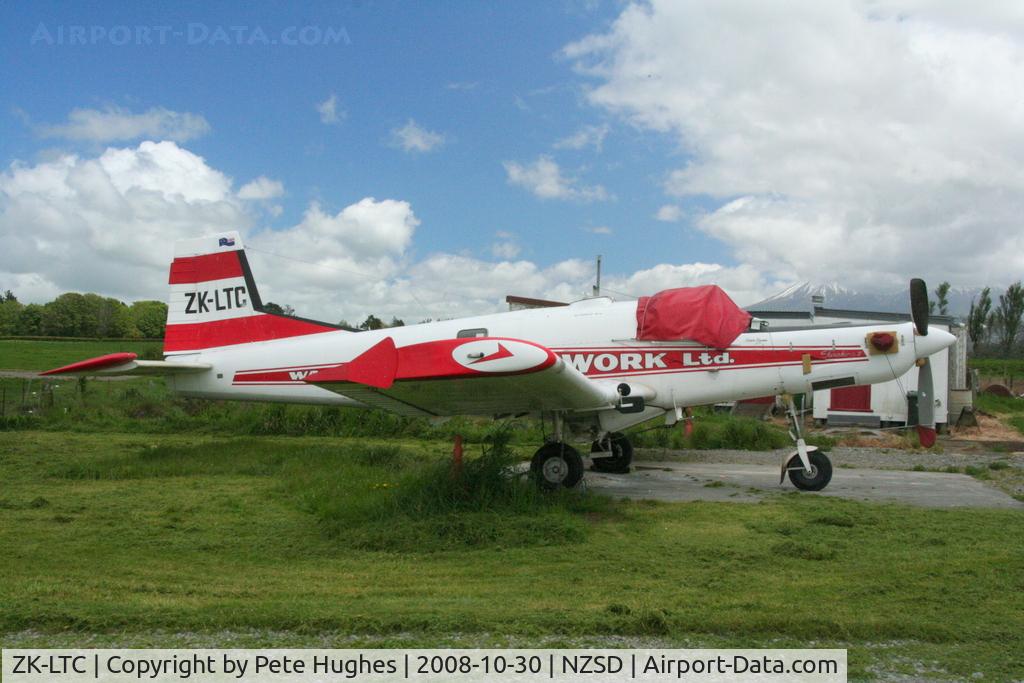
PAC Cresco 08-600 (08-750)Registration
ZK-LTC
MSN
20
Year of Manufacture
1997
Operator
Wanganui Aero WorkDate
December 14, 2008 at 11:55 AM
Type
CRASHFlight Type
Spraying (Agricultural)
Flight Phase
Takeoff (climb)
Crash Site
Plain, Valley
Crash Location
Tarata Taranaki Regional Council
Region
Oceania • New Zealand
Crash Cause
Other causes
Narrative Report
On December 14, 2008 at 11:55 AM, Tarata - Tarata experienced a crash involving PAC Cresco 08-600 (08-750), operated by Wanganui Aero Work, with the event recorded near Tarata Taranaki Regional Council.
The flight was categorized as spraying (agricultural) and the reported phase was takeoff (climb) at a plain, valley crash site.
1 people were known to be on board, 1 fatalities were recorded, 0 survivors were identified or estimated. This corresponds to an estimated fatality rate of 100.0%.
Crew on board: 1, crew fatalities: 1, passengers on board: 0, passenger fatalities: 0, other fatalities: 0.
The listed crash cause is other causes. On Sunday 14 December 2008, the aircraft departed from Stratford Aerodrome at 0630 hours for a transit flight to a farm airstrip near Tarata. Shortly after becoming airborne the pilot noticed the engine chip detector warning light on the instrument panel was illuminated. He diverted to the company maintenance base at Wanganui aerodrome for the defect to be rectified. The aircraft engineer found a light metallic fuzz on the engine magnetic (mag) plug. The fuzz was cleaned off and the mag plug refitted. The aircraft was released to service with a condition that a further inspection of the mag plug was to be performed after 10 hours flight time. The topdressing job, which involved the spreading of 450 tonnes of lime, had commenced on Thursday 11 December 2008 and continued on Friday 12 December 2008. No flying took place on Saturday 13 December 2008 due to a local horse-riding event being held on the farm property. The aircraft arrived at the farm airstrip at 0940 hours on the Sunday morning, and shortly thereafter commenced operations to complete the spreading of the lime. At the time of the accident, 423 tonnes of lime had been spread. The pilot flew a series of topdressing flights before needing to stop for the first refuel. When interviewed, the loader driver stated that the pilot informed him that he was having some difficulty with the lime product not flowing consistently from the aircraft hopper during the sowing runs. At approximately 1145 hours the pilot stopped again to refuel. On completion of the refuel, this gave the aircraft an estimated fuel load of 300 litres. The pilot completed a further two flights. On the third flight, the aircraft became airborne at the end of the airstrip and then descended 55 feet below the level of the airstrip where the aft fuselage struck a fence line. A concentration of lime along the aircraft’s take-off path indicated that the pilot had initiated an attempt to jettison his load at the end of the airstrip. Following the collision with the fence, the aircraft remained airborne for a further 450 metres before it impacted the side of a small hill in a slight nose down attitude. The aircraft then came to rest 12 metres to the left of the initial impact point. The accident occurred in daylight, at approximately 1155 hours NZDT, at Tarata, at an elevation of 410 feet amsl. Latitude: S39° 08.169', longitude: E174° 21.710'.
Aircraft reference details include registration ZK-LTC, MSN 20, year of manufacture 1997.
Fatalities
Total
1
Crew
1
Passengers
0
Other
0
Crash Summary
On Sunday 14 December 2008, the aircraft departed from Stratford Aerodrome at 0630 hours for a transit flight to a farm airstrip near Tarata. Shortly after becoming airborne the pilot noticed the engine chip detector warning light on the instrument panel was illuminated. He diverted to the company maintenance base at Wanganui aerodrome for the defect to be rectified. The aircraft engineer found a light metallic fuzz on the engine magnetic (mag) plug. The fuzz was cleaned off and the mag plug refitted. The aircraft was released to service with a condition that a further inspection of the mag plug was to be performed after 10 hours flight time. The topdressing job, which involved the spreading of 450 tonnes of lime, had commenced on Thursday 11 December 2008 and continued on Friday 12 December 2008. No flying took place on Saturday 13 December 2008 due to a local horse-riding event being held on the farm property. The aircraft arrived at the farm airstrip at 0940 hours on the Sunday morning, and shortly thereafter commenced operations to complete the spreading of the lime. At the time of the accident, 423 tonnes of lime had been spread. The pilot flew a series of topdressing flights before needing to stop for the first refuel. When interviewed, the loader driver stated that the pilot informed him that he was having some difficulty with the lime product not flowing consistently from the aircraft hopper during the sowing runs. At approximately 1145 hours the pilot stopped again to refuel. On completion of the refuel, this gave the aircraft an estimated fuel load of 300 litres. The pilot completed a further two flights. On the third flight, the aircraft became airborne at the end of the airstrip and then descended 55 feet below the level of the airstrip where the aft fuselage struck a fence line. A concentration of lime along the aircraft’s take-off path indicated that the pilot had initiated an attempt to jettison his load at the end of the airstrip. Following the collision with the fence, the aircraft remained airborne for a further 450 metres before it impacted the side of a small hill in a slight nose down attitude. The aircraft then came to rest 12 metres to the left of the initial impact point. The accident occurred in daylight, at approximately 1155 hours NZDT, at Tarata, at an elevation of 410 feet amsl. Latitude: S39° 08.169', longitude: E174° 21.710'.
Cause: Other causes
Occupants & Outcome
Crew On Board
1
Passengers On Board
0
Estimated Survivors
0
Fatality Rate
100.0%
Known people on board: 1
Operational Details
Schedule / Flight
Tarata - Tarata
Operator
Wanganui Aero WorkFlight Type
Spraying (Agricultural)
Flight Phase
Takeoff (climb)
Crash Site
Plain, Valley
Region / Country
Oceania • New Zealand
Aircraft Details
Similar Plane Crashes
Walsh Brother's Flying School
Avro 504
The pilot was performing a sightseeing flight around New Plymouth. While approaching to land, the aircraft stalled and crashed near the aerodrome. All three occupants were killed. Crew: Captain Richard Russell, pilot Passengers: James Clarke, mayor of New Plymouth, Kathleen Warnock.
Canterbury Aviation
Avro 504
The pilot H. C. Grout was performing some demo flights in the region of Blenheim. After a stop in Kaikoura, he was positioning to his base in Christchurch. En route, the engine failed and he was forced to attempt an emergency landing. At low height, the airplane stalled and crashed in a wheat field near Motunau. Seriously injured, the pilot was evacuated to a local hospital but died from his injuries in the evening. The aircraft was destroyed.
Canterbury Aviation
Avro 504
Crashed in unknown circumstances near Wigram AFB. There were no casualties.
K. W. J. Hall
De Havilland DH.60 Moth
The single engine aircraft crashed in unknown circumstances in Waikari, north of Christchurch. The pilot and owner K. W. J. Hall was unhurt.
Aerial Services New Zealand
Dornier DO.12 Libelle
The crew was performing a local test flight out of Auckland when the engine misfired on approach. The seaplane stalled and crashed in the Mechanics Bay, off Milford Beach. The aircraft was destroyed and both occupants were killed. Crew: Don Harkness, pilot. Passenger: Charles Goldsbro.
Bryant House Airways
De Havilland DH.60 Moth
Captain A. W. Saunders was performing demo flights on the racecourse of Te Awamutu. With his passenger Alfred W. Minchin, he climbed to a height of 1,000 feet when the plane was seen to enter a spin. The spin was recovered from about 50 feet and the Moth was still diving when it impacted the ground. Both occupants were seriously injured and evacuated to the local hospital. While the passenger died from his injuries in the evening, the pilot died the following day. The aircraft was destroyed by impact forces.