
Madrid - Las Palmas
Flight / Schedule
Madrid - Las Palmas
Aircraft
McDonnell Douglas MD-82Registration
EC-HFP
MSN
53148/2072
Year of Manufacture
1993
Operator
SpanairDate
August 20, 2008 at 02:24 PM
Type
CRASHFlight Type
Scheduled Revenue Flight
Flight Phase
Takeoff (climb)
Crash Site
Airport (less than 10 km from airport)
Crash Location
Madrid-Barajas Madrid
Region
Europe • Spain
Coordinates
40.4574°, -3.5619°
Crash Cause
Human factor
Narrative Report
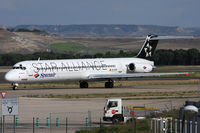
On August 20, 2008 at 02:24 PM, Madrid - Las Palmas experienced a crash involving McDonnell Douglas MD-82, operated by Spanair, with the event recorded near Madrid-Barajas Madrid.
The flight was categorized as scheduled revenue flight and the reported phase was takeoff (climb) at a airport (less than 10 km from airport) crash site.
172 people were known to be on board, 154 fatalities were recorded, 18 survivors were identified or estimated. This corresponds to an estimated fatality rate of 89.5%.
Crew on board: 6, crew fatalities: 6, passengers on board: 166, passenger fatalities: 148, other fatalities: 0.
The listed crash cause is human factor. An MD-82 passenger plane, registered EC-HFP, was destroyed when it crashed on takeoff at Madrid-Barajas Airport (MAD), Spain. Of the aircraft’s occupants, 154 were killed, including all six crew members. Eighteen passengers were seriously injured. The MD-82 aircraft operated Spanair flight JK5022 from Madrid-Barajas (MAD) to Gran Canaria (LPA). The estimated departure time was 13:00. The aircraft was authorized by control for engine start-up at 13:06:15. It then taxied to runway 36L from parking stand T21, which it occupied on the apron of terminal T2 at Barajas. The flaps were extended 11°. Once at the runway threshold, the aircraft was cleared for takeoff at 13:24:57. The crew informed the control tower at 13:26:27 that they had a problem and that they had to exit the runway. At 13:33:12, they communicated that they were returning to the stand. The crew had detected an overheating Ram Air Temperature (RAT) probe. The aircraft returned to the apron, parking on remote stand R11 of the terminal T2 parking area. The crew stopped the engines and requested assistance from maintenance technicians to solve the problem. The mechanic confirmed the malfunction described in the ATLB, checked the RAT probe heating section of the Minimum Equipment List (MEL) and opened the electrical circuit breaker that connected the heating element. Once complete, it was proposed and accepted that the aircraft be dispatched. The aircraft was topped off with 1080 liters of kerosene and at 14:08:01 it was cleared for engine start-up and to taxi to runway 36L for takeoff. The crew continued with the tasks to prepare the airplane for the flight. The conversations on the cockpit voice recorder revealed certain expressions corresponding to the before engine start checklists, the normal start list, the after start checklist and the taxi checklist. During the taxi run, the aircraft was in contact with the south sector ground control first and then with the central sector. On the final taxi segment the crew concluded its checks with the takeoff imminent checklist. At 14:23:14, with the aircraft situated at the head of runway 36L, it was cleared for takeoff. Along with the clearance, the control tower informed the aircraft that the wind was from 210° at 5 knots. At 14:23:19, the crew released the brakes for takeoff. Engine power had been increased a few seconds earlier and at 14:23:28 its value was 1.4 EPR. Power continued to increase to a maximum value of 1.95 EPR during the aircraft’s ground run. The CVR recording shows the crew calling out "V1" at 14:24:06, at which time the DFDR recorded a value of 147 knots for calibrated airspeed (CAS), and "rotate" at 14:24:08, at a recorded CAS of 154 knots. The DFDR recorded the signal change from ground mode to air mode from the nose gear strut ground sensor. The stall warning stick shaker was activated at 14:24:14 and on three occasions the stall horn and synthetic voice sounded in the cockpit: "[horn] stall, [horn] stall, [horn] stall". Impact with the ground took place at 14:24:23. During the entire takeoff run until the end of the CVR recording, no noises were recorded involving the takeoff warning system (TOWS) advising of an inadequate takeoff configuration. During the entire period from engine start-up while at parking stand R11 to the end of the DFDR recording, the values for the two flap position sensors situated on the wings were 0°. The length of the takeoff run was approximately 1950 m. Once airborne, the aircraft rose to an altitude of 40 feet above the ground before it descended and impacted the ground. During its trajectory in the air, the aircraft took on a slight left roll attitude, followed by a fast 20° roll to the right, another slight roll to the left and another abrupt roll to the right of 32°. The maximum pitch angle recorded during this process was 18°. The aircraft’s tail cone was the first part to impact the ground, almost simultaneously with the right wing tip and the right engine cowlings. The marks from these impacts were found on the right side of the runway strip as seen from the direction of the takeoff, at a distance of 60 m, measured perpendicular to the runway centerline, and 3207.5 m away from the threshold, measured in the direction of the runway. The aircraft then traveled across the ground an additional 448 m until it reached the side of the runway strip, tracing out an almost linear path at a 16° angle with the runway. It lost contact with the ground after reaching an embankment/drop-off beyond the strip, with the marks resuming 150 m away, on the airport perimeter road, whose elevation is 5.50 m lower than the runway strip. The aircraft continued moving along this irregular terrain until it reached the bed of the Vega stream, by which point the main structure was already in an advanced state of disintegration. It is here that it caught on fire. The distance from the initial impact site on the ground to the farthest point where the wreckage was found was 1093 m.
Aircraft reference details include registration EC-HFP, MSN 53148/2072, year of manufacture 1993.
Geospatial coordinates for this crash are approximately 40.4574°, -3.5619°.
Fatalities
Total
154
Crew
6
Passengers
148
Other
0
Crash Summary
An MD-82 passenger plane, registered EC-HFP, was destroyed when it crashed on takeoff at Madrid-Barajas Airport (MAD), Spain. Of the aircraft’s occupants, 154 were killed, including all six crew members. Eighteen passengers were seriously injured. The MD-82 aircraft operated Spanair flight JK5022 from Madrid-Barajas (MAD) to Gran Canaria (LPA). The estimated departure time was 13:00. The aircraft was authorized by control for engine start-up at 13:06:15. It then taxied to runway 36L from parking stand T21, which it occupied on the apron of terminal T2 at Barajas. The flaps were extended 11°. Once at the runway threshold, the aircraft was cleared for takeoff at 13:24:57. The crew informed the control tower at 13:26:27 that they had a problem and that they had to exit the runway. At 13:33:12, they communicated that they were returning to the stand. The crew had detected an overheating Ram Air Temperature (RAT) probe. The aircraft returned to the apron, parking on remote stand R11 of the terminal T2 parking area. The crew stopped the engines and requested assistance from maintenance technicians to solve the problem. The mechanic confirmed the malfunction described in the ATLB, checked the RAT probe heating section of the Minimum Equipment List (MEL) and opened the electrical circuit breaker that connected the heating element. Once complete, it was proposed and accepted that the aircraft be dispatched. The aircraft was topped off with 1080 liters of kerosene and at 14:08:01 it was cleared for engine start-up and to taxi to runway 36L for takeoff. The crew continued with the tasks to prepare the airplane for the flight. The conversations on the cockpit voice recorder revealed certain expressions corresponding to the before engine start checklists, the normal start list, the after start checklist and the taxi checklist. During the taxi run, the aircraft was in contact with the south sector ground control first and then with the central sector. On the final taxi segment the crew concluded its checks with the takeoff imminent checklist. At 14:23:14, with the aircraft situated at the head of runway 36L, it was cleared for takeoff. Along with the clearance, the control tower informed the aircraft that the wind was from 210° at 5 knots. At 14:23:19, the crew released the brakes for takeoff. Engine power had been increased a few seconds earlier and at 14:23:28 its value was 1.4 EPR. Power continued to increase to a maximum value of 1.95 EPR during the aircraft’s ground run. The CVR recording shows the crew calling out "V1" at 14:24:06, at which time the DFDR recorded a value of 147 knots for calibrated airspeed (CAS), and "rotate" at 14:24:08, at a recorded CAS of 154 knots. The DFDR recorded the signal change from ground mode to air mode from the nose gear strut ground sensor. The stall warning stick shaker was activated at 14:24:14 and on three occasions the stall horn and synthetic voice sounded in the cockpit: "[horn] stall, [horn] stall, [horn] stall". Impact with the ground took place at 14:24:23. During the entire takeoff run until the end of the CVR recording, no noises were recorded involving the takeoff warning system (TOWS) advising of an inadequate takeoff configuration. During the entire period from engine start-up while at parking stand R11 to the end of the DFDR recording, the values for the two flap position sensors situated on the wings were 0°. The length of the takeoff run was approximately 1950 m. Once airborne, the aircraft rose to an altitude of 40 feet above the ground before it descended and impacted the ground. During its trajectory in the air, the aircraft took on a slight left roll attitude, followed by a fast 20° roll to the right, another slight roll to the left and another abrupt roll to the right of 32°. The maximum pitch angle recorded during this process was 18°. The aircraft’s tail cone was the first part to impact the ground, almost simultaneously with the right wing tip and the right engine cowlings. The marks from these impacts were found on the right side of the runway strip as seen from the direction of the takeoff, at a distance of 60 m, measured perpendicular to the runway centerline, and 3207.5 m away from the threshold, measured in the direction of the runway. The aircraft then traveled across the ground an additional 448 m until it reached the side of the runway strip, tracing out an almost linear path at a 16° angle with the runway. It lost contact with the ground after reaching an embankment/drop-off beyond the strip, with the marks resuming 150 m away, on the airport perimeter road, whose elevation is 5.50 m lower than the runway strip. The aircraft continued moving along this irregular terrain until it reached the bed of the Vega stream, by which point the main structure was already in an advanced state of disintegration. It is here that it caught on fire. The distance from the initial impact site on the ground to the farthest point where the wreckage was found was 1093 m.
Cause: Human factor
Occupants & Outcome
Crew On Board
6
Passengers On Board
166
Estimated Survivors
18
Fatality Rate
89.5%
Known people on board: 172
Operational Details
Schedule / Flight
Madrid - Las Palmas
Operator
SpanairFlight Type
Scheduled Revenue Flight
Flight Phase
Takeoff (climb)
Crash Site
Airport (less than 10 km from airport)
Region / Country
Europe • Spain
Aircraft Details
Similar Plane Crashes
Lignes Aériennes Latécoère
Salmson 2.A2
The pilot was forced to make an emergency landing and escaped uninjured. The aircraft was damaged beyond repair.
Lignes Aériennes Latécoère
Breguet 14
While on a mail flight between France and Spain, the crew lost control of the airplane that crashed in Ontinyent, bursting into flames. Both crew were killed. Crew: Charles Genthon, pilot Léo Bénas, mechanic.
Lignes Aériennes Latécoère
Salmson 2.A2
Shortly after takeoff from Barcelona, the engine failed. The airplane stalled and crashed. The pilot Jean Sagnot was killed.
Compagnie Générale d'Entreprises Aéronautiques - CGEA
Breguet 14
While approaching Alicante, the pilot encountered stormy weather. He lost control of the airplane that crashed near El Campello, about 10 km northeast of Alicante. The aircraft was destroyed by a post crash fire and the pilot Marcel Stichter was killed.
Compagnie Générale d'Entreprises Aéronautiques - CGEA
Breguet 14
En route to France, the pilot encountered engine problems and made an emergency landing on the La Pineda beach west of Tarragone due to fuel exhaustion. Fuel was added and after few minutes, the pilot took off again. Shortly after liftoff, while climbing, the aircraft stalled and crashed in the sea, close to the shore. While all three occupants were uninjured, the aircraft was damaged beyond repair. Crew: Paul Vachet.
Compagnie Générale d'Entreprises Aéronautiques - CGEA
Breguet 14
The pilot was forced to make an emergency landing in Marbella. While both members crew escaped uninjured, the aircraft was damaged beyond repair.