
Riga - Tukums
Flight / Schedule
Riga - Tukums
Aircraft
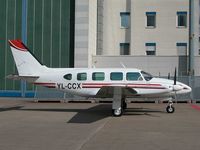
Piper PA-31-310 NavajoRegistration
YL-CCX
MSN
31-647
Year of Manufacture
1970
Operator
Air TrainingDate
August 16, 2008 at 10:30 AM
Type
CRASHFlight Type
Private
Flight Phase
Landing (descent or approach)
Crash Site
Airport (less than 10 km from airport)
Crash Location
Tukums Semigallia (Zemgale)
Region
Europe • Latvia
Crash Cause
Human factor
Narrative Report
On August 16, 2008 at 10:30 AM, Riga - Tukums experienced a crash involving Piper PA-31-310 Navajo, operated by Air Training, with the event recorded near Tukums Semigallia (Zemgale).
The flight was categorized as private and the reported phase was landing (descent or approach) at a airport (less than 10 km from airport) crash site.
8 people were known to be on board, 1 fatalities were recorded, 7 survivors were identified or estimated. This corresponds to an estimated fatality rate of 12.5%.
Crew on board: 1, crew fatalities: 1, passengers on board: 7, passenger fatalities: 0, other fatalities: 0.
The listed crash cause is human factor. The twin engine aircraft departed Riga on a flight to Tukums with eight people on board to take part to an airshow. Several others aircraft were also en route to Tukums but most of the pilots returned to their departure point due to the deterioration of the weather conditions. On approach to Tukums Airport runway 32, the pilot encountered poor visibility. Unable to establish a visual contact with the runway, he initiated a go-around procedure. After several circuits, he attempted a second approach under VFR mode. Too low, the aircraft struck a hill and eventually crashed in a private garden, coming to rest broken in two. All eight occupants were injured, some seriously. Few hours later, the pilot died from his injuries.
Aircraft reference details include registration YL-CCX, MSN 31-647, year of manufacture 1970.
Fatalities
Total
1
Crew
1
Passengers
0
Other
0
Crash Summary
The twin engine aircraft departed Riga on a flight to Tukums with eight people on board to take part to an airshow. Several others aircraft were also en route to Tukums but most of the pilots returned to their departure point due to the deterioration of the weather conditions. On approach to Tukums Airport runway 32, the pilot encountered poor visibility. Unable to establish a visual contact with the runway, he initiated a go-around procedure. After several circuits, he attempted a second approach under VFR mode. Too low, the aircraft struck a hill and eventually crashed in a private garden, coming to rest broken in two. All eight occupants were injured, some seriously. Few hours later, the pilot died from his injuries.
Cause: Human factor
Occupants & Outcome
Crew On Board
1
Passengers On Board
7
Estimated Survivors
7
Fatality Rate
12.5%
Known people on board: 8
Operational Details
Schedule / Flight
Riga - Tukums
Operator
Air TrainingFlight Type
Private
Flight Phase
Landing (descent or approach)
Crash Site
Airport (less than 10 km from airport)
Region / Country
Europe • Latvia
Aircraft Details
Similar Plane Crashes
Swedish Air Force - Flygvapnet
Caproni Ca.133
While overflying the Baltic Sea, the three engine aircraft was shot down by the pilot of a German Messerschmitt Me.109. The pilot ditched the aircraft some 13 km off Ventspils, Latvia. Three crew members were rescued and taken POW while the flight engineer Ingvar Ringström was killed. The Swedish government confirmed the aircraft was shot down over the international waters.
United States Navy - USN
Consolidated PB4Y-2 Privateer
The airplane left Wiesbaden Airport in Germany for an electronic surveillance mission over the Baltic Sea to localize Soviet submarines. While cruising over the Baltic Sea, the aircraft was intercepted and shot down by the pilots of four Soviet Air Force Lavochkin La-11. Out of control, it crashed into the sea about 16 km off Liepaja, Latvia. All 10 crew members were killed.
Aeroflot - Russian International Airlines
Lisunov LI-2
The crew was performing a local night training flight at Riga-Spilve Airport. On final approach, the instructor asked the pilot-in-command to make a go around. The aircraft climbed to a height of about 60 meters and then turn to the left, stalled and crashed 250 meters from the tower. All 4 crew members were killed.
Aeroflot - Russian International Airlines
Ilyushin II-18
The approach to Riga Airport was completed in a reduced visibility due to foggy conditions. The aircraft landed long and after touchdown, was unable to stop within the remaining distance. It overran, lost its nose gear and came to rest in a field located 200 meters from the Daugava River. All six crew members were evacuated safely while the aircraft was damaged beyond repair.
Pangles Inc.
Piper PA-31-310 Navajo
While cruising in poor weather conditions, the twin engine airplane went out of control and entered a dive. During the uncontrolled descent, the airplane disintegrated in the air and eventually crashed in a field, killing all three occupants. At the time of the accident, weather was poor and the crew lost his orientation shortly before he lost control of the airplane.
Aeroflot - Russian International Airlines
Antonov AN-24
On final approach to Liepaja Airport, while at an altitude of 300 meters at a speed of 300 km/h, the crew was unable to locate the runway nor the approach lights. In such conditions, the captain decided to make a go-around and increased engine power when the left engine failed. The aircraft banked left to an angle of 40°. Due to high drag, it lost height then struck the snow covered ground 1,800 meters past the outer marker, bounced and struck a telegraphic pole that torn off three meters of the left wing. Out of control, it continued for 1,410 meters before crashing in flames in an open field. Eight occupants survived while 43 others were killed. The aircraft was destroyed.