
Edinburgh - Coventry
Flight / Schedule
Edinburgh - Coventry
Aircraft
Fokker F27 FriendshipRegistration
TC-MBG
MSN
10459
Year of Manufacture
1971
Operator
MNG KargoDate
February 2, 2008 at 09:15 PM
Type
CRASHFlight Type
Cargo
Flight Phase
Taxiing
Crash Site
Airport (less than 10 km from airport)
Crash Location
Edinburgh Midlothian (County of Edinburgh)
Region
Europe • United Kingdom
Crash Cause
Human factor
Narrative Report
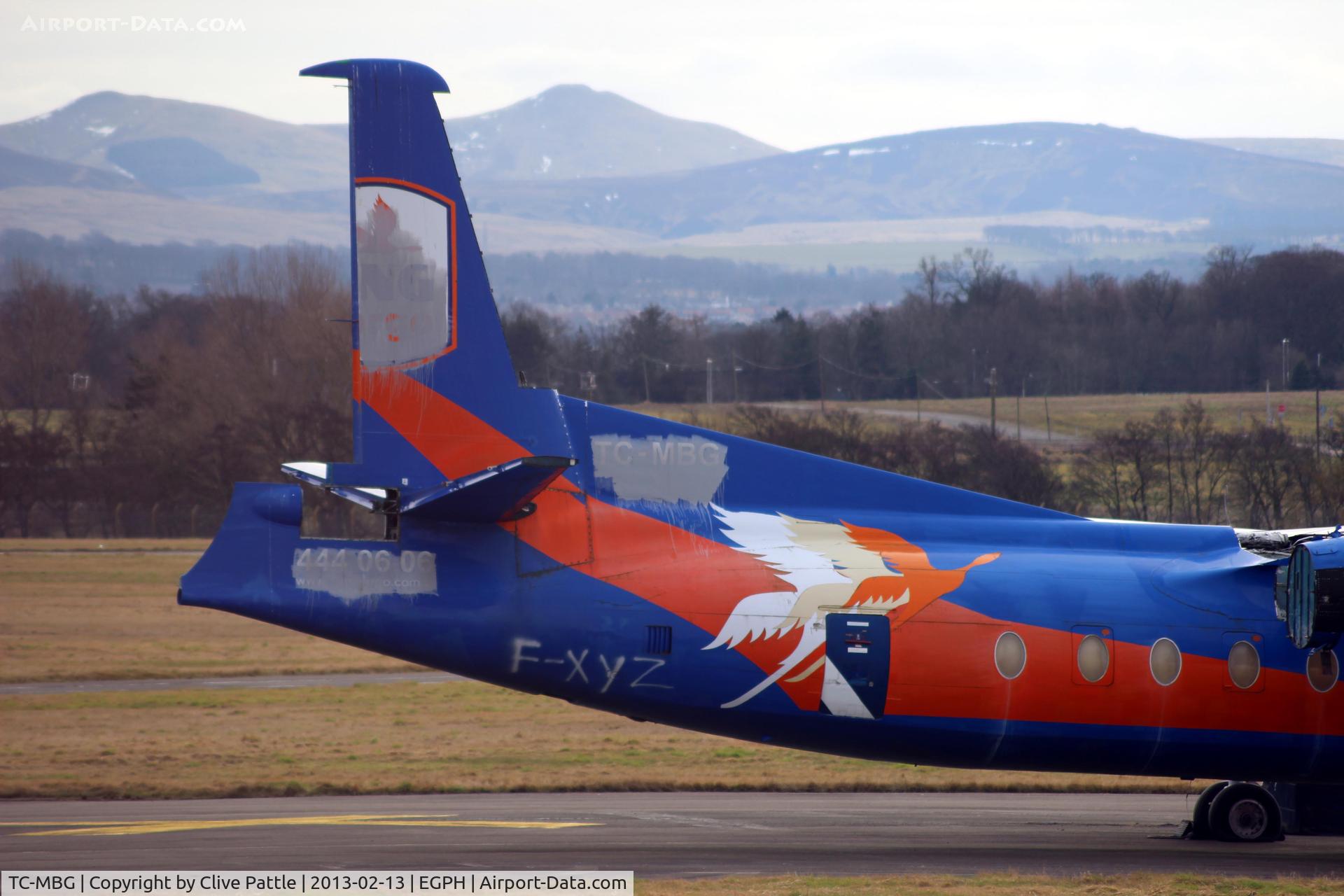
On February 2, 2008 at 09:15 PM, Edinburgh - Coventry experienced a crash involving Fokker F27 Friendship, operated by MNG Kargo, with the event recorded near Edinburgh Midlothian (County of Edinburgh).
The flight was categorized as cargo and the reported phase was taxiing at a airport (less than 10 km from airport) crash site.
2 people were known to be on board, 0 fatalities were recorded, 2 survivors were identified or estimated. This corresponds to an estimated fatality rate of 0.0%.
Crew on board: 2, crew fatalities: 0, passengers on board: 0, passenger fatalities: 0, other fatalities: 0.
The listed crash cause is human factor. The aircraft was scheduled to operate a night cargo flight from Edinburgh to Coventry. The weather conditions at Edinburgh Airport were wintry with snowfall, which required the aircraft to be de-iced. Shortly after both engines had been started, the commander signalled to the marshaller to remove the Ground Power Unit (GPU) from the aircraft, which was facing nose out from its stand, down a slight slope. As the marshaller went to assist his colleague to remove the GPU to a safe distance prior to the aircraft taxiing off the stand, the aircraft started to move forward slowly, forcing them to run to safety. The flight crew, who were looking into the cockpit, were unaware that the aircraft was moving. It continued to move forward until its right propeller struck the GPU, causing substantial damage to the GPU, the propeller and the engine. The ground crew were uninjured. No cause as to why the aircraft moved could be positively identified.
Aircraft reference details include registration TC-MBG, MSN 10459, year of manufacture 1971.
Fatalities
Total
0
Crew
0
Passengers
0
Other
0
Crash Summary
The aircraft was scheduled to operate a night cargo flight from Edinburgh to Coventry. The weather conditions at Edinburgh Airport were wintry with snowfall, which required the aircraft to be de-iced. Shortly after both engines had been started, the commander signalled to the marshaller to remove the Ground Power Unit (GPU) from the aircraft, which was facing nose out from its stand, down a slight slope. As the marshaller went to assist his colleague to remove the GPU to a safe distance prior to the aircraft taxiing off the stand, the aircraft started to move forward slowly, forcing them to run to safety. The flight crew, who were looking into the cockpit, were unaware that the aircraft was moving. It continued to move forward until its right propeller struck the GPU, causing substantial damage to the GPU, the propeller and the engine. The ground crew were uninjured. No cause as to why the aircraft moved could be positively identified.
Cause: Human factor
Occupants & Outcome
Crew On Board
2
Passengers On Board
0
Estimated Survivors
2
Fatality Rate
0.0%
Known people on board: 2
Operational Details
Schedule / Flight
Edinburgh - Coventry
Operator
MNG KargoFlight Type
Cargo
Flight Phase
Taxiing
Crash Site
Airport (less than 10 km from airport)
Region / Country
Europe • United Kingdom
Aircraft Details
Similar Plane Crashes
Handley Page Aircraft Company Ltd
Handley Page V/1500
Assembled at Cricklewood Airfield in May 1918, the aircraft departed Cricklewood for its 13th test flight, carrying six crew members. Shortly after takeoff, while climbing to a height of about 700-800 feet, all four engines stopped. The pilot elected to return for an emergency landing when the aircraft stalled and crashed in a field located in front of 21 Garrick Avenue in Golders Green, bursting into flames. Colonel Ogilvie, who was seating in the tail gunner position at the back of the plane, survived, while all five other occupants were killed. Crew: Cpt Vernon Earl George Busby, pilot, † Mr. Bertram G. Cooper, † Mr. R. P. Cooper, † Mr. W. H. Hathaway, † Mr. J. W. Windebank, † Colonel Ogilvie.
Marine Aeroplane Depot
Fairey III
The pilot departed Isle of Grain on a delivery flight to Glasgow-Renfrew Airport. On approach to RAF Usworth (RAF Hylton), he elected to make a go-around when the aircraft lost height and crashed. The aircraft was destroyed and the pilot, Captain Arthur Leslie Simms, was killed.
Royal Air Force - RAF
De Havilland DH.6
The crew was completing a local training flight at RAF Seaton Carew when the aircraft entered a spin and crashed in a field, bursting into flames. Both occupants were killed. Crew: Cpt Charles David Danby, pilot, 1st Class E. A. Bannister, mechanic.
Royal Air Force - RAF
Handley Page H.P.12
The aircraft departed Castle Bromwich for a test flight, carrying five engineers and two crew members. En route, the twin engine aircraft suffered technical problems with a wing, lost height and crashed in a field located in Maxstoke. The aircraft was destroyed and all seven occupants were killed. Crew: Lt Robert Edward Macbeth, Lt Frederick James Bravery, 1st Air Mechanic James Benjamn May, 2nd Air Mechanic Albert J. Winrow, 2nd Air Mechanic H. Simmonds, 3rd Air Mechanic Charles William Offord, 3rd George Greenland.
Royal Air Force - RAF
Blackburn R.T.1 Kangaroo
On final approach in bad visibility, aircraft was too low. It struck the ground short of runway and crashed. Both occupants were injured. Crew was performing a training flight on behalf of the 246th Squadron.
Royal Air Force - RAF
De Havilland DH.9
The pilot tried to return to his base but due to low visibility by night, he lost his orientation. He elected to make an emergency landing in an open field but the aircraft hit a tree and crashed. The pilot was injured.