
Hudson - Boulder
Flight / Schedule
Hudson - Boulder
Aircraft
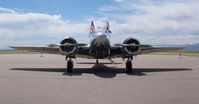
Beechcraft C-45 ExpeditorRegistration
N9562Z
MSN
AF-12
Year of Manufacture
1946
Operator
American Airpower Heritage MuseumDate
July 19, 2007 at 09:00 AM
Type
CRASHFlight Type
Training
Flight Phase
Flight
Crash Site
Plain, Valley
Crash Location
Longmont Colorado
Region
North America • United States of America
Coordinates
40.1672°, -105.1019°
Crash Cause
Human factor
Narrative Report
On July 19, 2007 at 09:00 AM, Hudson - Boulder experienced a crash involving Beechcraft C-45 Expeditor, operated by American Airpower Heritage Museum, with the event recorded near Longmont Colorado.
The flight was categorized as training and the reported phase was flight at a plain, valley crash site.
2 people were known to be on board, 0 fatalities were recorded, 2 survivors were identified or estimated. This corresponds to an estimated fatality rate of 0.0%.
Crew on board: 2, crew fatalities: 0, passengers on board: 0, passenger fatalities: 0, other fatalities: 0.
The listed crash cause is human factor. During the instructional flight, the instructor shut down the right engine and feathered the propeller. It was subsequently restarted, but the left engine started running rough and began to vibrate. The left engine was shut down and the propeller feathered. Level flight was maintained from power produced by the right engine. The left engine was then restarted but instead of producing thrust, the engine produced more drag so it was secured again. Then the right engine began losing power. Full power was applied but the airplane continued to descend. The instructor lowered the landing gear and while in-transit, the airplane clipped the tops of trees. He was able to guide the airplane between two houses and impacted an open field. The airplane bounced across the road, struck a power pole, and caught fire. The two pilots evacuated the airplane via the main cabin door. Examination at the airport of departure disclosed two pools of oil at the approximate positions of the two engines. There were two trails of oil leading from the parking spot down the taxiway and onto the runway. Both engines were partially disassembled and examined. There was evidence that both engines had failed catastrophically due to oil starvation. The left engine crankshaft was broken and all the piston heads were at the tops of their cylinders. Pieces of metal were recovered from the right engine oil sump. According to the operator, the engine rocker box recovery system must be drained during preflight to avoid hydraulic lock. The instructor stated that when they preflighted the airplane, the drain valves were open (the drained oil is captured and recycled). He thought they had closed both valves. According to the operator, either the pilot's failed to close the drain valves or they were jammed in the open position. The operator said the latter was unlikely "because you can feel it move when you close it."
Aircraft reference details include registration N9562Z, MSN AF-12, year of manufacture 1946.
Geospatial coordinates for this crash are approximately 40.1672°, -105.1019°.
Fatalities
Total
0
Crew
0
Passengers
0
Other
0
Crash Summary
During the instructional flight, the instructor shut down the right engine and feathered the propeller. It was subsequently restarted, but the left engine started running rough and began to vibrate. The left engine was shut down and the propeller feathered. Level flight was maintained from power produced by the right engine. The left engine was then restarted but instead of producing thrust, the engine produced more drag so it was secured again. Then the right engine began losing power. Full power was applied but the airplane continued to descend. The instructor lowered the landing gear and while in-transit, the airplane clipped the tops of trees. He was able to guide the airplane between two houses and impacted an open field. The airplane bounced across the road, struck a power pole, and caught fire. The two pilots evacuated the airplane via the main cabin door. Examination at the airport of departure disclosed two pools of oil at the approximate positions of the two engines. There were two trails of oil leading from the parking spot down the taxiway and onto the runway. Both engines were partially disassembled and examined. There was evidence that both engines had failed catastrophically due to oil starvation. The left engine crankshaft was broken and all the piston heads were at the tops of their cylinders. Pieces of metal were recovered from the right engine oil sump. According to the operator, the engine rocker box recovery system must be drained during preflight to avoid hydraulic lock. The instructor stated that when they preflighted the airplane, the drain valves were open (the drained oil is captured and recycled). He thought they had closed both valves. According to the operator, either the pilot's failed to close the drain valves or they were jammed in the open position. The operator said the latter was unlikely "because you can feel it move when you close it."
Cause: Human factor
Occupants & Outcome
Crew On Board
2
Passengers On Board
0
Estimated Survivors
2
Fatality Rate
0.0%
Known people on board: 2
Operational Details
Schedule / Flight
Hudson - Boulder
Operator
American Airpower Heritage MuseumFlight Type
Training
Flight Phase
Flight
Crash Site
Plain, Valley
Region / Country
North America • United States of America
Aircraft Details
Similar Plane Crashes
United States Signal Corps - USSC
De Havilland DH.4
The single engine airplane departed Dayton-McCook Field for a local test flight. Shortly after takeoff, the aircraft stalled and crashed, killing both occupants. Crew: Maj Oscar Brindley, Lt Col Henry Damm.
United States Signal Corps - USSC
De Havilland DH.4
Lt. Frank Stuart Patterson, son and nephew of the co-founders of National Cash Register, is killed in the crash of his DH.4M, AS-32098, at Wilbur Wright Field during a flight test of a new mechanism for synchronizing machine gun and propeller, when a tie rod breaks during a dive from 15,000 feet (4,600 m), causing the wings to separate from the aircraft. Wishing to recognize the contributions of the Patterson family (owners of NCR) the area of Wright Field east of Huffman Dam (including Wilbur Wright Field, Fairfield Air Depot, and the Huffman Prairie) is renamed Patterson Field on 6 July 1931, in honor of Lt. Patterson.
United States Signal Corps - USSC
De Havilland DH.4
The aircraft crashed in unknown circumstances.
United States Signal Corps - USSC
De Havilland DH.4
The crew was completing a training mission. At an altitude of about 4,000 feet, the aircraft entered a spin and crashed in an open field near Everman-Barron Field Airport. A crew was killed and the second occupants was injured. The aircraft was destroyed.
U.S. Air Mail Service
De Havilland DH.4
Crashed following an engine failure. Pilot fate unknown.
United States Signal Corps - USSC
De Havilland DH.4
The accident occurred in unknown circumstances.