
Headcorn - Headcorn
Flight / Schedule
Headcorn - Headcorn
Aircraft
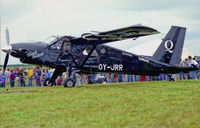
De Havilland DHC-2 BeaverRegistration
OY-JRR
MSN
1632
Year of Manufacture
1966
Operator
Para-FliteDate
March 11, 2007 at 04:00 PM
Type
CRASHFlight Type
Skydiving / Paratroopers
Flight Phase
Takeoff (climb)
Crash Site
Airport (less than 10 km from airport)
Crash Location
Headcorn Kent
Region
Europe • United Kingdom
Coordinates
51.1695°, 0.6230°
Crash Cause
Human factor
Narrative Report
On March 11, 2007 at 04:00 PM, Headcorn - Headcorn experienced a crash involving De Havilland DHC-2 Beaver, operated by Para-Flite, with the event recorded near Headcorn Kent.
The flight was categorized as skydiving / paratroopers and the reported phase was takeoff (climb) at a airport (less than 10 km from airport) crash site.
9 people were known to be on board, 1 fatalities were recorded, 8 survivors were identified or estimated. This corresponds to an estimated fatality rate of 11.1%.
Crew on board: 1, crew fatalities: 1, passengers on board: 8, passenger fatalities: 0, other fatalities: 0.
The listed crash cause is human factor. The pilot was conducting flights for the purpose of parachute operations; these flights are known colloquially as ‘lifts’. On the previous day, he had conducted 13 lifts, of which eleven were to an altitude of 12,000 ft and two to an altitude of 5,500 ft or less. On the day of the accident the pilot recorded that he took off for the first lift at 0927 hrs. The aircraft, with nine parachutists aboard, climbed to 12,000 ft and landed at 0946 hrs. There followed three flights of an average 18 minute duration, between each of which the aircraft was on the ground for no more than 7 minutes. The last of these flights landed at 1100 hrs, after which the aircraft uplifted 230 ltr of Jet A1 fuel. The aircraft utilised the main runway, Runway 29, for each of these flights. The surface wind had freshened from the south and the pilot requested the use of the shorter Runway 21. The air/ground radio operator refused this request because he believed that the pilot had not been checked out to use this runway, as required by the Headcorn Aerodrome Manual. Accordingly, the pilot approached a nominated check pilot who agreed to observe his next flight. The check pilot briefed the pilot of OY-JRR on the procedures for using the short runway, emphasising the need to make an early decision to abort the takeoff if necessary. The check pilot stated that the pilot of OY-JRR performed a thorough pre-takeoff check using the full checklist available in the cockpit and that the subsequent flight was entirely satisfactory. Following the check flight the aircraft took off again at 1148 hrs and flew a further five flights, each separated by periods that ranged between 7 and 36 minutes. The check pilot observed several of these flights, all of which were from Runway 21, and most appeared to proceed normally. He and another witness noticed that on one occasion the climb gradient after takeoff appeared shallower than normal, but they believed that the wind speed had decreased at this time. The pilot recorded that the aircraft was refuelled again after landing at 1443 hrs, this time uplifting 266 ltr of fuel. The next takeoff was at 1447 hrs and having climbed to 12,000 ft again the aircraft landed at 1521 hrs. The accident occurred on the pilot’s eleventh flight of the day. Prior to the flight the aircraft was refuelled with a further 100 ltr at 1555 hrs. Shortly before 1605 hrs the aircraft taxied to Runway 21. It appeared to accelerate normally but at no time was the tail seen to rise in its usual manner prior to becoming airborne. Onboard, the experienced jump-master noticed that the aircraft was passing the aerodrome refuelling installation and several aircraft parked close to the runway, beyond the intersection of Runway 21 with Runway 29. He was aware that the aircraft had now passed the point where it would normally become airborne. Almost simultaneously, he heard the pilot shout “Abort”. One of the parachutists shouted to the other occupants “Brace - Brace, everyone on the floor”. The aircraft stopped abruptly when its left wing and cockpit collided with a camouflaged F100 fighter aircraft which was parked as a museum exhibit to the left of the southern edge of Runway 21. The occupants of the cabin were able to vacate the aircraft with mutual assistance. Members of the aerodrome fire service extinguished a small fire, which had started in the area of the engine, and other witnesses helped the occupants to move away from the aircraft. The pilot, however, remained unconscious in the cockpit. He was attended subsequently by paramedics and taken to hospital, where he succumbed to his injuries.
Aircraft reference details include registration OY-JRR, MSN 1632, year of manufacture 1966.
Geospatial coordinates for this crash are approximately 51.1695°, 0.6230°.
Fatalities
Total
1
Crew
1
Passengers
0
Other
0
Crash Summary
The pilot was conducting flights for the purpose of parachute operations; these flights are known colloquially as ‘lifts’. On the previous day, he had conducted 13 lifts, of which eleven were to an altitude of 12,000 ft and two to an altitude of 5,500 ft or less. On the day of the accident the pilot recorded that he took off for the first lift at 0927 hrs. The aircraft, with nine parachutists aboard, climbed to 12,000 ft and landed at 0946 hrs. There followed three flights of an average 18 minute duration, between each of which the aircraft was on the ground for no more than 7 minutes. The last of these flights landed at 1100 hrs, after which the aircraft uplifted 230 ltr of Jet A1 fuel. The aircraft utilised the main runway, Runway 29, for each of these flights. The surface wind had freshened from the south and the pilot requested the use of the shorter Runway 21. The air/ground radio operator refused this request because he believed that the pilot had not been checked out to use this runway, as required by the Headcorn Aerodrome Manual. Accordingly, the pilot approached a nominated check pilot who agreed to observe his next flight. The check pilot briefed the pilot of OY-JRR on the procedures for using the short runway, emphasising the need to make an early decision to abort the takeoff if necessary. The check pilot stated that the pilot of OY-JRR performed a thorough pre-takeoff check using the full checklist available in the cockpit and that the subsequent flight was entirely satisfactory. Following the check flight the aircraft took off again at 1148 hrs and flew a further five flights, each separated by periods that ranged between 7 and 36 minutes. The check pilot observed several of these flights, all of which were from Runway 21, and most appeared to proceed normally. He and another witness noticed that on one occasion the climb gradient after takeoff appeared shallower than normal, but they believed that the wind speed had decreased at this time. The pilot recorded that the aircraft was refuelled again after landing at 1443 hrs, this time uplifting 266 ltr of fuel. The next takeoff was at 1447 hrs and having climbed to 12,000 ft again the aircraft landed at 1521 hrs. The accident occurred on the pilot’s eleventh flight of the day. Prior to the flight the aircraft was refuelled with a further 100 ltr at 1555 hrs. Shortly before 1605 hrs the aircraft taxied to Runway 21. It appeared to accelerate normally but at no time was the tail seen to rise in its usual manner prior to becoming airborne. Onboard, the experienced jump-master noticed that the aircraft was passing the aerodrome refuelling installation and several aircraft parked close to the runway, beyond the intersection of Runway 21 with Runway 29. He was aware that the aircraft had now passed the point where it would normally become airborne. Almost simultaneously, he heard the pilot shout “Abort”. One of the parachutists shouted to the other occupants “Brace - Brace, everyone on the floor”. The aircraft stopped abruptly when its left wing and cockpit collided with a camouflaged F100 fighter aircraft which was parked as a museum exhibit to the left of the southern edge of Runway 21. The occupants of the cabin were able to vacate the aircraft with mutual assistance. Members of the aerodrome fire service extinguished a small fire, which had started in the area of the engine, and other witnesses helped the occupants to move away from the aircraft. The pilot, however, remained unconscious in the cockpit. He was attended subsequently by paramedics and taken to hospital, where he succumbed to his injuries.
Cause: Human factor
Occupants & Outcome
Crew On Board
1
Passengers On Board
8
Estimated Survivors
8
Fatality Rate
11.1%
Known people on board: 9
Operational Details
Schedule / Flight
Headcorn - Headcorn
Operator
Para-FliteFlight Type
Skydiving / Paratroopers
Flight Phase
Takeoff (climb)
Crash Site
Airport (less than 10 km from airport)
Region / Country
Europe • United Kingdom
Aircraft Details
Similar Plane Crashes
Handley Page Aircraft Company Ltd
Handley Page V/1500
Assembled at Cricklewood Airfield in May 1918, the aircraft departed Cricklewood for its 13th test flight, carrying six crew members. Shortly after takeoff, while climbing to a height of about 700-800 feet, all four engines stopped. The pilot elected to return for an emergency landing when the aircraft stalled and crashed in a field located in front of 21 Garrick Avenue in Golders Green, bursting into flames. Colonel Ogilvie, who was seating in the tail gunner position at the back of the plane, survived, while all five other occupants were killed. Crew: Cpt Vernon Earl George Busby, pilot, † Mr. Bertram G. Cooper, † Mr. R. P. Cooper, † Mr. W. H. Hathaway, † Mr. J. W. Windebank, † Colonel Ogilvie.
Marine Aeroplane Depot
Fairey III
The pilot departed Isle of Grain on a delivery flight to Glasgow-Renfrew Airport. On approach to RAF Usworth (RAF Hylton), he elected to make a go-around when the aircraft lost height and crashed. The aircraft was destroyed and the pilot, Captain Arthur Leslie Simms, was killed.
Royal Air Force - RAF
De Havilland DH.6
The crew was completing a local training flight at RAF Seaton Carew when the aircraft entered a spin and crashed in a field, bursting into flames. Both occupants were killed. Crew: Cpt Charles David Danby, pilot, 1st Class E. A. Bannister, mechanic.
Royal Air Force - RAF
Handley Page H.P.12
The aircraft departed Castle Bromwich for a test flight, carrying five engineers and two crew members. En route, the twin engine aircraft suffered technical problems with a wing, lost height and crashed in a field located in Maxstoke. The aircraft was destroyed and all seven occupants were killed. Crew: Lt Robert Edward Macbeth, Lt Frederick James Bravery, 1st Air Mechanic James Benjamn May, 2nd Air Mechanic Albert J. Winrow, 2nd Air Mechanic H. Simmonds, 3rd Air Mechanic Charles William Offord, 3rd George Greenland.
Royal Air Force - RAF
Blackburn R.T.1 Kangaroo
On final approach in bad visibility, aircraft was too low. It struck the ground short of runway and crashed. Both occupants were injured. Crew was performing a training flight on behalf of the 246th Squadron.
Royal Air Force - RAF
De Havilland DH.9
The pilot tried to return to his base but due to low visibility by night, he lost his orientation. He elected to make an emergency landing in an open field but the aircraft hit a tree and crashed. The pilot was injured.