
ZH876
Flight / Schedule
ZH876
Aircraft
Lockheed C-130 HerculesRegistration
ZH876
MSN
5460
Year of Manufacture
1999
Operator
Royal Air Force - RAFDate
February 12, 2007 at 08:10 PM
Type
CRASHFlight Type
Military
Flight Phase
Landing (descent or approach)
Crash Site
Airport (less than 10 km from airport)
Crash Location
Amarah Maysan (<U+0645><U+064A><U+0633><U+0627><U+0646>)
Region
Asia • Iraq
Crash Cause
Terrorism act, Hijacking, Sabotage
Narrative Report
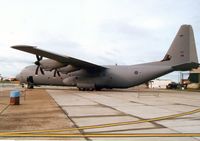
On February 12, 2007 at 08:10 PM, ZH876 experienced a crash involving Lockheed C-130 Hercules, operated by Royal Air Force - RAF, with the event recorded near Amarah Maysan (<U+0645><U+064A><U+0633><U+0627><U+0646>).
The flight was categorized as military and the reported phase was landing (descent or approach) at a airport (less than 10 km from airport) crash site.
64 people were known to be on board, 0 fatalities were recorded, 64 survivors were identified or estimated. This corresponds to an estimated fatality rate of 0.0%.
Crew on board: 6, crew fatalities: 0, passengers on board: 58, passenger fatalities: 0, other fatalities: 0.
The listed crash cause is terrorism act, hijacking, sabotage. The crew of ZH876 were tasked to fly a routine roulement of troops to a Tactical Landing Zone (TLZ) in Maysan province, Iraq. Weather at the TLZ was good, with a visibility of 25 km, no significant cloud and a light surface wind. The flight to the TLZ was routine and at approx 17:00 UTC the Hercules began to make its approach to the TLZ. Comms had already been established between ZH876 and the Tactical Air Traffic Controller (Tac ATC) at the TLZ, and the aircraft was subsequently cleared to land. An uneventful approach followed flown by the copilot. At 17:10:15 UTC, as the aircraft was about to touchdown at the TLZ, the crew experienced a load bang and a bright flash. The flash temporarily blinded the flight-deck crew. Virtually simultaneously, the aircraft touched down. The first flash was followed, a second later, by another flash and louder bang. The aircraft slewed off the left-hand side of the runway. The captain took over control of the aircraft. On regaining vision, the captain tried to steer the aircraft back onto the runway. However, the crew became aware of a fire on the port side, which was confirmed as a wing fire. The captain brought the aircraft to an immediate halt. The aircraft came to rest 50 m from the runway edge, some 700 m after touchdown. The aircraft sustained substantial damage and it was decided to blow up the plane because the damage was too difficult to repair and there was also a potential risk that anti-Iraqi forces might obtain information on specialist equipment.
Aircraft reference details include registration ZH876, MSN 5460, year of manufacture 1999.
Fatalities
Total
0
Crew
0
Passengers
0
Other
0
Crash Summary
The crew of ZH876 were tasked to fly a routine roulement of troops to a Tactical Landing Zone (TLZ) in Maysan province, Iraq. Weather at the TLZ was good, with a visibility of 25 km, no significant cloud and a light surface wind. The flight to the TLZ was routine and at approx 17:00 UTC the Hercules began to make its approach to the TLZ. Comms had already been established between ZH876 and the Tactical Air Traffic Controller (Tac ATC) at the TLZ, and the aircraft was subsequently cleared to land. An uneventful approach followed flown by the copilot. At 17:10:15 UTC, as the aircraft was about to touchdown at the TLZ, the crew experienced a load bang and a bright flash. The flash temporarily blinded the flight-deck crew. Virtually simultaneously, the aircraft touched down. The first flash was followed, a second later, by another flash and louder bang. The aircraft slewed off the left-hand side of the runway. The captain took over control of the aircraft. On regaining vision, the captain tried to steer the aircraft back onto the runway. However, the crew became aware of a fire on the port side, which was confirmed as a wing fire. The captain brought the aircraft to an immediate halt. The aircraft came to rest 50 m from the runway edge, some 700 m after touchdown. The aircraft sustained substantial damage and it was decided to blow up the plane because the damage was too difficult to repair and there was also a potential risk that anti-Iraqi forces might obtain information on specialist equipment.
Cause: Terrorism act, Hijacking, Sabotage
Occupants & Outcome
Crew On Board
6
Passengers On Board
58
Estimated Survivors
64
Fatality Rate
0.0%
Known people on board: 64
Operational Details
Operator
Royal Air Force - RAFFlight Type
Military
Flight Phase
Landing (descent or approach)
Crash Site
Airport (less than 10 km from airport)
Region / Country
Asia • Iraq
Aircraft Details
Similar Plane Crashes
Royal Air Force - RAF
Avro 504
The single engine aircraft was completing a local training flight when it stalled and crashed near Abukir. A crew member was killed and the second was injured. Crew: 2nd Lt G. E. Satterthwaite, † 2nd Lt J. Acheson.
Royal Air Force - RAF
De Havilland DH.6
The crew was completing a local training flight at RAF Seaton Carew when the aircraft entered a spin and crashed in a field, bursting into flames. Both occupants were killed. Crew: Cpt Charles David Danby, pilot, 1st Class E. A. Bannister, mechanic.
Royal Air Force - RAF
Handley Page H.P.12
The aircraft departed Castle Bromwich for a test flight, carrying five engineers and two crew members. En route, the twin engine aircraft suffered technical problems with a wing, lost height and crashed in a field located in Maxstoke. The aircraft was destroyed and all seven occupants were killed. Crew: Lt Robert Edward Macbeth, Lt Frederick James Bravery, 1st Air Mechanic James Benjamn May, 2nd Air Mechanic Albert J. Winrow, 2nd Air Mechanic H. Simmonds, 3rd Air Mechanic Charles William Offord, 3rd George Greenland.
Royal Air Force - RAF
Blackburn R.T.1 Kangaroo
On final approach in bad visibility, aircraft was too low. It struck the ground short of runway and crashed. Both occupants were injured. Crew was performing a training flight on behalf of the 246th Squadron.
Royal Air Force - RAF
De Havilland DH.9
The pilot tried to return to his base but due to low visibility by night, he lost his orientation. He elected to make an emergency landing in an open field but the aircraft hit a tree and crashed. The pilot was injured.
Royal Air Force - RAF
Avro 504
The pilot, sole on board, was completing a local training flight at Castle Bromwich Arport. While taking off, the engine failed, causing the aircraft to stall and crash. The pilot 2nd Lt Ormand Hilton Curry was slightly injured and the aircraft was destroyed.