
Braunschweig – Oxford
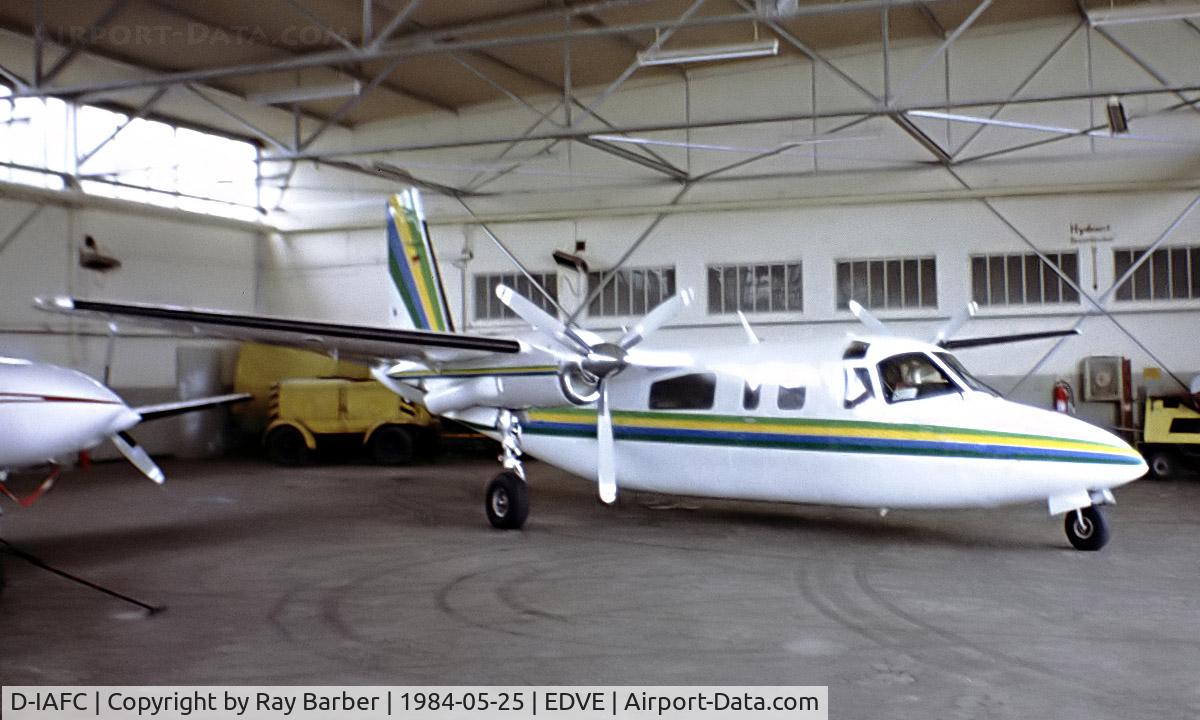
Flight / Schedule
Braunschweig – Oxford
Aircraft
Cessna 303 CrusaderRegistration
D-IAFC
MSN
303-00244
Year of Manufacture
1983
Operator
Aerowest FlugcenterDate
September 19, 2006 at 01:28 PM
Type
CRASHFlight Type
Cargo
Flight Phase
Flight
Crash Site
Lake, Sea, Ocean, River
Crash Location
Aldeburgh Suffolk
Region
Europe • United Kingdom
Coordinates
52.1524°, 1.6016°
Crash Cause
Human factor
Narrative Report
On September 19, 2006 at 01:28 PM, Braunschweig – Oxford experienced a crash involving Cessna 303 Crusader, operated by Aerowest Flugcenter, with the event recorded near Aldeburgh Suffolk.
The flight was categorized as cargo and the reported phase was flight at a lake, sea, ocean, river crash site.
1 people were known to be on board, 0 fatalities were recorded, 1 survivors were identified or estimated. This corresponds to an estimated fatality rate of 0.0%.
Crew on board: 1, crew fatalities: 0, passengers on board: 0, passenger fatalities: 0, other fatalities: 0.
The listed crash cause is human factor. Whilst on a cargo flight from Braunschweig, Germany, to Oxford, England, when approximately 30 nm from the English coast, the right engine started to run roughly. On checking the fuel gauges, the pilot observed that they were indicating in the ‘red sector’. The right engine subsequently stopped, shortly followed by the left engine. The aircraft then glided from FL100 towards the Suffolk coast and ditched in the sea approximately 9.5 nm southeast of Aldeburgh. The pilot was able to abandon the aircraft, which sank quickly. He was rescued from the sea some 18 minutes later by a Royal Air Force Search and Rescue helicopter and taken to hospital, where he was found to have suffered a fractured a vertebra. The investigation determined that the aircraft had run out of fuel, due to insufficient fuel for the intended journey being on-board the aircraft at the start of the flight.
Aircraft reference details include registration D-IAFC, MSN 303-00244, year of manufacture 1983.
Geospatial coordinates for this crash are approximately 52.1524°, 1.6016°.
Fatalities
Total
0
Crew
0
Passengers
0
Other
0
Crash Summary
Whilst on a cargo flight from Braunschweig, Germany, to Oxford, England, when approximately 30 nm from the English coast, the right engine started to run roughly. On checking the fuel gauges, the pilot observed that they were indicating in the ‘red sector’. The right engine subsequently stopped, shortly followed by the left engine. The aircraft then glided from FL100 towards the Suffolk coast and ditched in the sea approximately 9.5 nm southeast of Aldeburgh. The pilot was able to abandon the aircraft, which sank quickly. He was rescued from the sea some 18 minutes later by a Royal Air Force Search and Rescue helicopter and taken to hospital, where he was found to have suffered a fractured a vertebra. The investigation determined that the aircraft had run out of fuel, due to insufficient fuel for the intended journey being on-board the aircraft at the start of the flight.
Cause: Human factor
Occupants & Outcome
Crew On Board
1
Passengers On Board
0
Estimated Survivors
1
Fatality Rate
0.0%
Known people on board: 1
Operational Details
Schedule / Flight
Braunschweig – Oxford
Operator
Aerowest FlugcenterFlight Type
Cargo
Flight Phase
Flight
Crash Site
Lake, Sea, Ocean, River
Region / Country
Europe • United Kingdom
Aircraft Details
Similar Plane Crashes
Handley Page Aircraft Company Ltd
Handley Page V/1500
Assembled at Cricklewood Airfield in May 1918, the aircraft departed Cricklewood for its 13th test flight, carrying six crew members. Shortly after takeoff, while climbing to a height of about 700-800 feet, all four engines stopped. The pilot elected to return for an emergency landing when the aircraft stalled and crashed in a field located in front of 21 Garrick Avenue in Golders Green, bursting into flames. Colonel Ogilvie, who was seating in the tail gunner position at the back of the plane, survived, while all five other occupants were killed. Crew: Cpt Vernon Earl George Busby, pilot, † Mr. Bertram G. Cooper, † Mr. R. P. Cooper, † Mr. W. H. Hathaway, † Mr. J. W. Windebank, † Colonel Ogilvie.
Marine Aeroplane Depot
Fairey III
The pilot departed Isle of Grain on a delivery flight to Glasgow-Renfrew Airport. On approach to RAF Usworth (RAF Hylton), he elected to make a go-around when the aircraft lost height and crashed. The aircraft was destroyed and the pilot, Captain Arthur Leslie Simms, was killed.
Royal Air Force - RAF
De Havilland DH.6
The crew was completing a local training flight at RAF Seaton Carew when the aircraft entered a spin and crashed in a field, bursting into flames. Both occupants were killed. Crew: Cpt Charles David Danby, pilot, 1st Class E. A. Bannister, mechanic.
Royal Air Force - RAF
Handley Page H.P.12
The aircraft departed Castle Bromwich for a test flight, carrying five engineers and two crew members. En route, the twin engine aircraft suffered technical problems with a wing, lost height and crashed in a field located in Maxstoke. The aircraft was destroyed and all seven occupants were killed. Crew: Lt Robert Edward Macbeth, Lt Frederick James Bravery, 1st Air Mechanic James Benjamn May, 2nd Air Mechanic Albert J. Winrow, 2nd Air Mechanic H. Simmonds, 3rd Air Mechanic Charles William Offord, 3rd George Greenland.
Royal Air Force - RAF
Blackburn R.T.1 Kangaroo
On final approach in bad visibility, aircraft was too low. It struck the ground short of runway and crashed. Both occupants were injured. Crew was performing a training flight on behalf of the 246th Squadron.
Royal Air Force - RAF
De Havilland DH.9
The pilot tried to return to his base but due to low visibility by night, he lost his orientation. He elected to make an emergency landing in an open field but the aircraft hit a tree and crashed. The pilot was injured.