
Muscat - Muscat
Flight / Schedule
Muscat - Muscat
Aircraft
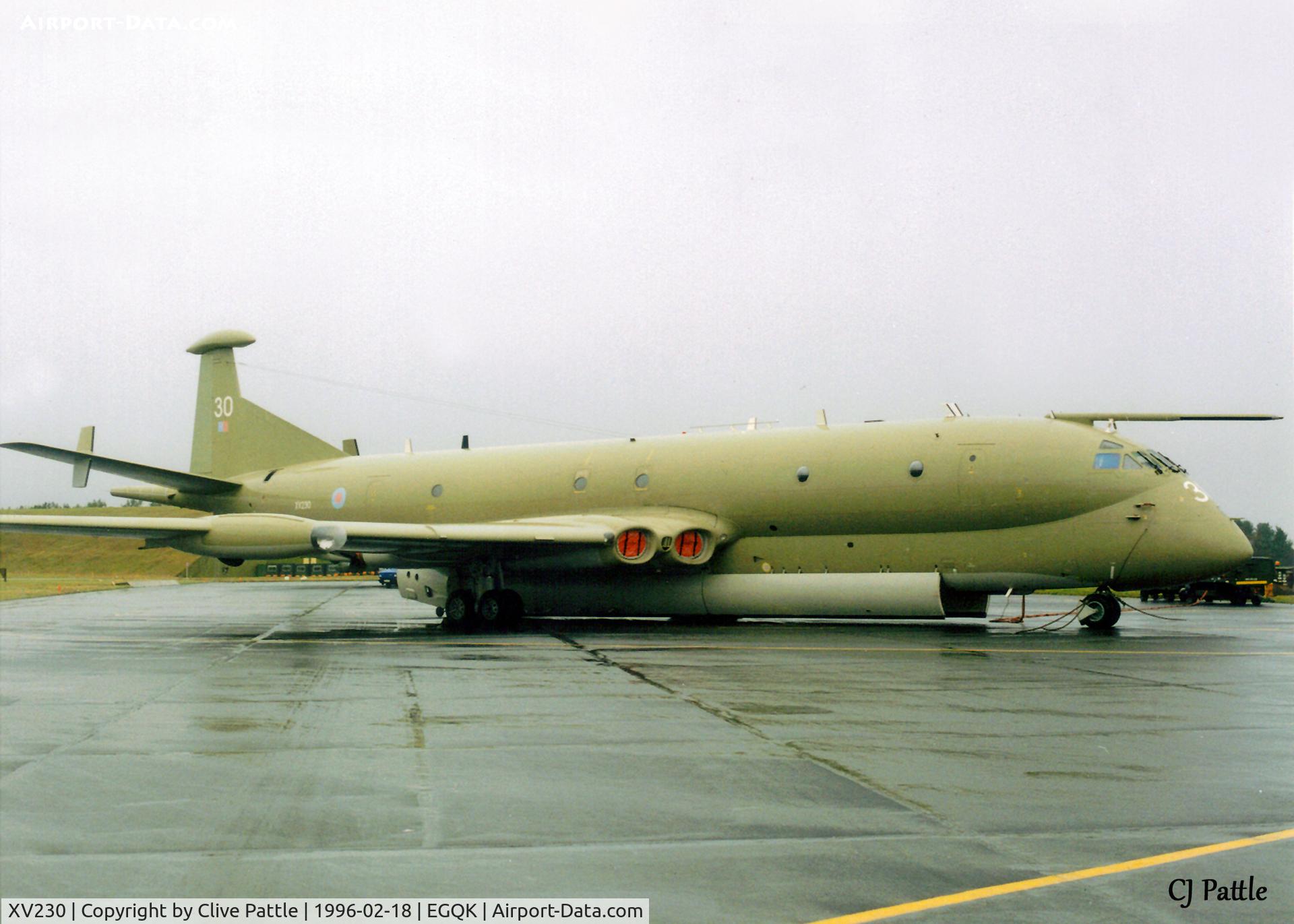
BAe NimrodRegistration
XV230
MSN
8005
Year of Manufacture
1969
Operator
Royal Air Force - RAFDate
September 2, 2006 at 03:47 PM
Type
CRASHFlight Type
Military
Flight Phase
Flight
Crash Site
Plain, Valley
Crash Location
Kandahar Kandahar
Region
Asia • Afghanistan
Coordinates
31.6123°, 65.7013°
Crash Cause
Technical failure
Narrative Report
On September 2, 2006 at 03:47 PM, Muscat - Muscat experienced a crash involving BAe Nimrod, operated by Royal Air Force - RAF, with the event recorded near Kandahar Kandahar.
The flight was categorized as military and the reported phase was flight at a plain, valley crash site.
14 people were known to be on board, 14 fatalities were recorded, 0 survivors were identified or estimated. This corresponds to an estimated fatality rate of 100.0%.
Crew on board: 14, crew fatalities: 14, passengers on board: 0, passenger fatalities: 0, other fatalities: 0.
The listed crash cause is technical failure. The aircraft departed at 13:43 for a mission over Afghanistan, in support of coalition forces engaging the Taliban. At 15:30 the airplane rendezvoused with an RAF Lockheed TriStar tanker and received fuel in an air-to-air refuelling procedure that lasted 10 minutes. Air-to-air refuelling appeared to pass without incident and XV230's crew prepared to turn east, towards their operational area. Eleven minutes later a bomb bay fire warning, either coincident with, or followed immediately by, an elevator bay underfloor smoke warning, was reported. The crew also reported smoke entering the aircraft’s cabin, from both elevator and aileron bays. Within a minute the aircraft depressurised as the fire breached the aircraft’s pressure hull requiring the crew to don their oxygen masks. The captain began to turn the aircraft towards Kandahar, declared a MAYDAY and began a descent. Meanwhile a crew member reported a fire 'from the rear of the starboard engines'. Another crew member reported a fire within the aileron bay. Last radio contact was at 15:46 when the crew acknowledged the Kandahar weather for landing. About the same time, a Harrier GR7 pilot, who was several thousand feet above, reported an intense fire close to the starboard fuselage and stretching out between where the wing joins the aircraft fuselage to the starboard engine; there was a second fire that stretched behind the aircraft from a point on the side of the rear body of the aircraft. At 15:47 the Harrier pilot reported that he saw the Nimrod explode. It broke into 4 sections, at a height of between 750 feet and 1000 feet. All 14 crew members were killed. Crew: F/Sgt Gary Wayne Andrews, F/Sgt Stephen Beattie, F/Sgt Gerard Martin Bell, F/Sgt Adrian Davies, L/Cpl Oliver Simon Dicketts, F/Lt Steven Johnson, Sgt Benjamin James Knight, F/Lt Leigh Anthony Mitchelmore, F/Lt Gareth Rodney Nicholas, Sgt John Joseph Langton, Sgt Gary Paul Quilliam, F/Lt Allan James Squires, F/Lt Steven Swarbrick, Mne Joseph David Windall.
Aircraft reference details include registration XV230, MSN 8005, year of manufacture 1969.
Geospatial coordinates for this crash are approximately 31.6123°, 65.7013°.
Fatalities
Total
14
Crew
14
Passengers
0
Other
0
Crash Summary
The aircraft departed at 13:43 for a mission over Afghanistan, in support of coalition forces engaging the Taliban. At 15:30 the airplane rendezvoused with an RAF Lockheed TriStar tanker and received fuel in an air-to-air refuelling procedure that lasted 10 minutes. Air-to-air refuelling appeared to pass without incident and XV230's crew prepared to turn east, towards their operational area. Eleven minutes later a bomb bay fire warning, either coincident with, or followed immediately by, an elevator bay underfloor smoke warning, was reported. The crew also reported smoke entering the aircraft’s cabin, from both elevator and aileron bays. Within a minute the aircraft depressurised as the fire breached the aircraft’s pressure hull requiring the crew to don their oxygen masks. The captain began to turn the aircraft towards Kandahar, declared a MAYDAY and began a descent. Meanwhile a crew member reported a fire 'from the rear of the starboard engines'. Another crew member reported a fire within the aileron bay. Last radio contact was at 15:46 when the crew acknowledged the Kandahar weather for landing. About the same time, a Harrier GR7 pilot, who was several thousand feet above, reported an intense fire close to the starboard fuselage and stretching out between where the wing joins the aircraft fuselage to the starboard engine; there was a second fire that stretched behind the aircraft from a point on the side of the rear body of the aircraft. At 15:47 the Harrier pilot reported that he saw the Nimrod explode. It broke into 4 sections, at a height of between 750 feet and 1000 feet. All 14 crew members were killed. Crew: F/Sgt Gary Wayne Andrews, F/Sgt Stephen Beattie, F/Sgt Gerard Martin Bell, F/Sgt Adrian Davies, L/Cpl Oliver Simon Dicketts, F/Lt Steven Johnson, Sgt Benjamin James Knight, F/Lt Leigh Anthony Mitchelmore, F/Lt Gareth Rodney Nicholas, Sgt John Joseph Langton, Sgt Gary Paul Quilliam, F/Lt Allan James Squires, F/Lt Steven Swarbrick, Mne Joseph David Windall.
Cause: Technical failure
Occupants & Outcome
Crew On Board
14
Passengers On Board
0
Estimated Survivors
0
Fatality Rate
100.0%
Known people on board: 14
Operational Details
Schedule / Flight
Muscat - Muscat
Operator
Royal Air Force - RAFFlight Type
Military
Flight Phase
Flight
Crash Site
Plain, Valley
Region / Country
Asia • Afghanistan
Aircraft Details
Similar Plane Crashes
Royal Air Force - RAF
Avro 504
The single engine aircraft was completing a local training flight when it stalled and crashed near Abukir. A crew member was killed and the second was injured. Crew: 2nd Lt G. E. Satterthwaite, † 2nd Lt J. Acheson.
Royal Air Force - RAF
De Havilland DH.6
The crew was completing a local training flight at RAF Seaton Carew when the aircraft entered a spin and crashed in a field, bursting into flames. Both occupants were killed. Crew: Cpt Charles David Danby, pilot, 1st Class E. A. Bannister, mechanic.
Royal Air Force - RAF
Handley Page H.P.12
The aircraft departed Castle Bromwich for a test flight, carrying five engineers and two crew members. En route, the twin engine aircraft suffered technical problems with a wing, lost height and crashed in a field located in Maxstoke. The aircraft was destroyed and all seven occupants were killed. Crew: Lt Robert Edward Macbeth, Lt Frederick James Bravery, 1st Air Mechanic James Benjamn May, 2nd Air Mechanic Albert J. Winrow, 2nd Air Mechanic H. Simmonds, 3rd Air Mechanic Charles William Offord, 3rd George Greenland.
Royal Air Force - RAF
Blackburn R.T.1 Kangaroo
On final approach in bad visibility, aircraft was too low. It struck the ground short of runway and crashed. Both occupants were injured. Crew was performing a training flight on behalf of the 246th Squadron.
Royal Air Force - RAF
De Havilland DH.9
The pilot tried to return to his base but due to low visibility by night, he lost his orientation. He elected to make an emergency landing in an open field but the aircraft hit a tree and crashed. The pilot was injured.
Royal Air Force - RAF
Avro 504
The pilot, sole on board, was completing a local training flight at Castle Bromwich Arport. While taking off, the engine failed, causing the aircraft to stall and crash. The pilot 2nd Lt Ormand Hilton Curry was slightly injured and the aircraft was destroyed.