
Charlotte Amalie - San Juan
Flight / Schedule
Charlotte Amalie - San Juan
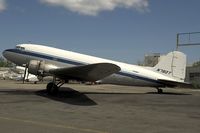
Aircraft
Douglas DC-3Registration
N782T
MSN
4382
Year of Manufacture
1942
Operator
TolAir ServicesDate
July 19, 2006 at 07:20 AM
Type
CRASHFlight Type
Positioning
Flight Phase
Takeoff (climb)
Crash Site
Lake, Sea, Ocean, River
Crash Location
Charlotte Amalie-Cyril E. King (ex Harry S. Truman) All US Virgin Islands
Region
Central America • US Virgin Islands
Crash Cause
Technical failure
Narrative Report
On July 19, 2006 at 07:20 AM, Charlotte Amalie - San Juan experienced a crash involving Douglas DC-3, operated by TolAir Services, with the event recorded near Charlotte Amalie-Cyril E. King (ex Harry S. Truman) All US Virgin Islands.
The flight was categorized as positioning and the reported phase was takeoff (climb) at a lake, sea, ocean, river crash site.
2 people were known to be on board, 0 fatalities were recorded, 2 survivors were identified or estimated. This corresponds to an estimated fatality rate of 0.0%.
Crew on board: 2, crew fatalities: 0, passengers on board: 0, passenger fatalities: 0, other fatalities: 0.
The listed crash cause is technical failure. The captain stated that the accident flight was a return flight to San Juan, Puerto Rico, after delivering U.S. Mail. The airplane was empty of cargo at the time of the accident. The first officer was flying the airplane. The takeoff roll and rotation at 84 knots was uneventful until about 100 feet above the ground when the gear was called out to be retracted. At that time, the left engine's rpm dropped from 2,700 to 1,000. He communicated to the first officer that he would be assuming control of the airplane. He then proceeded with verifying that the left engine had failed. Once confirmed, he proceeded with the failed engine check list and feathering the propeller. They advised air traffic control (ATC) of the situation and informed them that they were returning to land. The airplane would not maintain altitude and the airspeed dropped to about 75 knots. The captain stated that he knew the airplane would not make it back to the airport. Instructions were given to the two passengers to don their life vests and prepared for a ditching. The captain elected to perform a controlled flight into the water. All onboard managed to exit the airplane through the cockpit overhead escape hatch onto the life raft as the airplane remained afloat. About ten minutes later the airplane sank nose first straight down. The airplane came to rest at the bottom of the ocean, in about 100 feet of water. The airplane was not recovered. Underwater photos provided by the operator showed the nose and cockpit area caved in, the left engine's propeller was in the feathered position, and the right engine's propeller was in a low pitch position.
Aircraft reference details include registration N782T, MSN 4382, year of manufacture 1942.
Fatalities
Total
0
Crew
0
Passengers
0
Other
0
Crash Summary
The captain stated that the accident flight was a return flight to San Juan, Puerto Rico, after delivering U.S. Mail. The airplane was empty of cargo at the time of the accident. The first officer was flying the airplane. The takeoff roll and rotation at 84 knots was uneventful until about 100 feet above the ground when the gear was called out to be retracted. At that time, the left engine's rpm dropped from 2,700 to 1,000. He communicated to the first officer that he would be assuming control of the airplane. He then proceeded with verifying that the left engine had failed. Once confirmed, he proceeded with the failed engine check list and feathering the propeller. They advised air traffic control (ATC) of the situation and informed them that they were returning to land. The airplane would not maintain altitude and the airspeed dropped to about 75 knots. The captain stated that he knew the airplane would not make it back to the airport. Instructions were given to the two passengers to don their life vests and prepared for a ditching. The captain elected to perform a controlled flight into the water. All onboard managed to exit the airplane through the cockpit overhead escape hatch onto the life raft as the airplane remained afloat. About ten minutes later the airplane sank nose first straight down. The airplane came to rest at the bottom of the ocean, in about 100 feet of water. The airplane was not recovered. Underwater photos provided by the operator showed the nose and cockpit area caved in, the left engine's propeller was in the feathered position, and the right engine's propeller was in a low pitch position.
Cause: Technical failure
Occupants & Outcome
Crew On Board
2
Passengers On Board
0
Estimated Survivors
2
Fatality Rate
0.0%
Known people on board: 2
Operational Details
Schedule / Flight
Charlotte Amalie - San Juan
Operator
TolAir ServicesFlight Type
Positioning
Flight Phase
Takeoff (climb)
Crash Site
Lake, Sea, Ocean, River
Region / Country
Central America • US Virgin Islands
Aircraft Details
Similar Plane Crashes
United Airlines
Douglas DC-3
On final approach, the aircraft lost 400 feet in few seconds and eventually crashed into the bay of San Francisco, some two miles off the airport. All eleven occupants were killed. Crew: A. R. Thompson, pilot, Joe Decesaro, copilot, Ruth Kimmel, stewardess.
KLM Royal Dutch Airlines - Koninklijke Luchtvaart Maatschappij
Douglas DC-3
The aircraft was on a delivery flight to the Dutch National Company based in Amsterdam and should be flown from Long Beach to New York with intermediate stops in Phoenix and Kansas City. While proceeding in poor weather conditions, aircraft hit Baldy Peak located some 250 km northeast of Phoenix. All eight occupants were killed.
KLM Royal Dutch Airlines - Koninklijke Luchtvaart Maatschappij
Douglas DC-3
Shortly after takeoff from Palembang-Talang Airport, while in initial climb, the left engine failed. Crew decided to return for a safe landing but the aircraft hit tree tops, stalled and crashed near the airport. The cockpit was destroyed and separated from the rest of the aircraft, killing three crew. A passenger was killed as well. The aircraft was christened 'Specht'. Crew: F.M. Stork, pilot, † H.J. Groeneveld, copilot, J. J. Ruben, engineer, † J. J. Stodieck, radio. †
United Airlines
Douglas DC-3
While cruising at 10,000 feet at night and in bad weather conditions, pilot tried to contact ATC without any success. He could not receive any signal from the regional beacon and decided to continue ahead to Salt Lake City Airport. Few minutes later, in low visibility, the aircraft hit the Haydens Peak at a height of 10,000 feet and located 81 km east from Salt Lake City and 32 km southwest from Knight. All 19 occupants were killed. Up to date, worst plane crash in the US. Crew: Earl D. Woodgerd, pilot, John B. Adams, copilot, Leah Derr, stewardess.
United Airlines
Douglas DC-3
The aircraft was on approach to Cleveland Airport when the right engine fired. While cruising at an altitude of 4,000 feet, crew attempted to make an emergency landing when control was lost. Aircraft crashed in flames some 14 km from the airport and was destroyed by impact forces. All ten occupants were killed. Crew: James L. Brandon, pilot, Austin S. Merrifield, copilot, Fildred A., stewardess. Passengers: John Rodd Hoffett, Elling M. Veblen, Ralph Parker Morrell, John K. Brostuen, Richard Charles Lewis, Charles T. Lickel, L. Arthur Doty.
Pan American World Airways - PAA
Douglas DC-3
Shortly after takeoff, while in initial climb, an engine failed. The crew tried to return to the airport and attempted a turn when the aircraft stalled, hit the roof of a local hospital and crashed in some trees. All aircraft's occupants were rescued while one person in the hospital was killed.