
Hillsboro – Salem
Flight / Schedule
Hillsboro – Salem
Aircraft
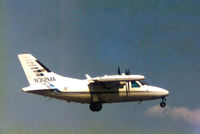
Mitsubishi MU-2 MarquiseRegistration
N312MA
MSN
266
Year of Manufacture
1973
Operator
Max Aviation - USADate
May 24, 2005 at 05:52 PM
Type
CRASHFlight Type
Charter/Taxi (Non Scheduled Revenue Flight)
Flight Phase
Takeoff (climb)
Crash Site
Airport (less than 10 km from airport)
Crash Location
Hillsboro Oregon
Region
North America • United States of America
Coordinates
45.5229°, -122.9898°
Crash Cause
Human factor
Narrative Report
On May 24, 2005 at 05:52 PM, Hillsboro – Salem experienced a crash involving Mitsubishi MU-2 Marquise, operated by Max Aviation - USA, with the event recorded near Hillsboro Oregon.
The flight was categorized as charter/taxi (non scheduled revenue flight) and the reported phase was takeoff (climb) at a airport (less than 10 km from airport) crash site.
4 people were known to be on board, 4 fatalities were recorded, 0 survivors were identified or estimated. This corresponds to an estimated fatality rate of 100.0%.
Crew on board: 1, crew fatalities: 1, passengers on board: 3, passenger fatalities: 3, other fatalities: 0.
The listed crash cause is human factor. Witnesses observed the aircraft perform a rolling takeoff and it was airborne by the crossing runway (1,300 feet down the 6,600 foot runway). The aircraft entered an approximate 40 degree nose high climb rate to about 1,000 feet. The aircraft then entered a steep left hand banking turn. The nose dropped and the aircraft rotated up to about 4 times before colliding with the flat terrain adjacent to the departure end of the runway threshold. On site documentation of the airframe found no evidence of a flight control malfunction. An engine examination and teardown found that the gearbox section of the left engine experienced a high cycle fatigue failure of the high speed pinion journal bearing oil supply tube and subsequent degradation of the high speed pinion journal bearings. This failure resulted in a partial power loss to the left engine. The pilot had recently purchased this aircraft and he had accumulated approximately 11 hours since the purchase. The pilot had stated to personnel at the place where he purchased the aircraft that he had not received, nor did he need recurrent training in this aircraft as he had several thousand hours in the aircraft. Flight logs provided by the family indicated that the pilot had accumulated about 551 hours in a Mitsubishi, however, the last time that the pilot had flown this make and model was 14 years prior to the accident. Logbook entries indicated that only a few hours of flight time had been accumulated in all aircraft during the approximately 2 years prior to the accident. Personnel that flew with the pilot in the make and model aircraft involved in the accident described the pilot as "proficiency lacking." Normal takeoff calculations for the aircraft with the flaps configured to 5 degrees, indicated a ground run of 2,900 feet, with a rotation speed of 106 KCAS, and 125 KCAS for the climb out. A maximum pitch attitude of 13 degrees maximum is indicated. Performance calculations indicated that the aircraft was capable of lifting off where the witnesses observed and climbing to 1,000 feet agl by the end of the runway. To achieve this performance the aircraft would have rotated at approximately 84 KCAS and climbed at an airspeed below Vmc (100 KCAS) and close to power-off stall speed (86 KCAS) with 5 degrees of flaps. The airplane's flight manual indicated that if an engine failure occurs in the takeoff climb and the landing gear is fully retracted, the emergency procedures is to maintain 140 KCAS, flaps to 5 degrees, the failed engine condition lever to EMERGENCY STOP, and failed engine power lever to TAKEOFF. On site documentation found the left side condition lever in the takeoff/land position and the power lever was found half-way between takeoff and flight idle.
Aircraft reference details include registration N312MA, MSN 266, year of manufacture 1973.
Geospatial coordinates for this crash are approximately 45.5229°, -122.9898°.
Fatalities
Total
4
Crew
1
Passengers
3
Other
0
Crash Summary
Witnesses observed the aircraft perform a rolling takeoff and it was airborne by the crossing runway (1,300 feet down the 6,600 foot runway). The aircraft entered an approximate 40 degree nose high climb rate to about 1,000 feet. The aircraft then entered a steep left hand banking turn. The nose dropped and the aircraft rotated up to about 4 times before colliding with the flat terrain adjacent to the departure end of the runway threshold. On site documentation of the airframe found no evidence of a flight control malfunction. An engine examination and teardown found that the gearbox section of the left engine experienced a high cycle fatigue failure of the high speed pinion journal bearing oil supply tube and subsequent degradation of the high speed pinion journal bearings. This failure resulted in a partial power loss to the left engine. The pilot had recently purchased this aircraft and he had accumulated approximately 11 hours since the purchase. The pilot had stated to personnel at the place where he purchased the aircraft that he had not received, nor did he need recurrent training in this aircraft as he had several thousand hours in the aircraft. Flight logs provided by the family indicated that the pilot had accumulated about 551 hours in a Mitsubishi, however, the last time that the pilot had flown this make and model was 14 years prior to the accident. Logbook entries indicated that only a few hours of flight time had been accumulated in all aircraft during the approximately 2 years prior to the accident. Personnel that flew with the pilot in the make and model aircraft involved in the accident described the pilot as "proficiency lacking." Normal takeoff calculations for the aircraft with the flaps configured to 5 degrees, indicated a ground run of 2,900 feet, with a rotation speed of 106 KCAS, and 125 KCAS for the climb out. A maximum pitch attitude of 13 degrees maximum is indicated. Performance calculations indicated that the aircraft was capable of lifting off where the witnesses observed and climbing to 1,000 feet agl by the end of the runway. To achieve this performance the aircraft would have rotated at approximately 84 KCAS and climbed at an airspeed below Vmc (100 KCAS) and close to power-off stall speed (86 KCAS) with 5 degrees of flaps. The airplane's flight manual indicated that if an engine failure occurs in the takeoff climb and the landing gear is fully retracted, the emergency procedures is to maintain 140 KCAS, flaps to 5 degrees, the failed engine condition lever to EMERGENCY STOP, and failed engine power lever to TAKEOFF. On site documentation found the left side condition lever in the takeoff/land position and the power lever was found half-way between takeoff and flight idle.
Cause: Human factor
Occupants & Outcome
Crew On Board
1
Passengers On Board
3
Estimated Survivors
0
Fatality Rate
100.0%
Known people on board: 4
Operational Details
Schedule / Flight
Hillsboro – Salem
Operator
Max Aviation - USAFlight Type
Charter/Taxi (Non Scheduled Revenue Flight)
Flight Phase
Takeoff (climb)
Crash Site
Airport (less than 10 km from airport)
Region / Country
North America • United States of America
Aircraft Details
Similar Plane Crashes
United States Signal Corps - USSC
De Havilland DH.4
The single engine airplane departed Dayton-McCook Field for a local test flight. Shortly after takeoff, the aircraft stalled and crashed, killing both occupants. Crew: Maj Oscar Brindley, Lt Col Henry Damm.
United States Signal Corps - USSC
De Havilland DH.4
Lt. Frank Stuart Patterson, son and nephew of the co-founders of National Cash Register, is killed in the crash of his DH.4M, AS-32098, at Wilbur Wright Field during a flight test of a new mechanism for synchronizing machine gun and propeller, when a tie rod breaks during a dive from 15,000 feet (4,600 m), causing the wings to separate from the aircraft. Wishing to recognize the contributions of the Patterson family (owners of NCR) the area of Wright Field east of Huffman Dam (including Wilbur Wright Field, Fairfield Air Depot, and the Huffman Prairie) is renamed Patterson Field on 6 July 1931, in honor of Lt. Patterson.
United States Signal Corps - USSC
De Havilland DH.4
The aircraft crashed in unknown circumstances.
United States Signal Corps - USSC
De Havilland DH.4
The crew was completing a training mission. At an altitude of about 4,000 feet, the aircraft entered a spin and crashed in an open field near Everman-Barron Field Airport. A crew was killed and the second occupants was injured. The aircraft was destroyed.
U.S. Air Mail Service
De Havilland DH.4
Crashed following an engine failure. Pilot fate unknown.
United States Signal Corps - USSC
De Havilland DH.4
The accident occurred in unknown circumstances.