
Billund – Baku – Kaboul
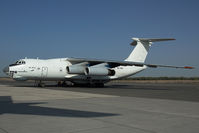
Flight / Schedule
Billund – Baku – Kaboul
Aircraft
Ilyushin II-76Registration
ER-IBM
MSN
00334 48390
Year of Manufacture
1983
Operator
Airline TransportDate
December 30, 2004 at 03:48 AM
Type
CRASHFlight Type
Cargo
Flight Phase
Landing (descent or approach)
Crash Site
Airport (less than 10 km from airport)
Crash Location
Dushanbe Districts of Republican Subordination
Region
Asia • Tajikistan
Coordinates
38.5594°, 68.8301°
Crash Cause
Human factor
Narrative Report
On December 30, 2004 at 03:48 AM, Billund – Baku – Kaboul experienced a crash involving Ilyushin II-76, operated by Airline Transport, with the event recorded near Dushanbe Districts of Republican Subordination.
The flight was categorized as cargo and the reported phase was landing (descent or approach) at a airport (less than 10 km from airport) crash site.
8 people were known to be on board, 0 fatalities were recorded, 8 survivors were identified or estimated. This corresponds to an estimated fatality rate of 0.0%.
Crew on board: 8, crew fatalities: 0, passengers on board: 0, passenger fatalities: 0, other fatalities: 0.
The listed crash cause is human factor. The Ilyushin 76 was chartered to fly a consignment of 28938 kg of humanitarian aid from Billund, Denmark to Kabul, Afghanistan. The airplane departed Billund at 18:00 and landed at Baku, Azerbaijan for a refueling stop. Visibility at Kabul was reported as 3000 m, and forecast worsening to 1200 m between 00:00 and 06:00 h due to snow and haze. Minima for Kabul airport however were a visibility of 5000 m and a cloud base at 450 m. The captain nevertheless departed Baku. While approaching Kabul the weather was reported to be: wind 340 degrees at 4 kts, visibility 2000 m, 1-2 octas clouds at 480 m, 5-7 octas clouds at 3000 m and a QNH of 1020 hPa. During the approach low clouds were moving in from the north. The visibility was limited to 500 m in fog and the wind direction changed. The crew of the Ilyushin were not informed of these changed values. The approach was continued and flaps and gear were selected down. At decision height the spoilers were extended and the descent was continued. The captain ordered the spoilers to be retracted, but this command was not carried out. At a height of 310 m, 4230 m short of the runway 29 threshold, the flaps were selected down to 43 degrees. The Il-76 was at that stage 365 m to the right of the extended centreline. The flight descended below the glideslope until it contacted the ground 910 m short of the runway threshold, at a speed of 230 km/h. The left undercarriage was destroyed and separated from the aircraft. The lower aft fuselage and cargo door were severely damaged and the pressure in the no. 1 and no. 2 hydraulic systems fell. The crew applied takeoff power, retracted the spoilers and selected flaps back to 30 degrees. The aircraft climbed away and the captain decided to head for Termez, Uzbekistan, but this airport was closed due to fog. It was decided to continue to Dushanbe, Tajikistan. The airplane made a low pass over the field so the air traffic controllers could observe the nature of the damage. A forced landing was then carried out.
Aircraft reference details include registration ER-IBM, MSN 00334 48390, year of manufacture 1983.
Geospatial coordinates for this crash are approximately 38.5594°, 68.8301°.
Fatalities
Total
0
Crew
0
Passengers
0
Other
0
Crash Summary
The Ilyushin 76 was chartered to fly a consignment of 28938 kg of humanitarian aid from Billund, Denmark to Kabul, Afghanistan. The airplane departed Billund at 18:00 and landed at Baku, Azerbaijan for a refueling stop. Visibility at Kabul was reported as 3000 m, and forecast worsening to 1200 m between 00:00 and 06:00 h due to snow and haze. Minima for Kabul airport however were a visibility of 5000 m and a cloud base at 450 m. The captain nevertheless departed Baku. While approaching Kabul the weather was reported to be: wind 340 degrees at 4 kts, visibility 2000 m, 1-2 octas clouds at 480 m, 5-7 octas clouds at 3000 m and a QNH of 1020 hPa. During the approach low clouds were moving in from the north. The visibility was limited to 500 m in fog and the wind direction changed. The crew of the Ilyushin were not informed of these changed values. The approach was continued and flaps and gear were selected down. At decision height the spoilers were extended and the descent was continued. The captain ordered the spoilers to be retracted, but this command was not carried out. At a height of 310 m, 4230 m short of the runway 29 threshold, the flaps were selected down to 43 degrees. The Il-76 was at that stage 365 m to the right of the extended centreline. The flight descended below the glideslope until it contacted the ground 910 m short of the runway threshold, at a speed of 230 km/h. The left undercarriage was destroyed and separated from the aircraft. The lower aft fuselage and cargo door were severely damaged and the pressure in the no. 1 and no. 2 hydraulic systems fell. The crew applied takeoff power, retracted the spoilers and selected flaps back to 30 degrees. The aircraft climbed away and the captain decided to head for Termez, Uzbekistan, but this airport was closed due to fog. It was decided to continue to Dushanbe, Tajikistan. The airplane made a low pass over the field so the air traffic controllers could observe the nature of the damage. A forced landing was then carried out.
Cause: Human factor
Occupants & Outcome
Crew On Board
8
Passengers On Board
0
Estimated Survivors
8
Fatality Rate
0.0%
Known people on board: 8
Operational Details
Schedule / Flight
Billund – Baku – Kaboul
Operator
Airline TransportFlight Type
Cargo
Flight Phase
Landing (descent or approach)
Crash Site
Airport (less than 10 km from airport)
Region / Country
Asia • Tajikistan
Aircraft Details
Similar Plane Crashes
Aeroflot - Russian International Airlines
Putilov Stal-2
The single engine airplane departed Stalinabad with three passengers and two crew members on board. The crew did not receive any weather bulletin prior to departure. After takeoff, the airplane entered clouds. While cruising at an altitude of about 1,000 metres, the airplane entered an uncontrolled descent and crashed near the village of Ak-Su. The aircraft was totally destroyed and all five occupants were killed.
Aeroflot - Russian International Airlines
Junkers JU.52
On a cargo flight from Stalinabad to Kulyab when the right wing caught fire some 20 minutes into the flight (probably due to a leak in a fuel pipe). The fuel tanks in the right wing exploded, the aircraft dove into the ground and crashed into rocks in the Rangon Mountain Range located southeast of Stalinabad. All three crew members were killed.
Aeroflot - Russian International Airlines
Lisunov LI-2
The aircraft lifted off from Leninabad after a takeoff roll of 1,200 meters only. After rotation, while in initial climb at a height of 2-3 meters, the aircraft hit a telephone pole and power cables, stalled and crashed in flames. Three occupants were killed while four others were injured, among them the copilot. The aircraft was partially destroyed by fire. The crew was performing a cargo flight to Alma Ata, carrying a load consisting of apricots and silk.
Aeroflot - Russian International Airlines
Lisunov LI-2
The crew was completing a cargo flight from Stalinabad to Tashkent with an intermediate stop in Leninabad, carrying a load of tires, construction goods, ropes and tuns. After the aircraft overflew Jizzhak, the captain started the descent through thick clouds. At this moment, the crew was unaware that the aircraft was off course due to strong winds when, at an altitude of 700 meters, the aircraft hit the west slope of a mountain located in the Mogol-Tau Mountain Range, about 31 km from Leninabad. Rescuers arrived on site a day later and were able to evacuate a wounded crew member while four other occupants were killed.
Aeroflot - Russian International Airlines
Lisunov LI-2
At 0613LT, while cruising at an altitude of 4,000 meters, the crew informed ATC he just passed over the city of Rushan eight minutes earlier. Shortly later, weather conditions deteriorated and the crew encountered clouds and low visibility. Now at an altitude of 4,800 meters, the aircraft lost height due to strong downdraft and hit the south slope of a mountain located near the Yauza Pass located about 15 km northwest of Rushan. The aircraft disintegrated on impact and all seven occupants were killed. The wreckage was found two days later at an altitude of 4,800 meters, approx 100 meters below the summit.
Aeroflot - Russian International Airlines
Antonov AN-2
On a flight from Dushanbe to Murghob in support of a geological expedition, a fire erupted (probably started by an acetone spill) while the aircraft was flying through the gorge of the river Murghob. The crew attempted a forced landing near the confluence of the rivers Murghob and Zapadny Pshart, some 60 km west of Murghob, but while flying a steep left turn, the aircraft collided with the northern slope of the gorge and crashed. Both pilots and all 4 passengers were killed. The wreckage was found two days later.