
Miami – Nassau
Flight / Schedule
Miami – Nassau
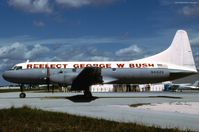
Aircraft
Convair CV-340Registration
N41626
MSN
274
Year of Manufacture
1955
Operator
Miami Air LeaseDate
December 4, 2004 at 08:51 AM
Type
CRASHFlight Type
Cargo
Flight Phase
Takeoff (climb)
Crash Site
Lake, Sea, Ocean, River
Crash Location
Miami Florida
Region
North America • United States of America
Coordinates
25.7742°, -80.1936°
Crash Cause
Human factor
Narrative Report
On December 4, 2004 at 08:51 AM, Miami – Nassau experienced a crash involving Convair CV-340, operated by Miami Air Lease, with the event recorded near Miami Florida.
The flight was categorized as cargo and the reported phase was takeoff (climb) at a lake, sea, ocean, river crash site.
2 people were known to be on board, 0 fatalities were recorded, 2 survivors were identified or estimated. This corresponds to an estimated fatality rate of 0.0%.
Crew on board: 2, crew fatalities: 0, passengers on board: 0, passenger fatalities: 0, other fatalities: 0.
The listed crash cause is human factor. The pilot stated that when the airplane was 3 miles east of the shoreline, at 3,000 feet, he felt a short tremor in the left engine followed by loss of power from the left engine. The pilot elected to return to the departure airport while declaring an emergency to air traffic control. During the process of securing the left engine the pilot noticed the propeller did not feathered and the airplane was descending quickly. He maneuvered the airplane and ditched in a lake. On September 26, 2003 engine s/n: 34592 was removed from the accident airplane due to high oil consumption with 1,225 hours of time in service. It was reportedly preserved and stored at the operator's warehouse. The mechanic who reportedly preserved the engine stated he followed the steps in the manual that was provided by the operator. On October 27, 2004 the left engine, s/n: NK510332, which was producing metal for months, was removed and engine s/n: 34592 was taken out of preservation and installed in the left position on the accident airplane with a new overhauled propeller assembly. On November 06, 2004, the left engine's, s/n: 34592, propeller governor was replaced due to the left propeller slow to response to power setting. During the post accident engine examination, the engine's main oil screen was observed with deposits of metal flakes and fragments, the oil scavenge pump would not rotate and had deposits of metal fragments internally; the engine was seized and wound not rotate. Catastrophic damage was observed to the accessories drive gears, oil transfer tube, and protection covers in the front accessory area. It was observed during a visual inspection of the crankshaft and bearings, including the front journal and front crankpin had damaged and sections of their respective bearings missing. The master rod bearing had incurred a catastrophic failure. Several cylinders skirts were found with impact marks from piston rods. Before removing the propeller assembly from the engine, the propeller feather system was flush with fresh oil and pressured with a feathering pump; the propeller blades were observed moving toward the feather position. Examination of the propeller assembly revealed metal contamination throughout the system; the propeller's governor screen gasket was clogged with metal contamination. The maintenance manual provided by the operator used for the engine preservation details several tasks required to be accomplished to the engine for proper engine preservation (i.e. thrust bear, cylinder, and propeller shaft treatments), which the mechanic did not mention he performed. No documentation for inspection and condition status of the dehydrator plugs were available. Documentation for flushing of contamination from the metal producing engine, s/n NK510332, was not available nor knowledge by the operator if since a process was preformed to the left engine's oil tank and its system before installation of engine s/n: 34592. An FAA review of the cargo manifest discovered two different manifest weights. The cargo manifest obtained at the accident scene showed a total of 267 pieces of cargo annotated at a total weight of 10, 837 lbs. The sealed cargo manifest package showed a total of 267 pieces of cargo annotated at a total weight of 14,182 lbs. The maximum payload weight for the accident airplane is 13,586 lbs.
Aircraft reference details include registration N41626, MSN 274, year of manufacture 1955.
Geospatial coordinates for this crash are approximately 25.7742°, -80.1936°.
Fatalities
Total
0
Crew
0
Passengers
0
Other
0
Crash Summary
The pilot stated that when the airplane was 3 miles east of the shoreline, at 3,000 feet, he felt a short tremor in the left engine followed by loss of power from the left engine. The pilot elected to return to the departure airport while declaring an emergency to air traffic control. During the process of securing the left engine the pilot noticed the propeller did not feathered and the airplane was descending quickly. He maneuvered the airplane and ditched in a lake. On September 26, 2003 engine s/n: 34592 was removed from the accident airplane due to high oil consumption with 1,225 hours of time in service. It was reportedly preserved and stored at the operator's warehouse. The mechanic who reportedly preserved the engine stated he followed the steps in the manual that was provided by the operator. On October 27, 2004 the left engine, s/n: NK510332, which was producing metal for months, was removed and engine s/n: 34592 was taken out of preservation and installed in the left position on the accident airplane with a new overhauled propeller assembly. On November 06, 2004, the left engine's, s/n: 34592, propeller governor was replaced due to the left propeller slow to response to power setting. During the post accident engine examination, the engine's main oil screen was observed with deposits of metal flakes and fragments, the oil scavenge pump would not rotate and had deposits of metal fragments internally; the engine was seized and wound not rotate. Catastrophic damage was observed to the accessories drive gears, oil transfer tube, and protection covers in the front accessory area. It was observed during a visual inspection of the crankshaft and bearings, including the front journal and front crankpin had damaged and sections of their respective bearings missing. The master rod bearing had incurred a catastrophic failure. Several cylinders skirts were found with impact marks from piston rods. Before removing the propeller assembly from the engine, the propeller feather system was flush with fresh oil and pressured with a feathering pump; the propeller blades were observed moving toward the feather position. Examination of the propeller assembly revealed metal contamination throughout the system; the propeller's governor screen gasket was clogged with metal contamination. The maintenance manual provided by the operator used for the engine preservation details several tasks required to be accomplished to the engine for proper engine preservation (i.e. thrust bear, cylinder, and propeller shaft treatments), which the mechanic did not mention he performed. No documentation for inspection and condition status of the dehydrator plugs were available. Documentation for flushing of contamination from the metal producing engine, s/n NK510332, was not available nor knowledge by the operator if since a process was preformed to the left engine's oil tank and its system before installation of engine s/n: 34592. An FAA review of the cargo manifest discovered two different manifest weights. The cargo manifest obtained at the accident scene showed a total of 267 pieces of cargo annotated at a total weight of 10, 837 lbs. The sealed cargo manifest package showed a total of 267 pieces of cargo annotated at a total weight of 14,182 lbs. The maximum payload weight for the accident airplane is 13,586 lbs.
Cause: Human factor
Occupants & Outcome
Crew On Board
2
Passengers On Board
0
Estimated Survivors
2
Fatality Rate
0.0%
Known people on board: 2
Operational Details
Schedule / Flight
Miami – Nassau
Operator
Miami Air LeaseFlight Type
Cargo
Flight Phase
Takeoff (climb)
Crash Site
Lake, Sea, Ocean, River
Region / Country
North America • United States of America
Aircraft Details
Similar Plane Crashes
United States Signal Corps - USSC
De Havilland DH.4
The single engine airplane departed Dayton-McCook Field for a local test flight. Shortly after takeoff, the aircraft stalled and crashed, killing both occupants. Crew: Maj Oscar Brindley, Lt Col Henry Damm.
United States Signal Corps - USSC
De Havilland DH.4
Lt. Frank Stuart Patterson, son and nephew of the co-founders of National Cash Register, is killed in the crash of his DH.4M, AS-32098, at Wilbur Wright Field during a flight test of a new mechanism for synchronizing machine gun and propeller, when a tie rod breaks during a dive from 15,000 feet (4,600 m), causing the wings to separate from the aircraft. Wishing to recognize the contributions of the Patterson family (owners of NCR) the area of Wright Field east of Huffman Dam (including Wilbur Wright Field, Fairfield Air Depot, and the Huffman Prairie) is renamed Patterson Field on 6 July 1931, in honor of Lt. Patterson.
United States Signal Corps - USSC
De Havilland DH.4
The aircraft crashed in unknown circumstances.
United States Signal Corps - USSC
De Havilland DH.4
The crew was completing a training mission. At an altitude of about 4,000 feet, the aircraft entered a spin and crashed in an open field near Everman-Barron Field Airport. A crew was killed and the second occupants was injured. The aircraft was destroyed.
U.S. Air Mail Service
De Havilland DH.4
Crashed following an engine failure. Pilot fate unknown.
United States Signal Corps - USSC
De Havilland DH.4
The accident occurred in unknown circumstances.