
Midland – Boulder
Flight / Schedule
Midland – Boulder
Aircraft
Lockheed 18 LodeStarRegistration
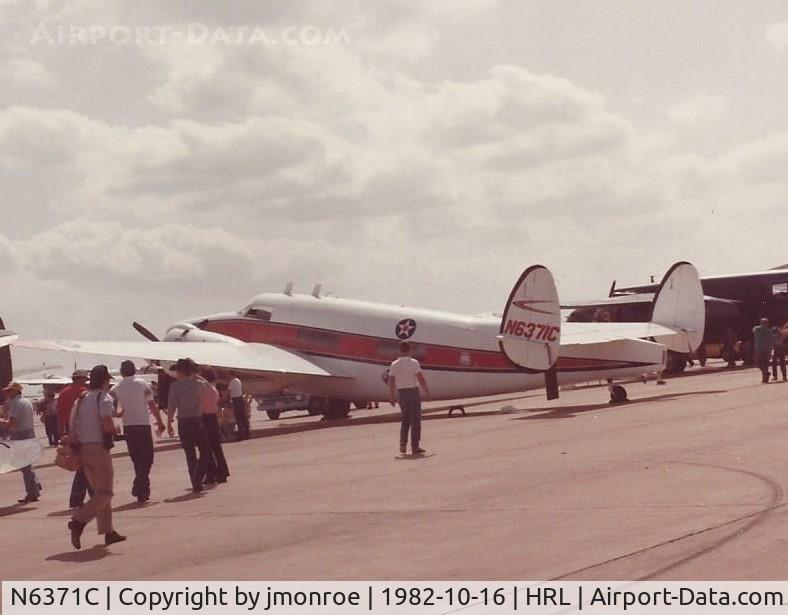
N6371C
MSN
2598
Year of Manufacture
1943
Operator
American Airpower Heritage MuseumDate
October 3, 2004 at 04:20 PM
Type
CRASHFlight Type
Private
Flight Phase
Takeoff (climb)
Crash Site
Airport (less than 10 km from airport)
Crash Location
Midland Texas
Region
North America • United States of America
Coordinates
31.8369°, -102.0104°
Crash Cause
Human factor
Narrative Report
On October 3, 2004 at 04:20 PM, Midland – Boulder experienced a crash involving Lockheed 18 LodeStar, operated by American Airpower Heritage Museum, with the event recorded near Midland Texas.
The flight was categorized as private and the reported phase was takeoff (climb) at a airport (less than 10 km from airport) crash site.
5 people were known to be on board, 0 fatalities were recorded, 5 survivors were identified or estimated. This corresponds to an estimated fatality rate of 0.0%.
Crew on board: 2, crew fatalities: 0, passengers on board: 3, passenger fatalities: 0, other fatalities: 0.
The listed crash cause is human factor. The 18,000- hour pilot was cleared for takeoff in the vintage twin-engine tail wheel equipped airplane on a 9,501- foot by 50- foot runway. The pilot was aware that there was a tailwind from approximately 160 degrees at 10 knots. Shortly after starting the takeoff roll, the airplane swerved to the right. The pilot was able to correct back to the centerline utilizing rudder control. The airplane then swerved to the left, and full right rudder was applied but the swerve could not be corrected. By the time the airplane reached the left edge of the runway, the airplane had not reached its calculated V2 speed of 110 knots. The airplane departed the left side of the runway, went airborne and shortly thereafter, the right wing dropped and contacted the ground. The airplane then spun 180 degrees, impacted the ground, slid backward, and came to rest upright. A post-crash fire consumed the aft fuselage and left wing.
Aircraft reference details include registration N6371C, MSN 2598, year of manufacture 1943.
Geospatial coordinates for this crash are approximately 31.8369°, -102.0104°.
Fatalities
Total
0
Crew
0
Passengers
0
Other
0
Crash Summary
The 18,000- hour pilot was cleared for takeoff in the vintage twin-engine tail wheel equipped airplane on a 9,501- foot by 50- foot runway. The pilot was aware that there was a tailwind from approximately 160 degrees at 10 knots. Shortly after starting the takeoff roll, the airplane swerved to the right. The pilot was able to correct back to the centerline utilizing rudder control. The airplane then swerved to the left, and full right rudder was applied but the swerve could not be corrected. By the time the airplane reached the left edge of the runway, the airplane had not reached its calculated V2 speed of 110 knots. The airplane departed the left side of the runway, went airborne and shortly thereafter, the right wing dropped and contacted the ground. The airplane then spun 180 degrees, impacted the ground, slid backward, and came to rest upright. A post-crash fire consumed the aft fuselage and left wing.
Cause: Human factor
Occupants & Outcome
Crew On Board
2
Passengers On Board
3
Estimated Survivors
5
Fatality Rate
0.0%
Known people on board: 5
Operational Details
Schedule / Flight
Midland – Boulder
Operator
American Airpower Heritage MuseumFlight Type
Private
Flight Phase
Takeoff (climb)
Crash Site
Airport (less than 10 km from airport)
Region / Country
North America • United States of America
Aircraft Details
Similar Plane Crashes
United States Signal Corps - USSC
De Havilland DH.4
The single engine airplane departed Dayton-McCook Field for a local test flight. Shortly after takeoff, the aircraft stalled and crashed, killing both occupants. Crew: Maj Oscar Brindley, Lt Col Henry Damm.
United States Signal Corps - USSC
De Havilland DH.4
Lt. Frank Stuart Patterson, son and nephew of the co-founders of National Cash Register, is killed in the crash of his DH.4M, AS-32098, at Wilbur Wright Field during a flight test of a new mechanism for synchronizing machine gun and propeller, when a tie rod breaks during a dive from 15,000 feet (4,600 m), causing the wings to separate from the aircraft. Wishing to recognize the contributions of the Patterson family (owners of NCR) the area of Wright Field east of Huffman Dam (including Wilbur Wright Field, Fairfield Air Depot, and the Huffman Prairie) is renamed Patterson Field on 6 July 1931, in honor of Lt. Patterson.
United States Signal Corps - USSC
De Havilland DH.4
The aircraft crashed in unknown circumstances.
United States Signal Corps - USSC
De Havilland DH.4
The crew was completing a training mission. At an altitude of about 4,000 feet, the aircraft entered a spin and crashed in an open field near Everman-Barron Field Airport. A crew was killed and the second occupants was injured. The aircraft was destroyed.
U.S. Air Mail Service
De Havilland DH.4
Crashed following an engine failure. Pilot fate unknown.
United States Signal Corps - USSC
De Havilland DH.4
The accident occurred in unknown circumstances.