
Ganes Creek – Fairbanks
Flight / Schedule
Ganes Creek – Fairbanks
Aircraft
Douglas C-54 SkymasterRegistration
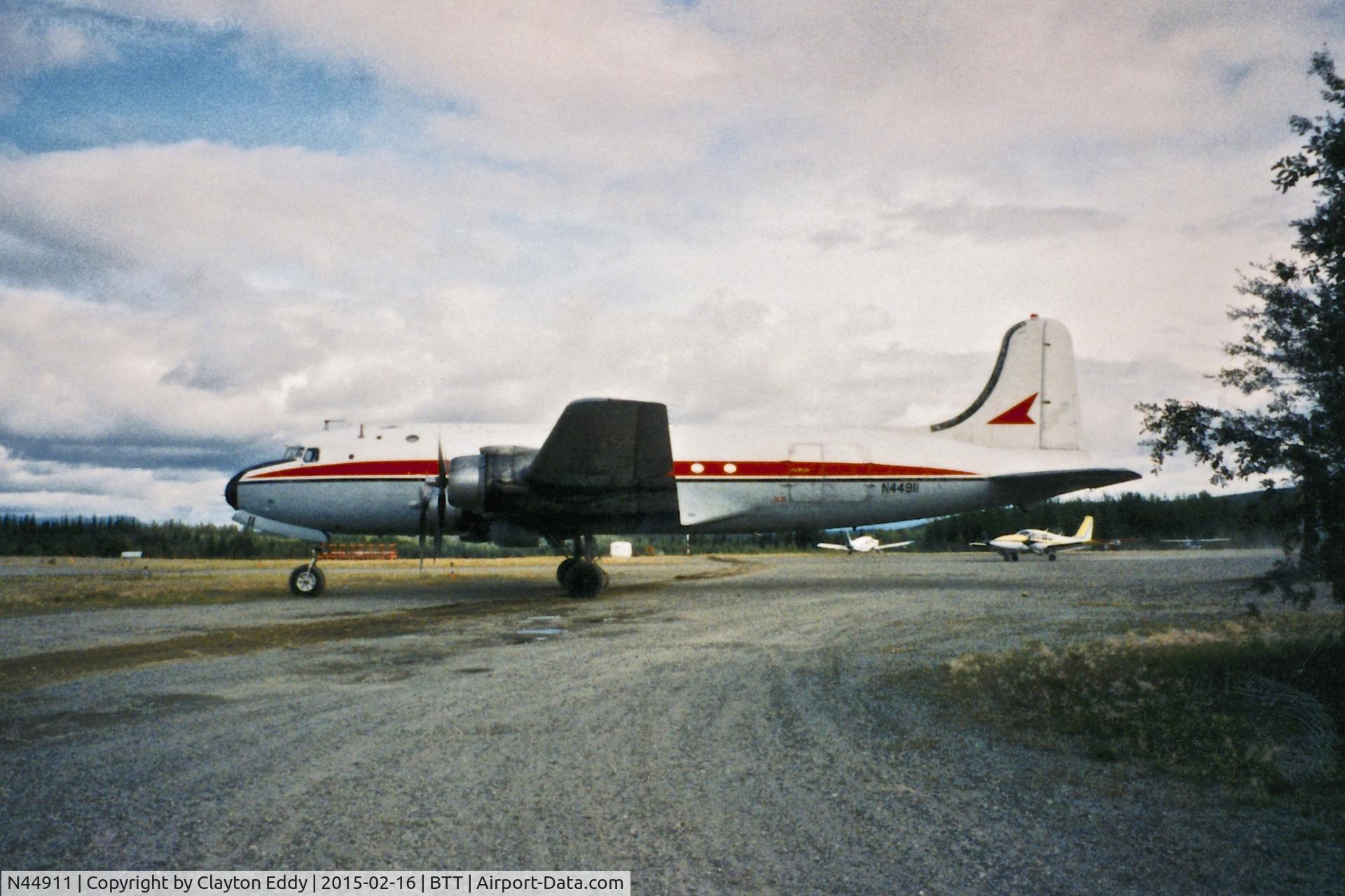
N44911
MSN
10461
Year of Manufacture
1945
Operator
Brooks FuelDate
May 7, 2004 at 09:30 PM
Type
CRASHFlight Type
Cargo
Flight Phase
Parking
Crash Site
Airport (less than 10 km from airport)
Crash Location
Ganes Creek Alaska
Region
North America • United States of America
Coordinates
63.0897°, -156.4306°
Crash Cause
Technical failure
Narrative Report
On May 7, 2004 at 09:30 PM, Ganes Creek – Fairbanks experienced a crash involving Douglas C-54 Skymaster, operated by Brooks Fuel, with the event recorded near Ganes Creek Alaska.
The flight was categorized as cargo and the reported phase was parking at a airport (less than 10 km from airport) crash site.
2 people were known to be on board, 0 fatalities were recorded, 2 survivors were identified or estimated. This corresponds to an estimated fatality rate of 0.0%.
Crew on board: 2, crew fatalities: 0, passengers on board: 0, passenger fatalities: 0, other fatalities: 0.
The listed crash cause is technical failure. The crew of the 4 engine airplane started its engines for a positioning flight from a remote mining airstrip. Following the startup of the engines, an explosion occurred in the left wing area aft of the number 1 engine firewall and number 1 auxiliary fuel tank. The airplane was parked next to the mine's fuel storage tank, and the pilot added power on the remaining engines to move away from the storage tank. Within seconds of beginning to move, the number 1 engine fell off the burning wing, followed by separation and aft folding of the outboard end of the left wing. The outboard end of the wing, however, was still attached via control cables. The pilot taxied the airplane about 200 feet, dragging the partially burning left wing segment to a pond of water and shut down the remaining engines. The crew evacuated with no injuries. Water was applied to the airplane until the fire was extinguished, about 3 1/2 hours later. NTSB and FAA personnel did not travel to the scene, and the airplane was not recovered from the mining strip. The airplane's left wing powerplant and fuel system consists of the number 1 and 2 engines. Each engine is separated from the wing by a firewall. Within the wing, from outboard to inboard, the fuel tank system consists of the number 1 fuel tank, the left wing auxiliary fuel tank, and the number 2 fuel tank. Each wet-wing type fuel tank contains a submerged electrical boost pump, sump drain valves and fuel quantity transmitters. The fuel system has selector valves, crossfeed valves, and shut-off valves for each tank. An FAA inspector examined portions of the airplane that the operator supplied. The inspector examined a portion of the upper wing surface that had been blown away from the airplane during the initial explosion. He noted that the inside of the upper wing surface, normally positioned over the auxiliary tank, was not charred or sooted. A separated portion of the lower wing surface, near the auxiliary boost pump, was sooted and charred. The aft side of the number 1 engine firewall was not charred. A portion of the number 1 engine nacelle was oily, but not sooted or charred. The operator located the auxiliary in-tank boost pump and sent it to the FAA. The boost pump impeller, encased in a small wire cage, was not melted and could be turned by hand. The body of the pump was sooted but not thermally damaged. Its wire connectors and one fuel line were melted. A smaller line, what appeared to be a return line, was not melted.
Aircraft reference details include registration N44911, MSN 10461, year of manufacture 1945.
Geospatial coordinates for this crash are approximately 63.0897°, -156.4306°.
Fatalities
Total
0
Crew
0
Passengers
0
Other
0
Crash Summary
The crew of the 4 engine airplane started its engines for a positioning flight from a remote mining airstrip. Following the startup of the engines, an explosion occurred in the left wing area aft of the number 1 engine firewall and number 1 auxiliary fuel tank. The airplane was parked next to the mine's fuel storage tank, and the pilot added power on the remaining engines to move away from the storage tank. Within seconds of beginning to move, the number 1 engine fell off the burning wing, followed by separation and aft folding of the outboard end of the left wing. The outboard end of the wing, however, was still attached via control cables. The pilot taxied the airplane about 200 feet, dragging the partially burning left wing segment to a pond of water and shut down the remaining engines. The crew evacuated with no injuries. Water was applied to the airplane until the fire was extinguished, about 3 1/2 hours later. NTSB and FAA personnel did not travel to the scene, and the airplane was not recovered from the mining strip. The airplane's left wing powerplant and fuel system consists of the number 1 and 2 engines. Each engine is separated from the wing by a firewall. Within the wing, from outboard to inboard, the fuel tank system consists of the number 1 fuel tank, the left wing auxiliary fuel tank, and the number 2 fuel tank. Each wet-wing type fuel tank contains a submerged electrical boost pump, sump drain valves and fuel quantity transmitters. The fuel system has selector valves, crossfeed valves, and shut-off valves for each tank. An FAA inspector examined portions of the airplane that the operator supplied. The inspector examined a portion of the upper wing surface that had been blown away from the airplane during the initial explosion. He noted that the inside of the upper wing surface, normally positioned over the auxiliary tank, was not charred or sooted. A separated portion of the lower wing surface, near the auxiliary boost pump, was sooted and charred. The aft side of the number 1 engine firewall was not charred. A portion of the number 1 engine nacelle was oily, but not sooted or charred. The operator located the auxiliary in-tank boost pump and sent it to the FAA. The boost pump impeller, encased in a small wire cage, was not melted and could be turned by hand. The body of the pump was sooted but not thermally damaged. Its wire connectors and one fuel line were melted. A smaller line, what appeared to be a return line, was not melted.
Cause: Technical failure
Occupants & Outcome
Crew On Board
2
Passengers On Board
0
Estimated Survivors
2
Fatality Rate
0.0%
Known people on board: 2
Operational Details
Schedule / Flight
Ganes Creek – Fairbanks
Operator
Brooks FuelFlight Type
Cargo
Flight Phase
Parking
Crash Site
Airport (less than 10 km from airport)
Region / Country
North America • United States of America
Aircraft Details
Similar Plane Crashes
United States Signal Corps - USSC
De Havilland DH.4
The single engine airplane departed Dayton-McCook Field for a local test flight. Shortly after takeoff, the aircraft stalled and crashed, killing both occupants. Crew: Maj Oscar Brindley, Lt Col Henry Damm.
United States Signal Corps - USSC
De Havilland DH.4
Lt. Frank Stuart Patterson, son and nephew of the co-founders of National Cash Register, is killed in the crash of his DH.4M, AS-32098, at Wilbur Wright Field during a flight test of a new mechanism for synchronizing machine gun and propeller, when a tie rod breaks during a dive from 15,000 feet (4,600 m), causing the wings to separate from the aircraft. Wishing to recognize the contributions of the Patterson family (owners of NCR) the area of Wright Field east of Huffman Dam (including Wilbur Wright Field, Fairfield Air Depot, and the Huffman Prairie) is renamed Patterson Field on 6 July 1931, in honor of Lt. Patterson.
United States Signal Corps - USSC
De Havilland DH.4
The aircraft crashed in unknown circumstances.
United States Signal Corps - USSC
De Havilland DH.4
The crew was completing a training mission. At an altitude of about 4,000 feet, the aircraft entered a spin and crashed in an open field near Everman-Barron Field Airport. A crew was killed and the second occupants was injured. The aircraft was destroyed.
U.S. Air Mail Service
De Havilland DH.4
Crashed following an engine failure. Pilot fate unknown.
United States Signal Corps - USSC
De Havilland DH.4
The accident occurred in unknown circumstances.