
Victoria - Boise
Flight / Schedule
Victoria - Boise
Aircraft
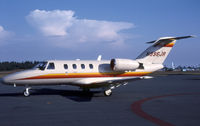
Cessna 525 CitationJet CJ1Registration
N996JR
MSN
525-0147
Year of Manufacture
1996
Operator
Tango CorporationDate
July 22, 2003 at 10:15 AM
Type
CRASHFlight Type
Private
Flight Phase
Flight
Crash Site
Lake, Sea, Ocean, River
Crash Location
Coupeville Washington
Region
North America • United States of America
Coordinates
48.2182°, -122.6858°
Crash Cause
Other causes
Narrative Report
On July 22, 2003 at 10:15 AM, Victoria - Boise experienced a crash involving Cessna 525 CitationJet CJ1, operated by Tango Corporation, with the event recorded near Coupeville Washington.
The flight was categorized as private and the reported phase was flight at a lake, sea, ocean, river crash site.
2 people were known to be on board, 0 fatalities were recorded, 2 survivors were identified or estimated. This corresponds to an estimated fatality rate of 0.0%.
Crew on board: 1, crew fatalities: 0, passengers on board: 1, passenger fatalities: 0, other fatalities: 0.
The listed crash cause is other causes. The corporate jet airplane experienced a loss of elevator trim control (runaway trim) that resulted in an uncommanded nose-low pitch attitude. The pilot reported that following the loss of elevator trim authority the airplane was extremely difficult to control and the elevator control forces were extremely high. The pilot continued to maneuver the airplane, but eventually ditched it into a nearby marine cove. The runaway trim condition was not immediately recognized by the pilot and he stated that, by that point in the event sequence, the control forces were so great that he had little time to troubleshoot the system and elected to continue on his established heading and ditch the airplane. Pulling the circuit breaker, which is called for by the checklist in the event of a trim runaway, would have arrested the trim movement. Post accident examination and functional testing of the airplane's electric pitch trim printed circuit board (PCB) showed a repeatable fault in the operation of the PCB's K6 relay, resulting in the relay contacts remaining closed. This condition would be representative of the autopilot pitch trim remaining engaged, providing an electrical current to drive continuous nose-down trim to the elevator trim motor. Examination of the airplane's maintenance records showed that the PCB was removed and replaced in conjunction with the phase inspection prior to the accident. Further examination of the airplane's maintenance records revealed that the replacement PCB was originally installed in an airplane that experienced an "electric trim runaway on the ground." Following the trim runaway, the PCB was removed and shipped to the manufacturer. After receiving the PCB the manufacturer tested the board and no discrepancies were noted. The unit was subsequently approved for return to service and later installed on the accident airplane. The investigation revealed a single-point failure of trim runaway (failed K6 relay) and a latent system design anomaly in the autopilot/trim disconnect switch on the airplane's pitch trim PCB. This design prohibited the disengagement of the electric trim motor during autopilot operation. As a result of the investigation, the FAA issued three airworthiness directives (AD 2003-21-07, AD 2003-23-20, and AD 2004-14-20), and the pitch trim printed circuit board was redesigned and evaluated for compliance with safety requirements via system safety assessment.
Aircraft reference details include registration N996JR, MSN 525-0147, year of manufacture 1996.
Geospatial coordinates for this crash are approximately 48.2182°, -122.6858°.
Fatalities
Total
0
Crew
0
Passengers
0
Other
0
Crash Summary
The corporate jet airplane experienced a loss of elevator trim control (runaway trim) that resulted in an uncommanded nose-low pitch attitude. The pilot reported that following the loss of elevator trim authority the airplane was extremely difficult to control and the elevator control forces were extremely high. The pilot continued to maneuver the airplane, but eventually ditched it into a nearby marine cove. The runaway trim condition was not immediately recognized by the pilot and he stated that, by that point in the event sequence, the control forces were so great that he had little time to troubleshoot the system and elected to continue on his established heading and ditch the airplane. Pulling the circuit breaker, which is called for by the checklist in the event of a trim runaway, would have arrested the trim movement. Post accident examination and functional testing of the airplane's electric pitch trim printed circuit board (PCB) showed a repeatable fault in the operation of the PCB's K6 relay, resulting in the relay contacts remaining closed. This condition would be representative of the autopilot pitch trim remaining engaged, providing an electrical current to drive continuous nose-down trim to the elevator trim motor. Examination of the airplane's maintenance records showed that the PCB was removed and replaced in conjunction with the phase inspection prior to the accident. Further examination of the airplane's maintenance records revealed that the replacement PCB was originally installed in an airplane that experienced an "electric trim runaway on the ground." Following the trim runaway, the PCB was removed and shipped to the manufacturer. After receiving the PCB the manufacturer tested the board and no discrepancies were noted. The unit was subsequently approved for return to service and later installed on the accident airplane. The investigation revealed a single-point failure of trim runaway (failed K6 relay) and a latent system design anomaly in the autopilot/trim disconnect switch on the airplane's pitch trim PCB. This design prohibited the disengagement of the electric trim motor during autopilot operation. As a result of the investigation, the FAA issued three airworthiness directives (AD 2003-21-07, AD 2003-23-20, and AD 2004-14-20), and the pitch trim printed circuit board was redesigned and evaluated for compliance with safety requirements via system safety assessment.
Cause: Other causes
Occupants & Outcome
Crew On Board
1
Passengers On Board
1
Estimated Survivors
2
Fatality Rate
0.0%
Known people on board: 2
Operational Details
Schedule / Flight
Victoria - Boise
Operator
Tango CorporationFlight Type
Private
Flight Phase
Flight
Crash Site
Lake, Sea, Ocean, River
Region / Country
North America • United States of America
Aircraft Details
Similar Plane Crashes
United States Signal Corps - USSC
De Havilland DH.4
The single engine airplane departed Dayton-McCook Field for a local test flight. Shortly after takeoff, the aircraft stalled and crashed, killing both occupants. Crew: Maj Oscar Brindley, Lt Col Henry Damm.
United States Signal Corps - USSC
De Havilland DH.4
Lt. Frank Stuart Patterson, son and nephew of the co-founders of National Cash Register, is killed in the crash of his DH.4M, AS-32098, at Wilbur Wright Field during a flight test of a new mechanism for synchronizing machine gun and propeller, when a tie rod breaks during a dive from 15,000 feet (4,600 m), causing the wings to separate from the aircraft. Wishing to recognize the contributions of the Patterson family (owners of NCR) the area of Wright Field east of Huffman Dam (including Wilbur Wright Field, Fairfield Air Depot, and the Huffman Prairie) is renamed Patterson Field on 6 July 1931, in honor of Lt. Patterson.
United States Signal Corps - USSC
De Havilland DH.4
The aircraft crashed in unknown circumstances.
United States Signal Corps - USSC
De Havilland DH.4
The crew was completing a training mission. At an altitude of about 4,000 feet, the aircraft entered a spin and crashed in an open field near Everman-Barron Field Airport. A crew was killed and the second occupants was injured. The aircraft was destroyed.
U.S. Air Mail Service
De Havilland DH.4
Crashed following an engine failure. Pilot fate unknown.
United States Signal Corps - USSC
De Havilland DH.4
The accident occurred in unknown circumstances.