
Paiaka - Paiaka
Flight / Schedule
Paiaka - Paiaka
Aircraft
Fletcher FU-24Registration
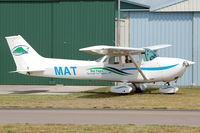
ZK-MAT
MSN
236
Year of Manufacture
1977
Operator
Private New ZealandDate
December 23, 2001 at 02:30 PM
Type
CRASHFlight Type
Spraying (Agricultural)
Flight Phase
Flight
Crash Site
Mountains
Crash Location
Paiaka Northland Regional Council
Region
Oceania • New Zealand
Crash Cause
Human factor
Narrative Report
On December 23, 2001 at 02:30 PM, Paiaka - Paiaka experienced a crash involving Fletcher FU-24, operated by Private New Zealand, with the event recorded near Paiaka Northland Regional Council.
The flight was categorized as spraying (agricultural) and the reported phase was flight at a mountains crash site.
1 people were known to be on board, 1 fatalities were recorded, 0 survivors were identified or estimated. This corresponds to an estimated fatality rate of 100.0%.
Crew on board: 1, crew fatalities: 1, passengers on board: 0, passenger fatalities: 0, other fatalities: 0.
The listed crash cause is human factor. On the morning of Sunday 23 December 2001, the pilot was engaged in spreading superphosphate on a property near Otonga. When this job was completed the operation moved to a property to the east of Whangarei where urea was sown on a maize crop. This job finished at about 1130 hours when the pilot and loader driver decided to have a cup of tea and determine which job they would do next. There were two options available; it was found that the wind was unsuitable for operations from one airstrip, so it was decided to complete the job at Paiaka, which involved spreading some 112 tonnes of lime. This particular job was to have commenced on 13 December 2001 but was delayed because of wind. The loader driver arrived at Paiaka at about 1300 hours to find that the pilot had already landed and was removing the cover from the fertiliser bin that held the lime. The loader driver noticed that water had come under the edges of the cover making the lime damp around the walls of the bin. The truck driver who had delivered lime earlier in the week had also noted the presence of moisture in the lime around the edges of the bin. The work commenced at about 1320 hours and the loader driver expected the pilot to stop for fuel between 1445 and 1500 hours. After approximately 13 loads the loader driver was using the lime that had been affected by moisture. As a result he took bucket loads from the sides of the bin and mixed it with the lime in the middle of the bin in an effort to make the lime flow more freely. At approximately 1425 the pilot gave the signal to the loader driver for a refuel on the next landing. As this was earlier than the expected refuel time the loader driver assumed this was also to check if any lime was building up around the bottom of the hopper. During the 10 weeks that they had been operating the aircraft they had to clean fertiliser away from the hopper door area. This had happened several times, especially if the fertiliser was damp, and on one occasion they had to clean out part of a previous fertiliser load that had “hung up” inside the hopper. As the loader driver was preparing for the refuel he could hear the aeroplane operating under what sounded like full power, and saw the pilot manoeuvre the aircraft in an apparent attempt to dislodge the load. He saw a small “puff” of lime discharge from the aircraft as it was “bunted”. The aircraft then disappeared behind intervening terrain into a valley, some 1,500 metres from the sowing area. The loader driver did not see the aeroplane again, but heard a muffled explosion and saw smoke on the skyline. He then phoned for emergency assistance. The accident occurred in daylight, at approximately 1430 hours NZDT, at Paiaka, at an elevation of 720 feet. Grid reference 260-Q06-142267, latitude S 35° 33 2', longitude E 174° 08.3'.
Aircraft reference details include registration ZK-MAT, MSN 236, year of manufacture 1977.
Fatalities
Total
1
Crew
1
Passengers
0
Other
0
Crash Summary
On the morning of Sunday 23 December 2001, the pilot was engaged in spreading superphosphate on a property near Otonga. When this job was completed the operation moved to a property to the east of Whangarei where urea was sown on a maize crop. This job finished at about 1130 hours when the pilot and loader driver decided to have a cup of tea and determine which job they would do next. There were two options available; it was found that the wind was unsuitable for operations from one airstrip, so it was decided to complete the job at Paiaka, which involved spreading some 112 tonnes of lime. This particular job was to have commenced on 13 December 2001 but was delayed because of wind. The loader driver arrived at Paiaka at about 1300 hours to find that the pilot had already landed and was removing the cover from the fertiliser bin that held the lime. The loader driver noticed that water had come under the edges of the cover making the lime damp around the walls of the bin. The truck driver who had delivered lime earlier in the week had also noted the presence of moisture in the lime around the edges of the bin. The work commenced at about 1320 hours and the loader driver expected the pilot to stop for fuel between 1445 and 1500 hours. After approximately 13 loads the loader driver was using the lime that had been affected by moisture. As a result he took bucket loads from the sides of the bin and mixed it with the lime in the middle of the bin in an effort to make the lime flow more freely. At approximately 1425 the pilot gave the signal to the loader driver for a refuel on the next landing. As this was earlier than the expected refuel time the loader driver assumed this was also to check if any lime was building up around the bottom of the hopper. During the 10 weeks that they had been operating the aircraft they had to clean fertiliser away from the hopper door area. This had happened several times, especially if the fertiliser was damp, and on one occasion they had to clean out part of a previous fertiliser load that had “hung up” inside the hopper. As the loader driver was preparing for the refuel he could hear the aeroplane operating under what sounded like full power, and saw the pilot manoeuvre the aircraft in an apparent attempt to dislodge the load. He saw a small “puff” of lime discharge from the aircraft as it was “bunted”. The aircraft then disappeared behind intervening terrain into a valley, some 1,500 metres from the sowing area. The loader driver did not see the aeroplane again, but heard a muffled explosion and saw smoke on the skyline. He then phoned for emergency assistance. The accident occurred in daylight, at approximately 1430 hours NZDT, at Paiaka, at an elevation of 720 feet. Grid reference 260-Q06-142267, latitude S 35° 33 2', longitude E 174° 08.3'.
Cause: Human factor
Occupants & Outcome
Crew On Board
1
Passengers On Board
0
Estimated Survivors
0
Fatality Rate
100.0%
Known people on board: 1
Operational Details
Schedule / Flight
Paiaka - Paiaka
Operator
Private New ZealandFlight Type
Spraying (Agricultural)
Flight Phase
Flight
Crash Site
Mountains
Region / Country
Oceania • New Zealand
Aircraft Details
Similar Plane Crashes
Walsh Brother's Flying School
Avro 504
The pilot was performing a sightseeing flight around New Plymouth. While approaching to land, the aircraft stalled and crashed near the aerodrome. All three occupants were killed. Crew: Captain Richard Russell, pilot Passengers: James Clarke, mayor of New Plymouth, Kathleen Warnock.
Canterbury Aviation
Avro 504
The pilot H. C. Grout was performing some demo flights in the region of Blenheim. After a stop in Kaikoura, he was positioning to his base in Christchurch. En route, the engine failed and he was forced to attempt an emergency landing. At low height, the airplane stalled and crashed in a wheat field near Motunau. Seriously injured, the pilot was evacuated to a local hospital but died from his injuries in the evening. The aircraft was destroyed.
Canterbury Aviation
Avro 504
Crashed in unknown circumstances near Wigram AFB. There were no casualties.
K. W. J. Hall
De Havilland DH.60 Moth
The single engine aircraft crashed in unknown circumstances in Waikari, north of Christchurch. The pilot and owner K. W. J. Hall was unhurt.
Aerial Services New Zealand
Dornier DO.12 Libelle
The crew was performing a local test flight out of Auckland when the engine misfired on approach. The seaplane stalled and crashed in the Mechanics Bay, off Milford Beach. The aircraft was destroyed and both occupants were killed. Crew: Don Harkness, pilot. Passenger: Charles Goldsbro.
Bryant House Airways
De Havilland DH.60 Moth
Captain A. W. Saunders was performing demo flights on the racecourse of Te Awamutu. With his passenger Alfred W. Minchin, he climbed to a height of 1,000 feet when the plane was seen to enter a spin. The spin was recovered from about 50 feet and the Moth was still diving when it impacted the ground. Both occupants were seriously injured and evacuated to the local hospital. While the passenger died from his injuries in the evening, the pilot died the following day. The aircraft was destroyed by impact forces.