
Zurich - Bern
Flight / Schedule
Zurich - Bern
Aircraft
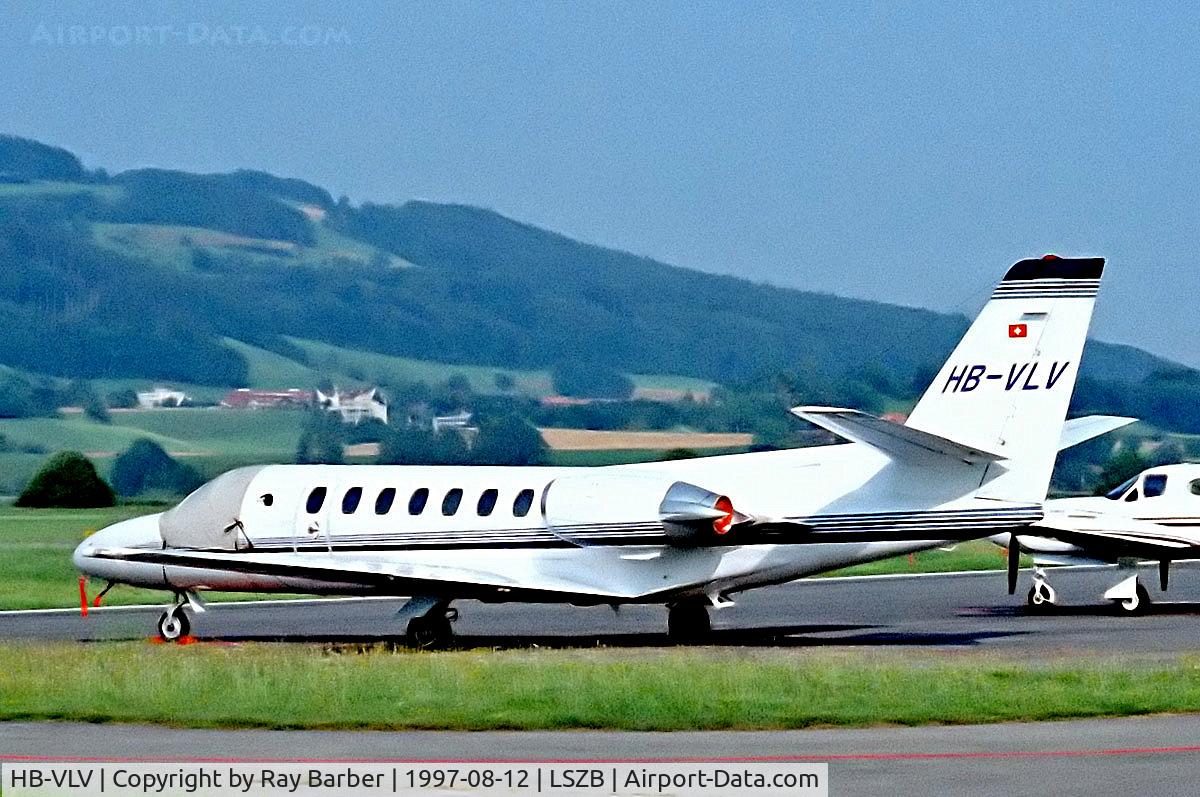
Cessna 560 Citation VRegistration
HB-VLV
MSN
560-0077
Year of Manufacture
1990
Operator
Eagle Air - SwitzerlandDate
December 20, 2001 at 10:06 PM
Type
CRASHFlight Type
Ferry
Flight Phase
Takeoff (climb)
Crash Site
Airport (less than 10 km from airport)
Crash Location
Zurich-Kloten Zurich
Region
Europe • Switzerland
Coordinates
47.4439°, 8.5715°
Crash Cause
Human factor
Narrative Report
On December 20, 2001 at 10:06 PM, Zurich - Bern experienced a crash involving Cessna 560 Citation V, operated by Eagle Air - Switzerland, with the event recorded near Zurich-Kloten Zurich.
The flight was categorized as ferry and the reported phase was takeoff (climb) at a airport (less than 10 km from airport) crash site.
2 people were known to be on board, 2 fatalities were recorded, 0 survivors were identified or estimated. This corresponds to an estimated fatality rate of 100.0%.
Crew on board: 2, crew fatalities: 2, passengers on board: 0, passenger fatalities: 0, other fatalities: 0.
The listed crash cause is human factor. At 19:43:49 UTC the crew of EAB 220 called clearance delivery (CLD) for the first time and asked if their flight plan to Bern-Belp was available. The answer was in the affirmative and the CLD air traffic controller informed the crew that they would need authorisation for the landing in Bern-Belp. Once it had been clarified that this authorisation had been obtained, EAB 220 called back a little later. CLD informed the pilots that their departure was planned from runway 34. However, they would have to expect a delay at that time, as arrivals and departures were being handled in batches. EAB 220 was scheduled in the next batch for take-off. CLD intimated to the crew an approximate departure time of 20:30 UTC. When the crew called back at 20:13:49 UTC to ask for any news, CLD informed them that departure would now take place in about 45 minutes. Since visual conditions were deteriorating due to the thickening fog, air traffic control had to increase the separation between arriving aircraft. As a result, flight EAB 220’s estimated departure time was delayed to about 21:00 UTC. At 20:24:38 UTC CLD transmitted to the crew a departure clearance. Flight EAB 220 was assigned the standard instrument departure (SID) “WILLISAU 3N” and transponder code 1403. In addition, a departure time of 21:07 UTC was estimated. The CEO of Eagle Air Ltd. had applied in Bern-Belp for a special authorisation for a late landing after 21:00 UTC and obtained a slot until 21:30 UTC at the latest. Since the departure of HB-VLV in Zurich was being further and further delayed, the crew found themselves under increasing time pressure. The crew were in contact with the CEO several times; at the time, the latter was performing the function of the dispatcher. In order to ensure the arrival of HB-VLV in Bern-Belp by 21:30 UTC at the latest, he also telephoned the duty manager in Zurich control tower and urged him several times for an earlier departure time. After a frequency change to apron control, the apron controller cleared EAB 220 to start its engines at 20:43:50 UTC. Approximately at the same time, an airport manager observed that HB-VLV’s right-hand engine was running, although only one pilot was present in the cockpit. He was sitting in the right-hand seat. The other crew member, probably the commander, was using a scraper to remove ice deposits from the left wing. The eye witness later observed how this crew member occupied the left-hand position in the cockpit, shortly before taxiing. Since the pilots were eager to leave their stand in the General Aviation Centre (GAC) Sector 1 as quickly as possible, they were cleared to taxi as far as the holding point for runway 28 just 2 minutes later. There they had to wait for a taxiing Saab 2000 to pass in the opposite direction. EAB 220 was then instructed by the apron controller to continue taxiing to the holding point for runway 34 via taxiways ALPHA, INNER and ECHO. One minute after taxi clearance had been given, the crew of EAB 220 again asked for the wording of this clearance: “Swiss Eagle 220, sorry for that, can you say the clearance again?” It must remain open whether HB-VLV had missed the intersection in the direction of the INNER taxiway. It is clear, however, that the apron controller had to intervene shortly afterwards with a correction: “220, continue on taxiway INNER, INNER, and then ECHO to Holding Point 34, Echo 9”. At 20:56:50 UTC flight EAB 220 made contact with Aerodrome Control (ADC) and stated that the aircraft was on Echo 9 just before the start of runway 34. The air traffic controller (ATCO) requested the crew to wait short of runway 34, since approaches were still taking place in the opposite direction on runway 16. At 21:04:51 UTC ADC cleared the aircraft to line up on runway 34. The crew taxied onto runway 34 and – after they had received take-off clearance at 21:05:54 UTC – initiated a rolling take-off by setting take-off power. At this time, meteorological visibility was 100 m with partial fog. Since the left-hand engine was run up within six seconds to 102 percent of take-off power and the right-hand engine to 58 percent, for a few seconds during the acceleration phase the aircraft veered on the runway to such an extent that it’s heading changed 10 degrees to the right. The crew were only able to bring the aircraft back into alignment with the runway by making a major nose-wheel control correction and by distinctly reducing the thrust of the left-hand engine. Afterwards the two engines were brought synchronously to take-off power and the take-off continued. Flight EAB 220 lifted off from runway 34 at 21:06:40 UTC. Shortly after take-off, the commander of EAB 220 acknowledged the request to change frequency to departure control. At about the same time various members of the airport fire-fighting services, who were inside and in front of the fire-fighting unit satellite “North” between runways 34 and 32, heard noises and saw visual indications of a low-flying aircraft. Immediately afterwards the noise of a crash and the flash of a fire were noted. At 21:07 UTC the aircraft impacted onto the frozen ground 400 m to the south-east of the end of runway 34 and skidded in a northerly direction, leaving a trail of debris. The main body of the wreck finally came to rest 500 m beyond the site of initial impact on runway 14/32. The rescue services reached the burning wreck after a few minutes. DFDR data revealed that the autopilot was disengaged during the whole flight.
Aircraft reference details include registration HB-VLV, MSN 560-0077, year of manufacture 1990.
Geospatial coordinates for this crash are approximately 47.4439°, 8.5715°.
Fatalities
Total
2
Crew
2
Passengers
0
Other
0
Crash Summary
At 19:43:49 UTC the crew of EAB 220 called clearance delivery (CLD) for the first time and asked if their flight plan to Bern-Belp was available. The answer was in the affirmative and the CLD air traffic controller informed the crew that they would need authorisation for the landing in Bern-Belp. Once it had been clarified that this authorisation had been obtained, EAB 220 called back a little later. CLD informed the pilots that their departure was planned from runway 34. However, they would have to expect a delay at that time, as arrivals and departures were being handled in batches. EAB 220 was scheduled in the next batch for take-off. CLD intimated to the crew an approximate departure time of 20:30 UTC. When the crew called back at 20:13:49 UTC to ask for any news, CLD informed them that departure would now take place in about 45 minutes. Since visual conditions were deteriorating due to the thickening fog, air traffic control had to increase the separation between arriving aircraft. As a result, flight EAB 220’s estimated departure time was delayed to about 21:00 UTC. At 20:24:38 UTC CLD transmitted to the crew a departure clearance. Flight EAB 220 was assigned the standard instrument departure (SID) “WILLISAU 3N” and transponder code 1403. In addition, a departure time of 21:07 UTC was estimated. The CEO of Eagle Air Ltd. had applied in Bern-Belp for a special authorisation for a late landing after 21:00 UTC and obtained a slot until 21:30 UTC at the latest. Since the departure of HB-VLV in Zurich was being further and further delayed, the crew found themselves under increasing time pressure. The crew were in contact with the CEO several times; at the time, the latter was performing the function of the dispatcher. In order to ensure the arrival of HB-VLV in Bern-Belp by 21:30 UTC at the latest, he also telephoned the duty manager in Zurich control tower and urged him several times for an earlier departure time. After a frequency change to apron control, the apron controller cleared EAB 220 to start its engines at 20:43:50 UTC. Approximately at the same time, an airport manager observed that HB-VLV’s right-hand engine was running, although only one pilot was present in the cockpit. He was sitting in the right-hand seat. The other crew member, probably the commander, was using a scraper to remove ice deposits from the left wing. The eye witness later observed how this crew member occupied the left-hand position in the cockpit, shortly before taxiing. Since the pilots were eager to leave their stand in the General Aviation Centre (GAC) Sector 1 as quickly as possible, they were cleared to taxi as far as the holding point for runway 28 just 2 minutes later. There they had to wait for a taxiing Saab 2000 to pass in the opposite direction. EAB 220 was then instructed by the apron controller to continue taxiing to the holding point for runway 34 via taxiways ALPHA, INNER and ECHO. One minute after taxi clearance had been given, the crew of EAB 220 again asked for the wording of this clearance: “Swiss Eagle 220, sorry for that, can you say the clearance again?” It must remain open whether HB-VLV had missed the intersection in the direction of the INNER taxiway. It is clear, however, that the apron controller had to intervene shortly afterwards with a correction: “220, continue on taxiway INNER, INNER, and then ECHO to Holding Point 34, Echo 9”. At 20:56:50 UTC flight EAB 220 made contact with Aerodrome Control (ADC) and stated that the aircraft was on Echo 9 just before the start of runway 34. The air traffic controller (ATCO) requested the crew to wait short of runway 34, since approaches were still taking place in the opposite direction on runway 16. At 21:04:51 UTC ADC cleared the aircraft to line up on runway 34. The crew taxied onto runway 34 and – after they had received take-off clearance at 21:05:54 UTC – initiated a rolling take-off by setting take-off power. At this time, meteorological visibility was 100 m with partial fog. Since the left-hand engine was run up within six seconds to 102 percent of take-off power and the right-hand engine to 58 percent, for a few seconds during the acceleration phase the aircraft veered on the runway to such an extent that it’s heading changed 10 degrees to the right. The crew were only able to bring the aircraft back into alignment with the runway by making a major nose-wheel control correction and by distinctly reducing the thrust of the left-hand engine. Afterwards the two engines were brought synchronously to take-off power and the take-off continued. Flight EAB 220 lifted off from runway 34 at 21:06:40 UTC. Shortly after take-off, the commander of EAB 220 acknowledged the request to change frequency to departure control. At about the same time various members of the airport fire-fighting services, who were inside and in front of the fire-fighting unit satellite “North” between runways 34 and 32, heard noises and saw visual indications of a low-flying aircraft. Immediately afterwards the noise of a crash and the flash of a fire were noted. At 21:07 UTC the aircraft impacted onto the frozen ground 400 m to the south-east of the end of runway 34 and skidded in a northerly direction, leaving a trail of debris. The main body of the wreck finally came to rest 500 m beyond the site of initial impact on runway 14/32. The rescue services reached the burning wreck after a few minutes. DFDR data revealed that the autopilot was disengaged during the whole flight.
Cause: Human factor
Occupants & Outcome
Crew On Board
2
Passengers On Board
0
Estimated Survivors
0
Fatality Rate
100.0%
Known people on board: 2
Operational Details
Schedule / Flight
Zurich - Bern
Operator
Eagle Air - SwitzerlandFlight Type
Ferry
Flight Phase
Takeoff (climb)
Crash Site
Airport (less than 10 km from airport)
Region / Country
Europe • Switzerland
Aircraft Details
Similar Plane Crashes
Martin Seidler
Farman F.40
The pilot Martin Seidler, sole on board, was completing a local flight in Porrentruy when he lost control of the airplane that crashed in a field. The pilot escaped uninjured and the aircraft was destroyed.
Ad Astra Aero
Savoia S.16
The crew was taking part to an Air Show in Romanshorn and arrived in the morning from Geneva. During a demo flight, while flying at an altitude of 700 metres, the aircraft went out of control and lost height. During the dive, wings and other pieces detached and the aircraft eventually crashed in the Lake Constance, some 200 metres offshore. Quickly on the scene, SAR teams just found some debris floating on water and both dead bodies were found later in the lake bottom. The Swiss aviator Pierre Émile Taddéoli was killed with his mechanic Y. Giovanelli, engineer by the Italian motorist Isotta-Fraschini.
Ad Astra Aero
Savoia S.13
The pilot Oscar Bereta was completing a demonstration flight over the Lake of Zurich. In unknown circumstances, he lost control of the seaplane that crashed in the lake off Zürichhorn. The aircraft was destroyed and the pilot was killed.
Ad Astra Aero
Wild WT-S
The single engine airplane departed Solothurn between 1700LT and 1730LT on a flight to Lausanne, carrying one passenger and one pilot. While approaching Lausanne, the airplane was at low height went it went out of control and crashed in an open field located in Sainte Catherine, about 9 km northeast of Lausanne. The aircraft was destroyed and both occupants were killed. There was no fire. Crew: Eugène Bouché, pilot. Passenger: Fritz Minder.
Ad Astra Aero
Hanriot HD.1
The pilot Walter Mittelholzer, sole on board, was flying overt the Swiss Alps when the aircraft impacted the slope of Mt Guldenstock/Tödi. The aircraft was destroyed and the pilot was rescued.
École Aéro
Avro 504
The crew was completing a local training flight at Lausanne-Blécherette Airport. The single engine airplane crashed in unknown circumstances, killing both occupants Emile Johner and Mr. Glaser.