
Conroe – Alamogordo
Flight / Schedule
Conroe – Alamogordo
Aircraft
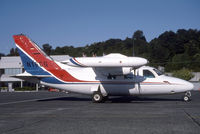
Mitsubishi MU-2 MarquiseRegistration
N16CG
MSN
418
Year of Manufacture
1980
Operator
Jerry L. FambroughDate
May 1, 2001 at 12:41 PM
Type
CRASHFlight Type
Private
Flight Phase
Flight
Crash Site
Plain, Valley
Crash Location
The Woodlands Texas
Region
North America • United States of America
Coordinates
30.1734°, -95.5047°
Crash Cause
Technical failure
Narrative Report
On May 1, 2001 at 12:41 PM, Conroe – Alamogordo experienced a crash involving Mitsubishi MU-2 Marquise, operated by Jerry L. Fambrough, with the event recorded near The Woodlands Texas.
The flight was categorized as private and the reported phase was flight at a plain, valley crash site.
2 people were known to be on board, 2 fatalities were recorded, 0 survivors were identified or estimated. This corresponds to an estimated fatality rate of 100.0%.
Crew on board: 1, crew fatalities: 1, passengers on board: 1, passenger fatalities: 1, other fatalities: 0.
The listed crash cause is technical failure. Visual meteorological conditions prevailed for the planned cross-country flight for which the pilot obtained a weather briefing, filed an IFR flight plan, and received an ATC clearance. Approximately 8 minutes after takeoff, radar indicated the airplane was at 11,200 feet msl, heading 241 degrees, with a ground speed of 180 knots. No distress calls or additional communications with the pilot were recorded, and radar contact was lost. The airplane impacted the ground in an uncontrolled descent. The right wing tip tank separated from the airplane and was found 0.18 nautical miles from the main wreckage. The teardown and examination of both engines disclosed that the type and degree of damage was indicative of engine power section rotation and operation at the time of impact. There were no complete systems intact at the accident site due to the impact sequence and post-impact fire which consumed the aircraft. The landing gear and flaps were found in the retracted position. The portion of the right propeller shaft coupling found at the site was fractured through 360 degrees. Metallurgical examination revealed that the propeller shaft coupling failed in fatigue. The presence of the fatigue cracks indicated the coupler fractured in fatigue in service, and the fatigue cracks were not the result of ground impact. The circumferential fracture intersected the ends of several internal spline teeth. The origin of the fatigue crack could not be determined because of severe corrosion damage on the fracture surface. Fatigue propagation was in the aft direction and from the inside to the outside of the coupling. The engine core rotating components would have bee free to rotate when uncoupled from the propeller shaft. The maintenance records indicated that the failed coupling had accumulated approximately 4,000 hours since new, and 1,250 hours since engine overhaul in 1989. Since 1990, as a result of fatigue fractures, the manufacturer introduced several design changes for the propeller shaft coupling via optional Service Bulletins to be accomplished at the next access or hot section inspection (HSI). Impact and thermal damage of the right propeller precluded a determination of the in-flight blade angles. The calculations by the airplane manufacturer indicated that "the [intact] airplane was capable of continued flight" with the right propeller feathered, and that the "airplane can keep attitude, but cannot climb and cannot maintain altitude" with the right propeller in the flat pitch or wind milling positions, respectively. Metallurgical examination of the component brackets and associated bolts from the right tip tank revealed the separation of the tip tank resulted from a single-event overstress fracture of both the forward and aft tank attachment fittings. Calculations showed that a 3.763 radians per second (35.9 RPM) spin rate would cause the failure of the forward wing fuel tank attachment fitting. There had not been a previous in-flight separation of a wing tip fuel tank on this model airplane.
Aircraft reference details include registration N16CG, MSN 418, year of manufacture 1980.
Geospatial coordinates for this crash are approximately 30.1734°, -95.5047°.
Fatalities
Total
2
Crew
1
Passengers
1
Other
0
Crash Summary
Visual meteorological conditions prevailed for the planned cross-country flight for which the pilot obtained a weather briefing, filed an IFR flight plan, and received an ATC clearance. Approximately 8 minutes after takeoff, radar indicated the airplane was at 11,200 feet msl, heading 241 degrees, with a ground speed of 180 knots. No distress calls or additional communications with the pilot were recorded, and radar contact was lost. The airplane impacted the ground in an uncontrolled descent. The right wing tip tank separated from the airplane and was found 0.18 nautical miles from the main wreckage. The teardown and examination of both engines disclosed that the type and degree of damage was indicative of engine power section rotation and operation at the time of impact. There were no complete systems intact at the accident site due to the impact sequence and post-impact fire which consumed the aircraft. The landing gear and flaps were found in the retracted position. The portion of the right propeller shaft coupling found at the site was fractured through 360 degrees. Metallurgical examination revealed that the propeller shaft coupling failed in fatigue. The presence of the fatigue cracks indicated the coupler fractured in fatigue in service, and the fatigue cracks were not the result of ground impact. The circumferential fracture intersected the ends of several internal spline teeth. The origin of the fatigue crack could not be determined because of severe corrosion damage on the fracture surface. Fatigue propagation was in the aft direction and from the inside to the outside of the coupling. The engine core rotating components would have bee free to rotate when uncoupled from the propeller shaft. The maintenance records indicated that the failed coupling had accumulated approximately 4,000 hours since new, and 1,250 hours since engine overhaul in 1989. Since 1990, as a result of fatigue fractures, the manufacturer introduced several design changes for the propeller shaft coupling via optional Service Bulletins to be accomplished at the next access or hot section inspection (HSI). Impact and thermal damage of the right propeller precluded a determination of the in-flight blade angles. The calculations by the airplane manufacturer indicated that "the [intact] airplane was capable of continued flight" with the right propeller feathered, and that the "airplane can keep attitude, but cannot climb and cannot maintain altitude" with the right propeller in the flat pitch or wind milling positions, respectively. Metallurgical examination of the component brackets and associated bolts from the right tip tank revealed the separation of the tip tank resulted from a single-event overstress fracture of both the forward and aft tank attachment fittings. Calculations showed that a 3.763 radians per second (35.9 RPM) spin rate would cause the failure of the forward wing fuel tank attachment fitting. There had not been a previous in-flight separation of a wing tip fuel tank on this model airplane.
Cause: Technical failure
Occupants & Outcome
Crew On Board
1
Passengers On Board
1
Estimated Survivors
0
Fatality Rate
100.0%
Known people on board: 2
Operational Details
Schedule / Flight
Conroe – Alamogordo
Operator
Jerry L. FambroughFlight Type
Private
Flight Phase
Flight
Crash Site
Plain, Valley
Region / Country
North America • United States of America
Aircraft Details
Similar Plane Crashes
United States Signal Corps - USSC
De Havilland DH.4
The single engine airplane departed Dayton-McCook Field for a local test flight. Shortly after takeoff, the aircraft stalled and crashed, killing both occupants. Crew: Maj Oscar Brindley, Lt Col Henry Damm.
United States Signal Corps - USSC
De Havilland DH.4
Lt. Frank Stuart Patterson, son and nephew of the co-founders of National Cash Register, is killed in the crash of his DH.4M, AS-32098, at Wilbur Wright Field during a flight test of a new mechanism for synchronizing machine gun and propeller, when a tie rod breaks during a dive from 15,000 feet (4,600 m), causing the wings to separate from the aircraft. Wishing to recognize the contributions of the Patterson family (owners of NCR) the area of Wright Field east of Huffman Dam (including Wilbur Wright Field, Fairfield Air Depot, and the Huffman Prairie) is renamed Patterson Field on 6 July 1931, in honor of Lt. Patterson.
United States Signal Corps - USSC
De Havilland DH.4
The aircraft crashed in unknown circumstances.
United States Signal Corps - USSC
De Havilland DH.4
The crew was completing a training mission. At an altitude of about 4,000 feet, the aircraft entered a spin and crashed in an open field near Everman-Barron Field Airport. A crew was killed and the second occupants was injured. The aircraft was destroyed.
U.S. Air Mail Service
De Havilland DH.4
Crashed following an engine failure. Pilot fate unknown.
United States Signal Corps - USSC
De Havilland DH.4
The accident occurred in unknown circumstances.