
Lanseria - Lanseria
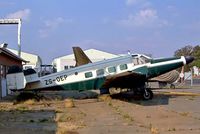
Flight / Schedule
Lanseria - Lanseria
Aircraft
Beechcraft G18SRegistration
ZS-OEP
MSN
BA-474
Year of Manufacture
1959
Operator
Saxon WingsDate
March 14, 2001 at 12:40 PM
Type
CRASHFlight Type
Training
Flight Phase
Landing (descent or approach)
Crash Site
Airport (less than 10 km from airport)
Crash Location
Lanseria Gauteng
Region
Africa • South Africa
Coordinates
-25.9397°, 27.9262°
Crash Cause
Human factor
Narrative Report
On March 14, 2001 at 12:40 PM, Lanseria - Lanseria experienced a crash involving Beechcraft G18S, operated by Saxon Wings, with the event recorded near Lanseria Gauteng.
The flight was categorized as training and the reported phase was landing (descent or approach) at a airport (less than 10 km from airport) crash site.
4 people were known to be on board, 0 fatalities were recorded, 4 survivors were identified or estimated. This corresponds to an estimated fatality rate of 0.0%.
Crew on board: 4, crew fatalities: 0, passengers on board: 0, passenger fatalities: 0, other fatalities: 0.
The listed crash cause is human factor. The instructor was accompanied by a trainee pilot and two passengers (also pilots) on a local training flight and was in the process of doing type conversion training when the accident happened. On the third circuit after a touch and go landing on runway 06L, the right-hand engine failed soon after take-off. The aircraft was flown at low altitude in a left-hand circuit in an attempt to land onto runway 17. During this circuit the left-hand engine also failed. The aircraft collided with, and severed, three 11kV electrical conductors and executed a forced landing with the gear retracted to the North of FALA approximately 1 km from threshold of runway 17. The pilot only sustained minor injuries with no one else injured. The initial on-site inspection revealed that both front tanks, which were selected at the fuel tank selector, were empty. The pilot who was undergoing conversion training refueled the aircraft prior to the accident and stated that 70 litres of fuel was uplifted into each "inboard auxiliary" tank and that what he presumed to be the "main" tanks were filled to capacity. The instructor stated that upon his arrival, the pilot who refueled the aircraft told him that he had filled the "mains" and that the "centre aux. tanks" were partially filled. The instructor further stated that the "main" tanks were selected for the duration of the flight. The aircraft is equipped with three fuel tanks in each wing. These tanks are: Front, Rear Auxiliary and Auxiliary tanks. Only one fuel quantity gauge is installed in the aircraft. A seven position selector knob above the fuel quantity gauge determines the tank to which the gauge is connected which then indicates the amount of fuel in that respective tank. The left and right front tanks were selected on the fuel gauge selector knob.
Aircraft reference details include registration ZS-OEP, MSN BA-474, year of manufacture 1959.
Geospatial coordinates for this crash are approximately -25.9397°, 27.9262°.
Fatalities
Total
0
Crew
0
Passengers
0
Other
0
Crash Summary
The instructor was accompanied by a trainee pilot and two passengers (also pilots) on a local training flight and was in the process of doing type conversion training when the accident happened. On the third circuit after a touch and go landing on runway 06L, the right-hand engine failed soon after take-off. The aircraft was flown at low altitude in a left-hand circuit in an attempt to land onto runway 17. During this circuit the left-hand engine also failed. The aircraft collided with, and severed, three 11kV electrical conductors and executed a forced landing with the gear retracted to the North of FALA approximately 1 km from threshold of runway 17. The pilot only sustained minor injuries with no one else injured. The initial on-site inspection revealed that both front tanks, which were selected at the fuel tank selector, were empty. The pilot who was undergoing conversion training refueled the aircraft prior to the accident and stated that 70 litres of fuel was uplifted into each "inboard auxiliary" tank and that what he presumed to be the "main" tanks were filled to capacity. The instructor stated that upon his arrival, the pilot who refueled the aircraft told him that he had filled the "mains" and that the "centre aux. tanks" were partially filled. The instructor further stated that the "main" tanks were selected for the duration of the flight. The aircraft is equipped with three fuel tanks in each wing. These tanks are: Front, Rear Auxiliary and Auxiliary tanks. Only one fuel quantity gauge is installed in the aircraft. A seven position selector knob above the fuel quantity gauge determines the tank to which the gauge is connected which then indicates the amount of fuel in that respective tank. The left and right front tanks were selected on the fuel gauge selector knob.
Cause: Human factor
Occupants & Outcome
Crew On Board
4
Passengers On Board
0
Estimated Survivors
4
Fatality Rate
0.0%
Known people on board: 4
Operational Details
Schedule / Flight
Lanseria - Lanseria
Operator
Saxon WingsFlight Type
Training
Flight Phase
Landing (descent or approach)
Crash Site
Airport (less than 10 km from airport)
Region / Country
Africa • South Africa
Aircraft Details
Similar Plane Crashes
Handley Page Transport
Handley Page O/7
The pilot encountered control problems and elected to make an emergency landing in Acadia Siding. All nine occupants escaped uninjured while the aircraft was damaged beyond repair.
African Aerial Travels
De Havilland DH.60 Moth
While on a flight from Durban, the aircraft crashed in unknown circumstances near Pomeroy. Both occupants were injured and the aircraft was destroyed.
African Aerial Travels
De Havilland DH.60 Moth
Crashed on final approach to Bloemfontein for unknown reason. Both occupants were injured.
Henderson Flying School
Avro 548
Crashed shortly after takeoff from Harrismith, killing both occupants.
Johannesburg Light Plane Club
De Havilland DH.60 Moth
The crew departed Baragwanath Airport on a local training flight. En route, the aircraft entered an uncontrolled descent and crashed in Roodepoort, some 17 km northwest of Johannesburg. Both crew members were injured.
Johannesburg Light Plane Club
De Havilland DH.60 Moth
The crew was completing a local training flight at Baragwanath Airport. The single engine aircraft crashed upon landing for unknown reason. Both occupants were injured.