
Cardiff - Gerona
Flight / Schedule
Cardiff - Gerona
Aircraft
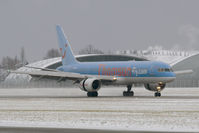
Boeing 757-200Registration
G-BYAG
MSN
26965
Year of Manufacture
1993
Operator
Britannia AirwaysDate
September 14, 1999 at 11:47 PM
Type
CRASHFlight Type
Charter/Taxi (Non Scheduled Revenue Flight)
Flight Phase
Landing (descent or approach)
Crash Site
Airport (less than 10 km from airport)
Crash Location
Girona Catalonia
Region
Europe • Spain
Coordinates
41.6992°, 2.8361°
Crash Cause
Human factor
Narrative Report
On September 14, 1999 at 11:47 PM, Cardiff - Gerona experienced a crash involving Boeing 757-200, operated by Britannia Airways, with the event recorded near Girona Catalonia.
The flight was categorized as charter/taxi (non scheduled revenue flight) and the reported phase was landing (descent or approach) at a airport (less than 10 km from airport) crash site.
245 people were known to be on board, 1 fatalities were recorded, 244 survivors were identified or estimated. This corresponds to an estimated fatality rate of 0.4%.
Crew on board: 9, crew fatalities: 0, passengers on board: 236, passenger fatalities: 1, other fatalities: 0.
The listed crash cause is human factor. Flight BY226A took off from Cardiff at 20:40 local time for a charter flight to Gerona. The crew contacted Gerona ATC at 23:14 hours. With a thunderstorm in the area, flight conditions were turbulent. ATC offered the option of a runway 20 ILS approach, but the crew decided to fly a VOR/DME procedure to runway 02 considering the prevailing conditions of wet runway, downslope and tailwind. At 23:33, in full landing configuration and just after passing 10 DME, the crew were advised of a change of wind to 200 degrees at 12 knots. Upon becoming visual the aircraft was not adequately aligned with the runway and the change in wind direction now favored the reciprocal runway so a missed approach was carried out. The aircraft was now positioned for an ILS approach to runway 20. During the approach the crew noted that the company minimum amount of fuel for a diversion to Barcelona (2,800 kg) had been reached. At 23:46:58 hrs, at 250 feet above ground level (agl) and on the correct glidepath, the captain disconnected the autopilot and autothrottle. The aircraft began to deviate above the glidepath. Twelve seconds later, at 110 feet agl, the captain briefly pushed the control column almost fully forward before returning it to an approximately neutral position. The aircraft pitched down to -4.5° nose down attitude and then back up to -2.5° nose down attitude. During this period the captain lost his visual reference with the runway because all runway lights had suddenly failed. The GPWS then warned of the excessive sink rate and the thrust levers being retarded to idle. At 21:47:17 the aircraft touched down in a 2° nose down attitude and a recorded peak normal (vertical) acceleration of 3.11 g. The aircraft bounced, the nose pitched up to +3.3°, a roll to the right commenced, both the thrust levers advanced and the power on both engines increased to 1.18 EPR. Full nose down elevator was applied and held until a second touchdown, resulting in a rapid pitch down. The aircraft made the second touchdown 1.9 seconds after the first at -0.5° pitch attitude (nose down), with a pitch rate of 7°/sec nose down and 4.2° of right roll. After a run of approximately 343 meters across flat grassland beside the runway, the aircraft ran diagonally over a substantial earth mound adjacent to the airport boundary, becoming semi-airborne as a result. At the far side of the mound a number of medium sized trees were struck and severed, predominantly by the right wing, and the right engine nacelle struck the boundary fence. The aircraft, yawed considerably to the right of its direction of travel, then passed through the fence, re-landed in a field and both main landing gears collapsed. It came to rest after a 244 meter slide across the field, with the fuselage almost structurally severed at two points.
Aircraft reference details include registration G-BYAG, MSN 26965, year of manufacture 1993.
Geospatial coordinates for this crash are approximately 41.6992°, 2.8361°.
Fatalities
Total
1
Crew
0
Passengers
1
Other
0
Crash Summary
Flight BY226A took off from Cardiff at 20:40 local time for a charter flight to Gerona. The crew contacted Gerona ATC at 23:14 hours. With a thunderstorm in the area, flight conditions were turbulent. ATC offered the option of a runway 20 ILS approach, but the crew decided to fly a VOR/DME procedure to runway 02 considering the prevailing conditions of wet runway, downslope and tailwind. At 23:33, in full landing configuration and just after passing 10 DME, the crew were advised of a change of wind to 200 degrees at 12 knots. Upon becoming visual the aircraft was not adequately aligned with the runway and the change in wind direction now favored the reciprocal runway so a missed approach was carried out. The aircraft was now positioned for an ILS approach to runway 20. During the approach the crew noted that the company minimum amount of fuel for a diversion to Barcelona (2,800 kg) had been reached. At 23:46:58 hrs, at 250 feet above ground level (agl) and on the correct glidepath, the captain disconnected the autopilot and autothrottle. The aircraft began to deviate above the glidepath. Twelve seconds later, at 110 feet agl, the captain briefly pushed the control column almost fully forward before returning it to an approximately neutral position. The aircraft pitched down to -4.5° nose down attitude and then back up to -2.5° nose down attitude. During this period the captain lost his visual reference with the runway because all runway lights had suddenly failed. The GPWS then warned of the excessive sink rate and the thrust levers being retarded to idle. At 21:47:17 the aircraft touched down in a 2° nose down attitude and a recorded peak normal (vertical) acceleration of 3.11 g. The aircraft bounced, the nose pitched up to +3.3°, a roll to the right commenced, both the thrust levers advanced and the power on both engines increased to 1.18 EPR. Full nose down elevator was applied and held until a second touchdown, resulting in a rapid pitch down. The aircraft made the second touchdown 1.9 seconds after the first at -0.5° pitch attitude (nose down), with a pitch rate of 7°/sec nose down and 4.2° of right roll. After a run of approximately 343 meters across flat grassland beside the runway, the aircraft ran diagonally over a substantial earth mound adjacent to the airport boundary, becoming semi-airborne as a result. At the far side of the mound a number of medium sized trees were struck and severed, predominantly by the right wing, and the right engine nacelle struck the boundary fence. The aircraft, yawed considerably to the right of its direction of travel, then passed through the fence, re-landed in a field and both main landing gears collapsed. It came to rest after a 244 meter slide across the field, with the fuselage almost structurally severed at two points.
Cause: Human factor
Occupants & Outcome
Crew On Board
9
Passengers On Board
236
Estimated Survivors
244
Fatality Rate
0.4%
Known people on board: 245
Operational Details
Schedule / Flight
Cardiff - Gerona
Operator
Britannia AirwaysFlight Type
Charter/Taxi (Non Scheduled Revenue Flight)
Flight Phase
Landing (descent or approach)
Crash Site
Airport (less than 10 km from airport)
Region / Country
Europe • Spain
Aircraft Details
Similar Plane Crashes
Lignes Aériennes Latécoère
Salmson 2.A2
The pilot was forced to make an emergency landing and escaped uninjured. The aircraft was damaged beyond repair.
Lignes Aériennes Latécoère
Breguet 14
While on a mail flight between France and Spain, the crew lost control of the airplane that crashed in Ontinyent, bursting into flames. Both crew were killed. Crew: Charles Genthon, pilot Léo Bénas, mechanic.
Lignes Aériennes Latécoère
Salmson 2.A2
Shortly after takeoff from Barcelona, the engine failed. The airplane stalled and crashed. The pilot Jean Sagnot was killed.
Compagnie Générale d'Entreprises Aéronautiques - CGEA
Breguet 14
While approaching Alicante, the pilot encountered stormy weather. He lost control of the airplane that crashed near El Campello, about 10 km northeast of Alicante. The aircraft was destroyed by a post crash fire and the pilot Marcel Stichter was killed.
Compagnie Générale d'Entreprises Aéronautiques - CGEA
Breguet 14
En route to France, the pilot encountered engine problems and made an emergency landing on the La Pineda beach west of Tarragone due to fuel exhaustion. Fuel was added and after few minutes, the pilot took off again. Shortly after liftoff, while climbing, the aircraft stalled and crashed in the sea, close to the shore. While all three occupants were uninjured, the aircraft was damaged beyond repair. Crew: Paul Vachet.
Compagnie Générale d'Entreprises Aéronautiques - CGEA
Breguet 14
The pilot was forced to make an emergency landing in Marbella. While both members crew escaped uninjured, the aircraft was damaged beyond repair.