
Straubing - Straubing
Flight / Schedule
Straubing - Straubing
Aircraft
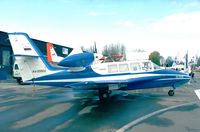
Beriev Be-103Registration
RA-03002
MSN
30 02
Year of Manufacture
1996
Operator
TANTK - Taganrog ANTKDate
April 29, 1999 at 06:33 PM
Type
CRASHFlight Type
Test
Flight Phase
Takeoff (climb)
Crash Site
Airport (less than 10 km from airport)
Crash Location
Straubing Bavaria
Region
Europe • Germany
Coordinates
48.8839°, 12.5956°
Crash Cause
Human factor
Narrative Report
On April 29, 1999 at 06:33 PM, Straubing - Straubing experienced a crash involving Beriev Be-103, operated by TANTK - Taganrog ANTK, with the event recorded near Straubing Bavaria.
The flight was categorized as test and the reported phase was takeoff (climb) at a airport (less than 10 km from airport) crash site.
1 people were known to be on board, 1 fatalities were recorded, 0 survivors were identified or estimated. This corresponds to an estimated fatality rate of 100.0%.
Crew on board: 1, crew fatalities: 1, passengers on board: 0, passenger fatalities: 0, other fatalities: 0.
The listed crash cause is human factor. A testflight for the purpose of vibration measurements on the propellers was to be carried out with the a.m. aircraft. The Beriev BE103 is the prototype of a 6 seater, twin engine amphibious aircraft of russian design. It was powered by two piston engines Teledyne Continental IO-360 E5 which operated hydraulic variable pitch propellers. In the course of the russian type certification the vibration behavior and the stiffness of the propeller blades had to be proven. Therefore a test propeller, fitted with wire strain gauges was attached to the L/H engine at the propeller manufacturer’s facilities in Straubing. The transducers and transmitters were fitted instead of the spinner by means of special brackets. The data recording system was installed in the aircraft’s cabin. As during the testflights a maximum of 105% of the maximum allowable rpm had to be achieved the L/H propeller governor was adjusted to 2940 rpm. Furthermore the R/H propeller and governor were changed from prototypes to the serial components. After these modifications several engine test runs were carried out for calibration of the test equipment and data recording. The testflight was recorded on a camcorder. The film showed that the pilot in command taxied to the far end of the 940 m long pavement runway, adjusted the engines while standing and thereafter commenced his take-off run which should have been approx. 300 m long with view to the aircraft weight according to information gained from the a/c manufacturer. The a/c, however, taxied far beyond the ½ marking of the runway, rotated fairly long and went airborne after approx. 700 m with a high angle of attack. After gaining 10 to 15 m of altitude the pilot in command retracted the landing gear. Right after that the a/c entered a shallow descend in a nose-up attitude and turned to the left before it left the camera view some seconds before the impact. During the entire flight a constant and normal engine noise was audible. Approx. 600 m behind the runway end the aircraft hit the bank of a street and caught fire. The pilot in command was fatally injured, the aircraft was destroyed by the impact and the post impact fire.
Aircraft reference details include registration RA-03002, MSN 30 02, year of manufacture 1996.
Geospatial coordinates for this crash are approximately 48.8839°, 12.5956°.
Fatalities
Total
1
Crew
1
Passengers
0
Other
0
Crash Summary
A testflight for the purpose of vibration measurements on the propellers was to be carried out with the a.m. aircraft. The Beriev BE103 is the prototype of a 6 seater, twin engine amphibious aircraft of russian design. It was powered by two piston engines Teledyne Continental IO-360 E5 which operated hydraulic variable pitch propellers. In the course of the russian type certification the vibration behavior and the stiffness of the propeller blades had to be proven. Therefore a test propeller, fitted with wire strain gauges was attached to the L/H engine at the propeller manufacturer’s facilities in Straubing. The transducers and transmitters were fitted instead of the spinner by means of special brackets. The data recording system was installed in the aircraft’s cabin. As during the testflights a maximum of 105% of the maximum allowable rpm had to be achieved the L/H propeller governor was adjusted to 2940 rpm. Furthermore the R/H propeller and governor were changed from prototypes to the serial components. After these modifications several engine test runs were carried out for calibration of the test equipment and data recording. The testflight was recorded on a camcorder. The film showed that the pilot in command taxied to the far end of the 940 m long pavement runway, adjusted the engines while standing and thereafter commenced his take-off run which should have been approx. 300 m long with view to the aircraft weight according to information gained from the a/c manufacturer. The a/c, however, taxied far beyond the ½ marking of the runway, rotated fairly long and went airborne after approx. 700 m with a high angle of attack. After gaining 10 to 15 m of altitude the pilot in command retracted the landing gear. Right after that the a/c entered a shallow descend in a nose-up attitude and turned to the left before it left the camera view some seconds before the impact. During the entire flight a constant and normal engine noise was audible. Approx. 600 m behind the runway end the aircraft hit the bank of a street and caught fire. The pilot in command was fatally injured, the aircraft was destroyed by the impact and the post impact fire.
Cause: Human factor
Occupants & Outcome
Crew On Board
1
Passengers On Board
0
Estimated Survivors
0
Fatality Rate
100.0%
Known people on board: 1
Operational Details
Schedule / Flight
Straubing - Straubing
Operator
TANTK - Taganrog ANTKFlight Type
Test
Flight Phase
Takeoff (climb)
Crash Site
Airport (less than 10 km from airport)
Region / Country
Europe • Germany
Aircraft Details
Similar Plane Crashes
United States Army Air Service - USAAS
De Havilland DH.4
Crashed in unknown circumstances.
Deutsche Luft-Reederei
LVG C.VI
Crashed shortly after takeoff from Dortmund Airport. Both occupants were injured and the aircraft was destroyed.
United States Army Air Service - USAAS
De Havilland DH.4
Crashed following an engine failure in flight. Crew fate unknown.
Rumpler Luftverkehr
Junkers F.13
The aircraft crashed shortly after takeoff from Munich-Oberschleissheim Airport. The pilot Höpken escaped uninjured.
Compagnie Internationale de Navigation Aérienne - CIDNA
Farman F.121 Jabiru
Crashed in unknown circumstances. Occupant fate unknown.
Deutscher Aero Lloyd
Junkers F.13
The single engine airplane departed Munich-Oberschleissheim Airport on a regular service to Leipzig with three passengers and one pilot on board. While flying over Bavaria, the pilot encountered poor weather conditions with thunderstorm activity. He attempted an emergency landing when the aircraft crashed in an open field located in Kulmbach. All four occupants evacuated safely and the aircraft was damaged beyond repair.