
Shanghai - Seoul
Flight / Schedule
Shanghai - Seoul
Aircraft
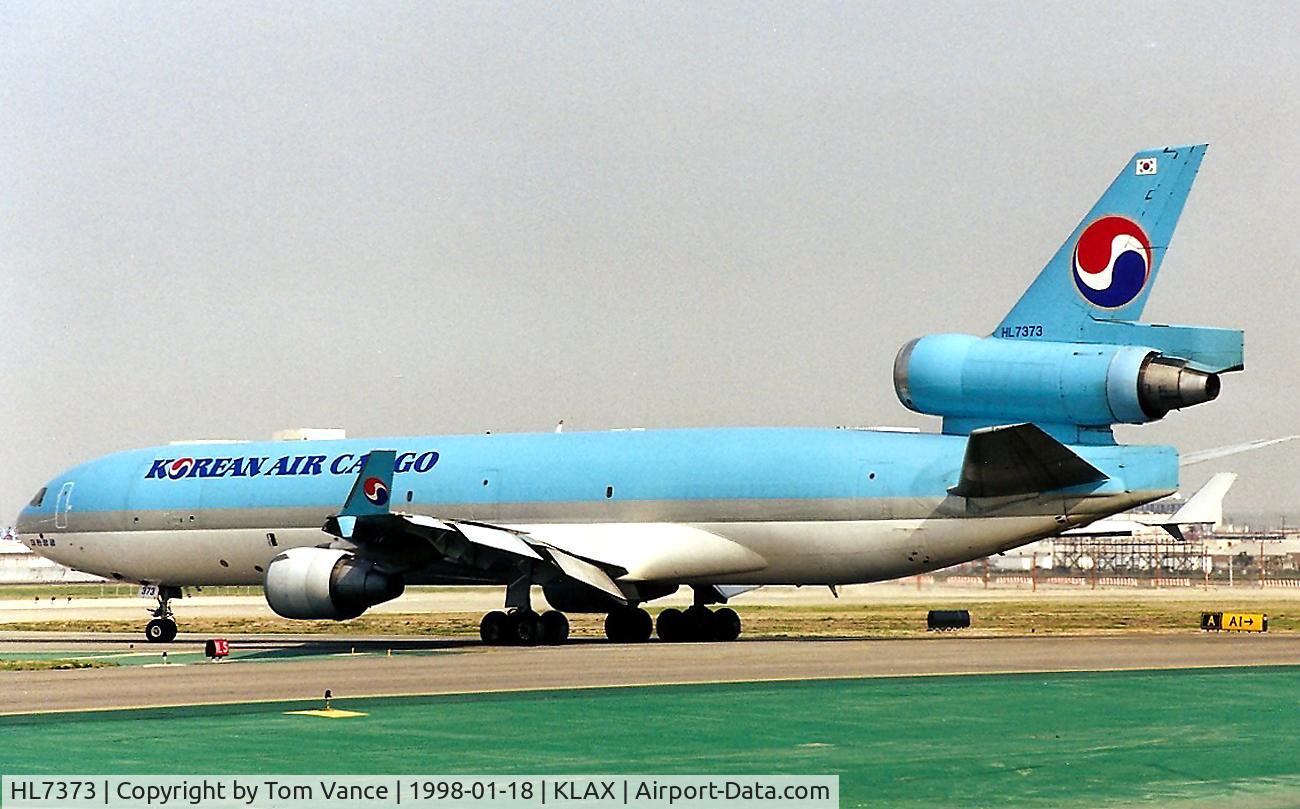
McDonnell Douglas MD-11Registration
HL7373
MSN
48409
Year of Manufacture
1992
Operator
Korean Air CargoDate
April 15, 1999 at 04:04 PM
Type
CRASHFlight Type
Cargo
Flight Phase
Takeoff (climb)
Crash Site
Airport (less than 10 km from airport)
Crash Location
Shanghai-Hongqiao Shanghai
Region
Asia • China
Coordinates
31.1926°, 121.3671°
Crash Cause
Human factor
Narrative Report
On April 15, 1999 at 04:04 PM, Shanghai - Seoul experienced a crash involving McDonnell Douglas MD-11, operated by Korean Air Cargo, with the event recorded near Shanghai-Hongqiao Shanghai.
The flight was categorized as cargo and the reported phase was takeoff (climb) at a airport (less than 10 km from airport) crash site.
3 people were known to be on board, 8 fatalities were recorded, 0 survivors were identified or estimated. This corresponds to an estimated fatality rate of 266.7%.
Crew on board: 3, crew fatalities: 3, passengers on board: 0, passenger fatalities: 0, other fatalities: 5.
The listed crash cause is human factor. On April 15, 1999, Korean Air cargo flight KE6316, a McDonnell Douglas MD-11F, Korean registration HL7373, departed from runway 18 at Shanghai-Hongqiao International Airport, for Seoul, Korea with 2 pilots and 1 flight technician on board at 16:01:35 Beijing local time (08:01:35 UTC time). The autopilot was off 1 minute 7 seconds (at 16:02:42) after takeoff. The airplane maneuvered first to the right, and then kept level flight at approximately 200° track for more than 30 seconds, and maneuvered back to the left. The crew was subsequently cleared to climb to 1,500 meters (4,900 feet) during which the airplane turned to NHW** at 900 meters (3,000 feet). The airplane passed 1,310 meters at 16:04:15, the airplane suddenly executed a very rapid descent after reaching 1,370 meters (4,500 feet) at 16:04:19 and then the airplane disappeared from the airport SSR screen. The airplane crashed into the ground at 16:04:35 according to Shanghai Seismic Bureau's measurement. The distance from the accident site to the airport runway is 11.6 kilometers, the site azimuth is 165° from the center of the runway centerline. The aircraft was totally destroyed and all three crew members were killed as well as five people on the ground. Thirty-six other people were injured, four seriously.
Aircraft reference details include registration HL7373, MSN 48409, year of manufacture 1992.
Geospatial coordinates for this crash are approximately 31.1926°, 121.3671°.
Fatalities
Total
8
Crew
3
Passengers
0
Other
5
Crash Summary
On April 15, 1999, Korean Air cargo flight KE6316, a McDonnell Douglas MD-11F, Korean registration HL7373, departed from runway 18 at Shanghai-Hongqiao International Airport, for Seoul, Korea with 2 pilots and 1 flight technician on board at 16:01:35 Beijing local time (08:01:35 UTC time). The autopilot was off 1 minute 7 seconds (at 16:02:42) after takeoff. The airplane maneuvered first to the right, and then kept level flight at approximately 200° track for more than 30 seconds, and maneuvered back to the left. The crew was subsequently cleared to climb to 1,500 meters (4,900 feet) during which the airplane turned to NHW** at 900 meters (3,000 feet). The airplane passed 1,310 meters at 16:04:15, the airplane suddenly executed a very rapid descent after reaching 1,370 meters (4,500 feet) at 16:04:19 and then the airplane disappeared from the airport SSR screen. The airplane crashed into the ground at 16:04:35 according to Shanghai Seismic Bureau's measurement. The distance from the accident site to the airport runway is 11.6 kilometers, the site azimuth is 165° from the center of the runway centerline. The aircraft was totally destroyed and all three crew members were killed as well as five people on the ground. Thirty-six other people were injured, four seriously.
Cause: Human factor
Occupants & Outcome
Crew On Board
3
Passengers On Board
0
Estimated Survivors
0
Fatality Rate
266.7%
Known people on board: 3
Operational Details
Schedule / Flight
Shanghai - Seoul
Operator
Korean Air CargoFlight Type
Cargo
Flight Phase
Takeoff (climb)
Crash Site
Airport (less than 10 km from airport)
Region / Country
Asia • China
Aircraft Details
Similar Plane Crashes
Eurasia Aviation Corporation
Junkers W.33
It is believed that the crew was forced to make an emergency landing while approaching Lanzhou. The mechanic was injured and the pilot escaped unhurt. Other source reports that the aircraft was shot down over Mongolia - China border.
Eurasia Aviation Corporation
Junkers W.33
The crew was completing a local flight in the area of Lanzhou to test new mail routes. The accident occurred in unknown circumstances. The airplane was destroyed and both occupants were injured.
Eurasia Aviation Corporation
Junkers W.33
Crashed in unknown circumstances.
Eurasia Aviation Corporation
Junkers F.13
The crew was forced to attempt an emergency landing for unknown reason. The aircraft was damaged beyond repair and all occupants were rescued.
China National Aviation Corporation - CNAC
Sikorsky S-38
On approach to Hangzhou, the crew reduced his altitude due to low visibility caused by foggy conditions. As the Captain was unable to locate the landing area in the Hangzhou Bay, he initiated a go around procedure. During the last turn, while flying too low, the float plane impacted a hill and crashed. All 11 occupants were injured and the aircraft was destroyed.
China National Aviation Corporation - CNAC
Sikorsky S-38
One hour after his departure from Shanghai, while overflying the Bay of Hangzhou, the crew encountered foggy conditions and informed his base he was returning to Shanghai. A brief message was transmitted with two audible words 'turning back'. Shortly later, the seaplane crashed in the Bay of Hangzhou, south of Shanghai. Some debris were found 10 days later and the dead body of the captain was found four months later. The passenger was a Japanese citizen. Crew: Robert H. Gast, pilot, James Frink, pilot, Ivan Carlson, radio operator.