
Cologne - Dublin - Shannon
Flight / Schedule
Cologne - Dublin - Shannon
Aircraft
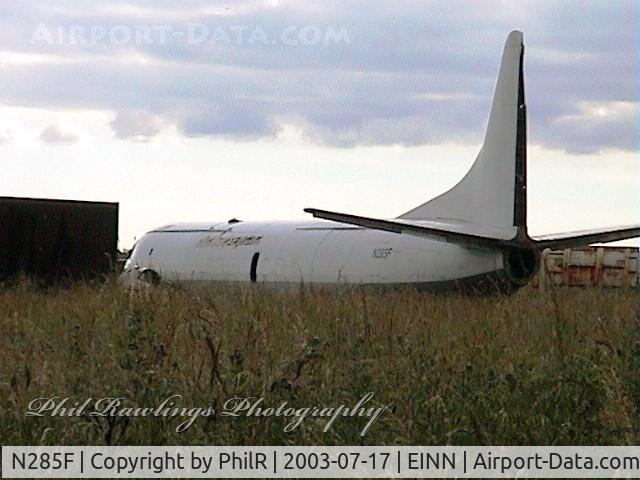
Lockheed L-188 ElectraRegistration
N285F
MSN
1107
Year of Manufacture
1959
Operator
Channel Express - Air ServicesDate
March 1, 1999 at 08:46 AM
Type
CRASHFlight Type
Cargo
Flight Phase
Landing (descent or approach)
Crash Site
Airport (less than 10 km from airport)
Crash Location
Shannon Munster
Region
Europe • Ireland
Coordinates
52.7059°, -8.9002°
Crash Cause
Human factor
Narrative Report
On March 1, 1999 at 08:46 AM, Cologne - Dublin - Shannon experienced a crash involving Lockheed L-188 Electra, operated by Channel Express - Air Services, with the event recorded near Shannon Munster.
The flight was categorized as cargo and the reported phase was landing (descent or approach) at a airport (less than 10 km from airport) crash site.
3 people were known to be on board, 0 fatalities were recorded, 3 survivors were identified or estimated. This corresponds to an estimated fatality rate of 0.0%.
Crew on board: 3, crew fatalities: 0, passengers on board: 0, passenger fatalities: 0, other fatalities: 0.
The listed crash cause is human factor. The aircraft (Flight 6526) departed Cologne at 0300 hours and routed directly to Dublin, where, after more than one hours delay due to the late arrival of a freight truck, the aircraft departed for Shannon Airport at 0816 hours. The crew consisted of the First Officer who was the handling pilot on both of these sectors, the Captain who was the non-handling pilot and the Flight Engineer. The take off gross weight was estimated at 83,701 lbs, well below the limiting 116,000 lbs take off weight (MTOW), and the centre of gravity was within limits. The landing weight was estimated at 80,345 lbs, again below the maximum landing weight of 98,102 lbs. The total freight on board was 14,000 lbs, less than half the 33,000 lbs maximum amount permissible. The aircraft reached it's designated altitude of FL120. The crew were handed over to Shannon Approach and given descent clearance. Shannon Approach instructed the crew to keep the speed up (due to an another aircraft behind them) and the aircraft was vectored on an approach to RWY 24. Due to the weather forecast for Shannon the crew decided to conduct the landing with 78% flaps set, rather than the standard 100% flap normally set for landing. During the approach the Captain called 1000 ft above the touchdown zone (TDZ), then 500 ft and every 100 ft thereafter to the Decision Altitude (DA). At an altitude of 700 ft the Ground Proximity Warning (GPWS) horn sounded. The Flight Engineer proceeded to inhibit the GPWS system. Slowing the aircraft to Vma (Maximum Manoeuvering Airspeed) the crew did not carry out the "before landing" checks. Whilst over the RWY threshold the gear warning horn sounded and five seconds later the crew heard a scraping sound and felt severe aircraft vibrations. Realising that the gear was not down the Captain called for a go-around. The First Officer continued to fly the aircraft and was cleared to 3000 ft by ATC. However, during the climb out the aircraft flew into cloud (Instrument Meteorological Conditions) at about 500/600 feet, and simultaneously the propeller assembly and part of No. 3 engine fell to the ground. Electrical power was lost and the only serviceable flight instruments available to the crew was the standby artificial horizon and wet compass. The First Officer relinquished control of the aircraft to the Captain who had great difficulty in maintaining directional control and it took the combined efforts of both pilots to control the excessive yaw through the rudder pedals. In addition, there was insufficient power available to climb to 3000 ft. In fact, less than 2000 ft was attained, as the aircraft commenced a slow difficult turn in a North Easterly direction and towards the high ground west of Limerick city. It was only by further manipulation of the throttles and feathering No. 4 engine that sufficient directional control was recovered, enough to respond to the instructions of the ATC Radar operator. The aircraft was now flying with only No.1 engine fully operative and No. 2 engine producing only half power and much vibration. The Radar operator vectored the aircraft to approach RWY 24 which became visible to the crew. They selected "gear down" and while only 2 of the 3 green landing lights illuminated, the Captain elected to proceed with the landing, with the flaps again set at 78%. This landing was successful, with all the landing gear deploying correctly. The aircraft was evacuated while the airport crash crews stood by.
Aircraft reference details include registration N285F, MSN 1107, year of manufacture 1959.
Geospatial coordinates for this crash are approximately 52.7059°, -8.9002°.
Fatalities
Total
0
Crew
0
Passengers
0
Other
0
Crash Summary
The aircraft (Flight 6526) departed Cologne at 0300 hours and routed directly to Dublin, where, after more than one hours delay due to the late arrival of a freight truck, the aircraft departed for Shannon Airport at 0816 hours. The crew consisted of the First Officer who was the handling pilot on both of these sectors, the Captain who was the non-handling pilot and the Flight Engineer. The take off gross weight was estimated at 83,701 lbs, well below the limiting 116,000 lbs take off weight (MTOW), and the centre of gravity was within limits. The landing weight was estimated at 80,345 lbs, again below the maximum landing weight of 98,102 lbs. The total freight on board was 14,000 lbs, less than half the 33,000 lbs maximum amount permissible. The aircraft reached it's designated altitude of FL120. The crew were handed over to Shannon Approach and given descent clearance. Shannon Approach instructed the crew to keep the speed up (due to an another aircraft behind them) and the aircraft was vectored on an approach to RWY 24. Due to the weather forecast for Shannon the crew decided to conduct the landing with 78% flaps set, rather than the standard 100% flap normally set for landing. During the approach the Captain called 1000 ft above the touchdown zone (TDZ), then 500 ft and every 100 ft thereafter to the Decision Altitude (DA). At an altitude of 700 ft the Ground Proximity Warning (GPWS) horn sounded. The Flight Engineer proceeded to inhibit the GPWS system. Slowing the aircraft to Vma (Maximum Manoeuvering Airspeed) the crew did not carry out the "before landing" checks. Whilst over the RWY threshold the gear warning horn sounded and five seconds later the crew heard a scraping sound and felt severe aircraft vibrations. Realising that the gear was not down the Captain called for a go-around. The First Officer continued to fly the aircraft and was cleared to 3000 ft by ATC. However, during the climb out the aircraft flew into cloud (Instrument Meteorological Conditions) at about 500/600 feet, and simultaneously the propeller assembly and part of No. 3 engine fell to the ground. Electrical power was lost and the only serviceable flight instruments available to the crew was the standby artificial horizon and wet compass. The First Officer relinquished control of the aircraft to the Captain who had great difficulty in maintaining directional control and it took the combined efforts of both pilots to control the excessive yaw through the rudder pedals. In addition, there was insufficient power available to climb to 3000 ft. In fact, less than 2000 ft was attained, as the aircraft commenced a slow difficult turn in a North Easterly direction and towards the high ground west of Limerick city. It was only by further manipulation of the throttles and feathering No. 4 engine that sufficient directional control was recovered, enough to respond to the instructions of the ATC Radar operator. The aircraft was now flying with only No.1 engine fully operative and No. 2 engine producing only half power and much vibration. The Radar operator vectored the aircraft to approach RWY 24 which became visible to the crew. They selected "gear down" and while only 2 of the 3 green landing lights illuminated, the Captain elected to proceed with the landing, with the flaps again set at 78%. This landing was successful, with all the landing gear deploying correctly. The aircraft was evacuated while the airport crash crews stood by.
Cause: Human factor
Occupants & Outcome
Crew On Board
3
Passengers On Board
0
Estimated Survivors
3
Fatality Rate
0.0%
Known people on board: 3
Operational Details
Schedule / Flight
Cologne - Dublin - Shannon
Operator
Channel Express - Air ServicesFlight Type
Cargo
Flight Phase
Landing (descent or approach)
Crash Site
Airport (less than 10 km from airport)
Region / Country
Europe • Ireland
Aircraft Details
Similar Plane Crashes
Vickers-Armstrongs Ltd
Vickers FB.27 Vimy Commercial
British aviators John Alcock and Arthur Whitten Brown were performing one of the first transatlantic crossflight from the US to Europe. The aircraft departed Saint John’s-Lester Field, Newfoundland, on 14JUN1919 at 1345LT. Following an uneventful flight of 15 hours and 57 minutes at an altitude of 12,000 feet and at an average speed of 185 km/h, both pilots reached the Irish coast on the morning of June 15. While landing in an open field located in Clifden, Galway, the twin engine aircraft nosed down and came to rest. Both pilots were slightly injured while the aircraft was damaged beyond repair.
Irish Air Corps - Aer Chór na hÉireann
De Havilland DH.9
The crew was completing a local training flight at Fermoy Aerodrome. The accident occurred in unknown circumstances. While the pilot was seriously injured, the observer was killed. Crew: Lt McCullogh, pilot, Lt John Francis McDonagh, observer. †
Irish Air Corps - Aer Chór na hÉireann
De Havilland DH.60 Moth
Shortly after takeoff, while climbing, the aircraft went out of control and crashed, killing the pilot, sole on board.
Irish Air Corps - Aer Chór na hÉireann
De Havilland DH.60 Moth
The crew was engaged in a local training mission at Baldonnel-Casement AFB. On final approach, the aircraft crashed in unknown circumstances, injuring both pilots.
Iona National Airways
De Havilland DH.60 Moth
The single engine airplane departed Kildonan Aerodrome in Finglas with one passenger and one pilot on board. In unknown circumstances, the aircraft crashed on the roof of a farm located in Bundoran, Ulster. Both occupants were injured and the aircraft was destroyed. Crew: L. S. Coogan, pilot. Passenger: J. Doherty.
Macfadden Publications
Lockheed 8 Sirius/Altair
The pilot Lou Reichers departed Harbour Grace on a new record solo flight to Paris. While cruising over Ireland, he encountered an unexpected situation and was forced to ditch the airplane in the Bandon River off Kinsale, south Ireland. He was rescued by the crew of 'USS President Roosevelt' while the airplane sank and was lost.